
1-208-754-4884

2026 Top Fusion Bonded Epoxy Pipe Suppliers?

Choosing a Fusion Bonded Epoxy Pipe supplier in 2026 requires more than comparing prices or catalog claims. The right choice depends on the fluid, operating temperature, pressure, pipe dimensions, and installation environment. A coating suited to a buried water line may not fit a demanding industrial process. Details matter.

This guide examines supplier capabilities that buyers can verify. Look for clear information on surface preparation, coating thickness, curing controls, adhesion testing, and inspection records. Ask how the supplier handles flange edges, bends, and other areas where coverage can be harder to maintain. Request sample quality documents and confirm that product specifications match the project requirements. A polished brochure is useful, but traceable test results are stronger evidence.

The “top” supplier is not automatically the largest or least expensive. Reliable delivery, responsive technical support, and consistent production can matter just as much as headline pricing. A low quote can look persuasive, until coating limits or delivery assumptions become clear. Not always. Buyers should compare equivalent specifications and ask direct questions before shortlisting manufacturers. This article offers a practical framework for assessing suppliers, while recognizing that no ranking fits every project. Some details may remain uncertain until drawings, service conditions, and inspection needs are reviewed. That is worth acknowledging. A careful selection process can reduce avoidable surprises, but it cannot replace project-specific engineering judgment.
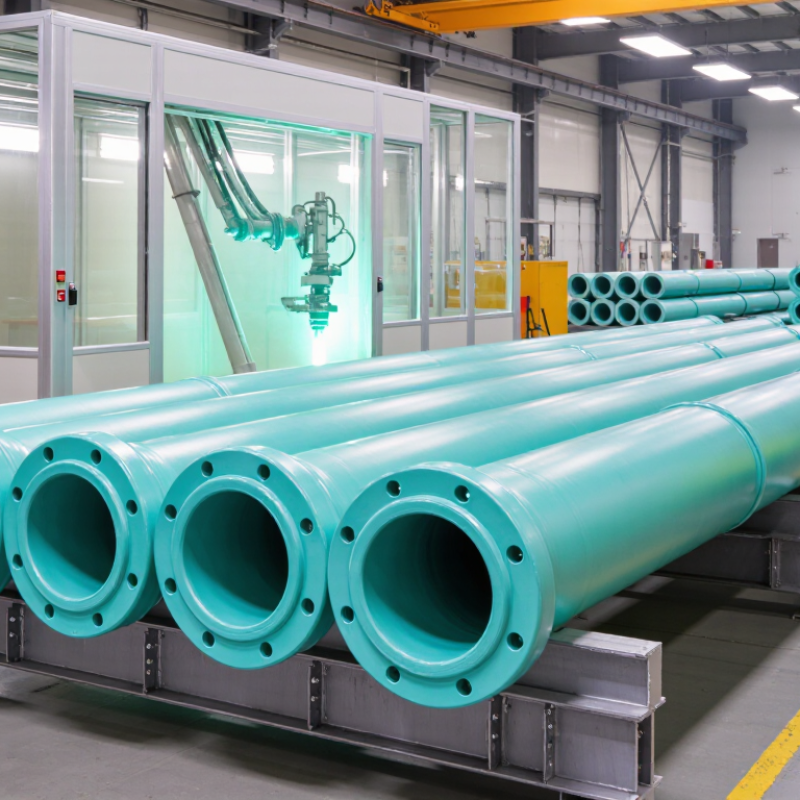
2026 Top Fusion Bonded Epoxy Pipe Suppliers?

What Fusion-Bonded Epoxy Pipes Are and How They Are Made

Fusion-bonded epoxy pipe starts as a steel pipe with a carefully prepared surface. Workers remove rust, oil, and mill scale, often using abrasive blasting. The cleaned steel should show a consistent, rough texture. That profile gives the coating something to grip. Even a small patch of contamination can weaken adhesion, though the problem may not be obvious at a glance.

The pipe is heated, then fine epoxy powder is applied, commonly by electrostatic spray. Heat melts and cures the powder into a continuous layer bonded to the steel. Depending on the application, coating may cover the pipe’s interior, exterior, or both. Operators control temperature, powder delivery, and line speed. Too little heat can leave an under-cured film; too much may affect coating quality. It is a narrow process window.

After cooling, inspectors check coating thickness, adhesion, and pinholes, sometimes called holidays. A pipe can look smooth and still contain a tiny defect. That is why visual checks alone are not enough. Fusion-bonded epoxy helps protect steel from corrosion, but performance also depends on service temperature, handling, installation, and the surrounding environment. The coating is not a cure-all. Careful inspection matters, and real-world conditions can still surprise even a well-run production line.

Fusion-Bonded Epoxy (FBE) Pipes: Typical Coating Thickness

An indicative thickness range for FBE pipeline coatings; actual requirements depend on the applicable standard, service conditions, and project specification.

FBE is applied to prepared steel, typically by preheating the pipe and electrostatically applying epoxy powder, which melts and cures into a bonded coating. Inspection commonly checks coating thickness, continuity, and adhesion. This general range is not a supplier-specific specification.

Key Standards and Quality Factors for FBE Pipe Suppliers

2026 Top Fusion Bonded Epoxy Pipe Suppliers?

Choosing a supplier starts with checking whether its coating system matches the project specification. ISO 21809-2 and AWWA C213 address different pipeline applications, so confirm the relevant standard and edition before comparing quotations. The steel pipe itself also needs a suitable material grade, dimensions, and documented traceability.

Ask for inspection records covering surface preparation, coating thickness, cure, adhesion, and holiday detection. Cleanliness and surface profile matter: dust, salts, or uneven blasting can weaken the coating bond. Request batch-level reports and clarify how rejected sections are identified and repaired. A certificate alone is not enough. Inspect the process, too. Suppliers should explain how they control application temperature and verify coating continuity. Real production conditions can vary, and a neat report may not reveal every inconsistency.

Tips: Compare like with like. Confirm test methods, sampling frequency, acceptance limits, and repair procedures in writing. If possible, review a recent inspection report and examine a sample pipe section. Check that packaging protects the coating during loading and transport. One detail is easy to miss: handling damage can undo careful factory work. Even experienced buyers may overlook it.

How to Evaluate FBE Pipe Suppliers in 2026

Evaluating an FBE pipe supplier in 2026 starts with verifiable records, not a polished brochure. Ask for recent project references, quality procedures, and traceability from steel pipe to finished coating. Can they identify each production batch? Request sample inspection reports and confirm that their testing matches your project specification and applicable standards.

Look closely at surface preparation and coating controls. Ask how the supplier monitors steel cleanliness, profile, preheating temperature, and coating thickness. Request holiday-test results, adhesion checks, and documented repair procedures. Records matter. During a factory visit, observe how inspectors handle rejected pipes and protect coated surfaces during storage. A neat sample is useful, but it cannot prove consistent production.

Delivery capability deserves equal scrutiny. Compare stated capacity with actual schedules, shipping arrangements, and plans for handling damaged coating. Ask who reviews inspection data and how quickly they report a nonconformance. Small gaps in documentation can become delays. I would not treat one successful audit as a guarantee; production teams and workloads change. Verify critical details again before placing a large order.

Leading Fusion-Bonded Epoxy Pipe Suppliers in 2026

Leading fusion-bonded epoxy pipe suppliers in 2026 should offer more than a broad size list. Look for clear information on steel grade, pipe dimensions, coating thickness, and intended service conditions. A supplier should explain how surface preparation and coating application are controlled, since dust, moisture, or uneven heating can affect adhesion. Details matter. Ask for inspection records, coating test results, and traceability documents tied to the delivered pipe, not just generic sample forms.

Compare suppliers by how they handle practical project needs. Can they maintain consistent coating quality across the order? Do they protect pipe ends and coated surfaces during storage and transport? Clear answers often reveal more than a polished brochure. Review the stated inspection methods, including visual checks and tests for coating discontinuities, and confirm they match the project specification. When possible, assess a representative sample or arrange an independent inspection before shipment.

Communication is part of supply quality, too. Reliable teams flag production limits, lead-time changes, and documentation gaps early. That may sound basic, but it is not always done well. A useful supplier comparison weighs technical evidence, delivery capability, and after-sales responsiveness together. No single certificate can replace careful review, and even a strong supplier may need closer oversight on a complex project.

Common Applications and Market Trends for FBE-Coated Pipes

Fusion-bonded epoxy (FBE) coatings protect steel pipes from corrosion in buried and submerged service. Common applications include water transmission, oil and gas pipelines, and industrial process lines. The American Water Works Association’s C213 standard covers FBE coatings for steel water pipe, while ISO 21809-2 addresses external FBE coatings on pipelines. These standards help specify coating performance and inspection requirements.

The U.S. Energy Information Administration describes a natural-gas pipeline network exceeding three million miles, illustrating the scale of infrastructure exposed to soil and moisture. AMPP’s 2016 IMPACT study estimated corrosion costs at $2.5 trillion annually, or about 3.4% of global GDP. That figure supports investment in protective coatings, but it does not predict savings for any single project. Current practice emphasizes surface preparation, coating-thickness checks, and careful handling at field joints. Small flaws matter. FBE can resist corrosion and provide strong adhesion, yet damage during transport or installation can expose steel. Operators should match coating systems to soil conditions, operating temperature, and repair procedures; one specification rarely fits every route.

2026 Top Fusion Bonded Epoxy Pipe Suppliers? - Common Applications and Market Trends for FBE-Coated Pipes
Category Typical Scope or Application Relevant Standards or References Supplier and Project Checks Market Trends and Practical Considerations
Supplier profiles (anonymous categories; not a company ranking)
Pipe mill with an in-house coating line Can coordinate pipe production and coating for pipeline projects requiring defined pipe and coating specifications. Coating requirements are project-specific; pipeline coating specifications may reference ISO 21809-2 or CSA Z245.20. Check coating-line capability, production records, inspection procedures, traceability, and coordination of pipe and coating documentation. Integrated production can simplify scheduling and quality-document coordination for large or time-sensitive orders.
Independent pipe-coating applicator Applies FBE to pipe supplied by the purchaser or pipe mill; may serve multiple project and pipe-supply sources. Use the project specification and applicable coating standard to define surface preparation, application, inspection, and acceptance criteria. Confirm permitted pipe dimensions, handling limits, coating-line capacity, inspection capability, repair procedures, and delivery logistics. Project owners often evaluate applicators on documented process control, available capacity, and proximity to pipe storage or the job site.
Regional, project-focused coating provider Provides coating services for local infrastructure, industrial facilities, or projects with specific delivery and handling needs. Applicable requirements depend on the service and project; water-pipeline work may specify AWWA C213. Review relevant project experience, quality records, inspection resources, coating repair controls, and transport arrangements. Local availability can reduce transport complexity, while technical qualification and specification compliance remain essential.
Common applications and market considerations
Potable-water transmission and distribution FBE may be specified as an internal or external coating for steel water pipe, subject to the project design and coating specification. AWWA C213 covers fusion-bonded epoxy coating for the interior and exterior of steel water pipelines. Check the specified coating location, surface preparation, application controls, inspection criteria, and any drinking-water contact requirements applicable to the project. Water-infrastructure projects place emphasis on corrosion protection, documented compliance, and the suitability of the complete coating system for service.
Oil and gas pipeline systems External FBE is used as a corrosion-protection coating on steel line pipe when selected by the pipeline design. ISO 21809-2 addresses external FBE coatings for steel pipelines in pipeline transportation systems; CSA Z245.20 is another relevant external-coating standard. Confirm the specified coating system, pipe dimensions, environmental and handling conditions, inspection plan, and compatibility with any project-required field-joint coating. Purchasing specifications commonly focus on coating qualification, inspection documentation, traceability, and coordination with field-joint protection.
Wastewater and water-treatment facilities FBE-coated steel pipe may be specified for selected process or conveyance services after the project designer evaluates the service environment. AWWA C213 may be relevant to steel water pipelines; confirm the governing project specification and its applicability to the service. Check chemical exposure, operating conditions, coating location, and project-specific acceptance requirements rather than assuming one coating is suitable for every wastewater service. Service-specific coating selection and clear exposure data are important because wastewater environments can vary substantially between facilities.
Industrial and fire-protection piping FBE may be considered for steel piping in industrial or fire-water systems where the design and operating environment permit its use. Requirements are generally set by the project specification and applicable industry or owner standards. Confirm operating temperature, fluid and chemical exposure, installation conditions, and any required approvals or project-specific tests. Buyers increasingly seek clear documentation of intended service conditions and coating-system limitations during supplier qualification.
Cross-project procurement trend Applies across water, energy, and industrial pipeline projects. Use the current edition named in the contract and identify any additional owner or regulatory requirements. Compare suppliers using the same technical specification, inspection scope, documentation list, delivery basis, and acceptance criteria. For 2026 planning, treat demand and capacity as project- and region-dependent; avoid assuming a universal market growth rate or supplier ranking.