
1-208-754-4884

7 Best Feed Pellet Mills for Sale in 2026

Choosing among the 7 Best Feed Pellet Mills for Sale in 2026 starts with the job, not the sales brochure. A small farm making daily batches has different needs from a commercial feed plant. The right machine should suit the ingredients, target output, available power, and maintenance skills on site. Those details matter.

The scale is substantial. Alltech’s 2024 Agri-Food Outlook reported global feed production of about 1.29 billion metric tons in 2023, drawing on data from 142 countries. That industry-wide figure does not predict demand for any single mill. It does show why reliable pellet production remains an important part of livestock supply chains. A Feed Pellet Mill compresses prepared mash through a die, forming pellets that can be easier to handle and store. Results still depend on formulation, moisture, die design, and operating conditions.

This guide compares seven machines through practical criteria: rated capacity, motor power, pellet size options, construction, cleaning access, spare-parts availability, and manufacturer support. Specifications should be checked against the seller’s documentation, since stated capacity can vary with feed type and moisture. A machine that performs well on one formula may struggle with another. That is easy to overlook. Treat the list as a starting point, not a universal ranking, and confirm local service and warranty terms before buying.
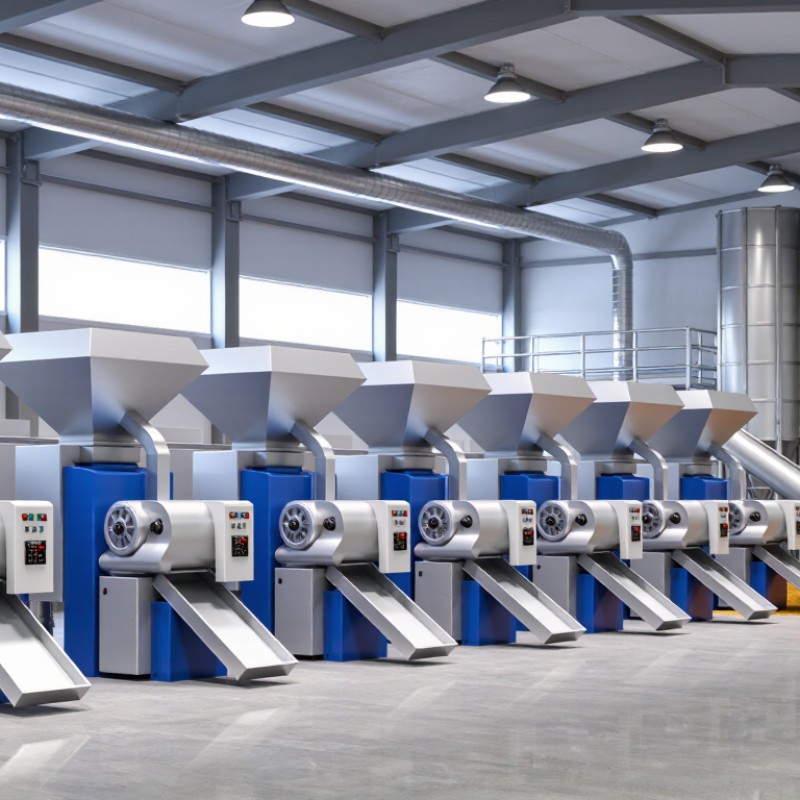
7 Best Feed Pellet Mills for Sale in 2026

How Feed Pellet Mills Work: 2–12 mm Dies and 70–90°C Conditioning

Feed pellet mills press conditioned mash through a rotating die, where rollers form compact cylinders. Die holes commonly range from 2 to 12 mm. Their diameter affects pellet size, production rate, and the pressure needed for extrusion. Choose a hole size for the animals and ration, not appearance alone. Smaller holes may require more energy. Larger holes can produce fragile pellets when the mash does not bind well. The die is not the whole story. Grind size and fiber content also matter.

Steam conditioning typically heats mash to 70–90°C, softening starch and helping particles bind. Measure temperature near the conditioner outlet, and keep steam and moisture steady. Too little moisture can leave dusty pellets; too much may clog the die or create soft output. Don’t chase the upper limit automatically. It is a guide, not a promise. Check fines, pellet durability, and motor load after adjustments, comparing the same feed batch where possible. Warm pellets may look firm, then crumble during handling. Small trials help, though results can vary with formulation, die wear, and room humidity.

Compare 7 Feed Pellet Mills by Capacity, Motor Power, and Energy Use

7 Best Feed Pellet Mills for Sale in 2026

Compare 7 Feed Pellet Mills by Capacity, Motor Power, and Energy Use

A useful comparison starts with the feed recipe, not the largest capacity on a sales sheet. These seven mill configurations cover different workloads; figures are indicative, since moisture, grinding, and die size affect output.

Compact flat-die mills often handle 50–150 kg per hour with 3–7.5 kW motors.

Heavy flat-die units may reach 150–400 kg per hour at 7.5–22 kW.

Mobile mills commonly produce 0.2–0.8 tonnes per hour with 7.5–30 kW.

Small ring-die mills may deliver 0.5–1.5 tonnes per hour using 22–55 kW.

Standard ring-die machines often suit 1–3 tonnes per hour and 55–132 kW.

High-throughput ring-die mills can reach 3–8 tonnes per hour with motors around 132–315 kW.

Variable-speed ring-die configurations, often around 1–3 tonnes per hour, may use 55–160 kW and help match operation to changing loads.

More motor power does not automatically mean more pellets. Not even close.

Compare energy use in kilowatt-hours per tonne at your intended production rate. Ask suppliers how they tested the stated capacity, and check whether the figure includes conditioning and conveying.

A low-load trial can mislead; so can a recipe unlike yours. I would treat any capacity estimate as provisional until a representative batch runs through the mill.

That extra test takes time, but it may reveal a poor fit before installation.

Match Die Diameter and Compression Ratio to Each Livestock Feed

For the 7 Best Feed Pellet Mills for Sale in 2026, compare die diameter and compression ratio before motor power. Alltech’s 2024 Agri-Food Outlook estimated global feed production at 1.29 billion metric tons in 2023. At that scale, poor sizing can mean more fines, wasted feed, and uneven intake. Small birds generally need narrower pellets; larger livestock can handle wider ones.

As practical starting points, poultry pellets often measure 2–3 mm, pig pellets 3–4.5 mm, and cattle pellets 6–8 mm. Adjust for animal age and feeding system. The compression ratio compares a die hole’s effective length with its diameter. A higher ratio usually adds friction and can improve pellet durability, but may reduce output or increase plugging risk. A lower ratio can raise throughput, yet leave softer pellets. Feed formulation matters too: fibrous mash behaves differently from grain-rich mash.

One caution: catalog ratios do not guarantee consistent pellets. The Feed Science review by Thomas and van der Poel in Animal Feed Science and Technology identifies formulation and processing conditions as key influences on physical quality. Test a small batch, then check pellet durability and fines after cooling. It is a little tedious. Still, that check can expose a die mismatch before full production.

Assess Pellet Durability, Fines, and Common 3–4 mm Poultry Pellets

When comparing feed pellet mills for sale, ask for measured durability and fines data from the same feed recipe. A shiny pellet can still crack during cooling, bagging, and transport. Request a durability test result, plus the tester type and sample conditions. ASABE Standard S269.5 describes methods for measuring pellet durability, density, and moisture; results are meaningful only when testing conditions are disclosed. Small details matter.

Fines deserve their own check. Screen a cooled sample and record the percentage that passes the chosen screen, rather than relying on appearance alone. There is no single fines threshold that suits every farm, formulation, or delivery system. A mill producing a high initial pellet rate may still create extra fines after handling. Test at the outlet and again after a realistic transfer. That comparison can be revealing.

For poultry, 3–4 mm pellets are common in grower and finisher diets. Aviagen’s 2022 Ross Broiler Nutrition Specifications list this diameter range for those stages. Treat it as a practical reference, not a universal requirement: bird age, feed formulation, and feeding equipment all matter. Ask suppliers to run your intended recipe, then inspect pellet length, breakage, and fines after cooling. I would not choose a mill from one attractive sample; repeatability is the harder question.

Select a 2026 Mill by Throughput, Maintenance, Safety, and Total Cost

When comparing the 7 best feed pellet mills for sale in 2026, start with usable throughput, not the largest number on a brochure. Output changes with feed mix, moisture, pellet diameter, and operator skill. Ask for a test using your own ingredients, then compare the result with your daily production target. Leave some capacity in reserve. A machine running flat out all day may leave little room for wear or demand spikes.

Maintenance access matters on ordinary workdays. Check how easily staff can inspect rollers, change dies, clear buildup, and reach grease points. Look for fixed guards, accessible emergency stops, and clear shutdown instructions. Small details count. A difficult service routine can turn a short repair into hours of downtime. Review the parts list and delivery times before choosing.

Tips: Estimate total cost across several years, including electricity, labor, dies, rollers, spare parts, and lost production during repairs. Compare the same assumptions for each mill. Ask what routine maintenance requires and whether your team can perform it safely. A low purchase price can become expensive. And honestly, estimates are imperfect; keep a contingency for wear parts and service delays.