
1-208-754-4884

7 Self Locking Connector Buying Tips?

A Self Locking Connector should do more than click into place. It must stay secure under vibration, repeated handling, and the specific conditions of your equipment. Before comparing products, identify the cable type, current and voltage needs, operating temperature, and available space. A connector that fits the drawing may still be awkward to grip with gloves or difficult to inspect after installation.

Pay close attention to the locking mechanism. Check how it engages, how much force release requires, and whether the connection gives a clear indication that it is fully seated. Small details matter. A recessed latch can be hard to reach; a loose fit can create doubt during maintenance. Review material specifications and test data, too, rather than relying on appearance or a broad “industrial grade” claim.

“Choose for the real operating conditions, not just the catalog description.” This is an editorial buying principle, not a verified quotation from a named industry expert. No source was provided for an attributable expert statement, so assigning one would risk misrepresenting their words. Use the tips below to assess compatibility, locking performance, durability, and supplier support. Some trade-offs remain. A stronger lock may take longer to release, and the cheapest option may not be the easiest to service. Examine the connector alongside its cable, panel, and maintenance routine before making a decision.
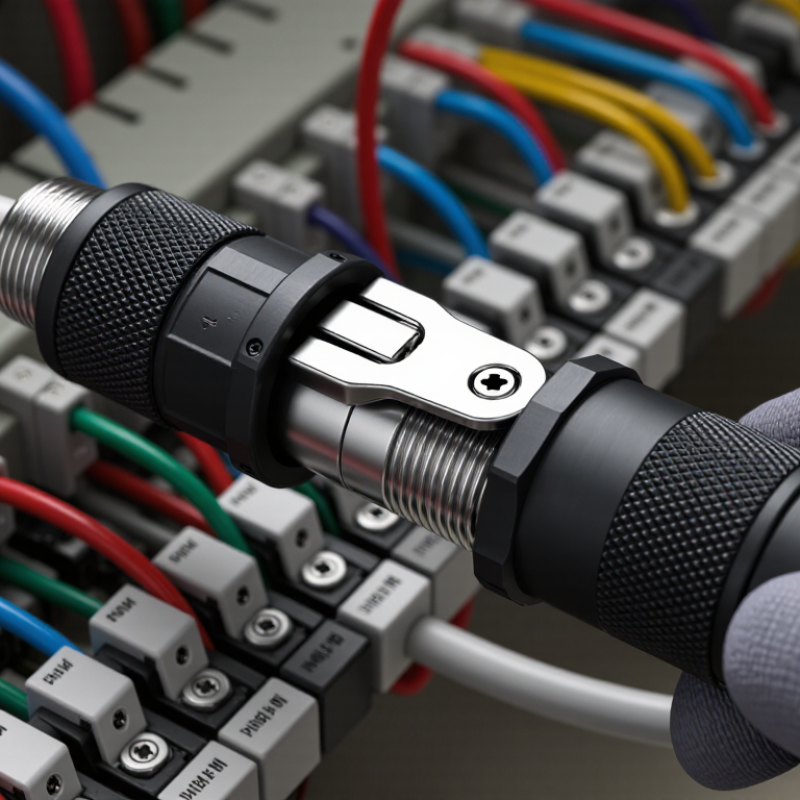
7 Self Locking Connector Buying Tips?

Define the Locking Style and Specify Retention Tests Under IEC 60512

7 Self Locking Connector Buying Tips?

Define the locking style before comparing self-locking connectors. Threaded, bayonet, push-pull, and latch designs resist separation differently. A threaded coupling may suit a panel exposed to vibration; a push-pull design can be easier to operate with gloved hands. Small detail, big consequence. Check whether the connector can be released accidentally when a cable is pulled sideways.

Specify retention tests by name, direction, and acceptance limit. IEC 60512 provides standardized connector test methods, including mechanical tests in its relevant parts. Use the applicable method to measure retention or coupling performance, and state the required force in newtons, conditioning, sample count, and failure criteria. Do not assume one universal force limit: the connector design and application determine what is acceptable. That distinction is easy to miss.

Ask suppliers for test records, not just a claim of “secure locking.” Review measured force before and after the specified mating cycles, and note whether vibration or temperature conditioning is required. Compare like with like: a peak axial pull value cannot prove resistance to torsion or side loading. IEC 60512 test data is useful only when the method and setup are stated. I would also question any result without raw readings; tidy averages can hide a weak sample.

Match Voltage, Current, and Contact Resistance to IEC 60512 Test Data

When comparing self-locking connectors, check voltage and current ratings against the actual load, not just the headline figures. A connector may carry a stated current under specific temperature and wiring conditions. Look for those conditions in the test data. IEC 60512 reports can show how electrical properties were measured, but the test setup matters. One number is not the whole story.

For contact resistance, compare the stated limit with the reported test method and sample condition. Low resistance helps reduce voltage drop and local heating, especially in compact assemblies. Check whether measurements were taken before or after mating cycles, and whether temperature rise was assessed at the intended current. Small details matter. A test at room temperature may not reflect a warm enclosure or tightly bundled cables.

Also confirm that voltage, current, and resistance figures refer to the same connector configuration. Contact count, wire size, and termination method can change performance. Ask for the relevant IEC 60512 test report if the datasheet gives only a brief rating. Then compare its limits with your operating margin, rather than treating a pass result as a guarantee. Specs can still leave gaps. I would flag any unclear test conditions before approving a part, even when the numbers look comfortable.

Choose Sealing by IEC 60529: IPX7 Tests Immersion at 1 m for 30 Minutes

For a self-locking connector used near washdown zones or exposed outdoor equipment, treat IPX7 as a specific test result, not a universal waterproof promise. IEC 60529:2013 defines the IPX7 immersion test as submersion in water at a depth of 1 metre for 30 minutes under specified conditions. The “X” means the rating does not state a dust-protection level. Nor does IPX7 alone confirm resistance to water jets, saltwater, detergents, or repeated immersion. That distinction is easy to miss.

Ask suppliers for the IEC 60529 test report, and check whether the tested assembly matches your use: connector halves fully mated, seals installed, and cable exits tightened as specified. A loose backshell or nicked O-ring can create a leak path, even when the connector body passed testing. Check the lab’s ISO/IEC 17025 accreditation scope, too; accreditation should cover the relevant test. For a real installation, inspect the seal after mating and consider testing the complete cable-and-connector assembly. Useful, but not perfect: a single 30-minute test cannot reproduce every field condition.

Compare Rated Mating Cycles and Mechanical Durability Test Results

A self-locking connector’s rated mating-cycle life is useful, but only when the test conditions match your application. A rating of 500 cycles may sound adequate until equipment is disconnected several times each day. Check whether the manufacturer tested complete mating and unmating cycles, and whether the locking mechanism was operated normally. Small differences matter.

Look beyond the headline number. Review test reports for contact resistance, retention force, and visible wear after cycling. Were samples tested dry, or exposed to vibration, dust, or temperature changes? A connector that still mates after repeated use may nevertheless develop loose contacts or a weakened latch. Ask for the test method, sample size, and pass criteria. Details count.

In practice, inspect the connector’s shell and latch after testing, not just its electrical readings. A cracked housing, flattened spring, or latch that needs extra pressure can signal trouble. Compare results under realistic handling conditions, including slight cable pull during disconnection. Lab tests cannot capture every hurried service call. That limitation is easy to overlook. If data is incomplete, treat the cycle rating as a starting point, then verify durability with a small trial using your actual cable and mounting setup.

Verify Connector Materials Against UL 94 Flammability Classifications

Self-locking connector buyers should verify the housing resin’s UL 94 rating at the actual molded-wall thickness. A V-0 label alone is not enough. UL 94’s vertical-burning criteria cap each V-0 afterflame period at 10 seconds. V-1 and V-2 allow up to 30 seconds. V-2 also permits flaming droplets to ignite the cotton indicator. These are test outcomes, not guarantees of identical behavior inside a finished connector. Easy to overlook.

Check the exact resin grade, color, and minimum rated thickness in the supplier’s UL-recognized material record. Compare those details with the drawing and molding specification. UL Yellow Card records can support this cross-check; a rating for a thicker specimen may not apply to a thin latch wall. Ask for current documentation tied to the supplied grade, rather than a broad resin-family data sheet. Inspect adjacent wire insulation, seals, and strain reliefs too. The housing rating does not certify the assembled connector. That distinction matters.

7 Self Locking Connector Buying Tips? - Verify Connector Materials Against UL 94 Flammability Classifications

Buying tip Material or feature to check UL 94 detail What to verify
1. Identify every polymer part Connector housing, insert, contact carrier, seal, and any molded backshell UL 94 classifications apply to tested plastic materials, not to metal locking hardware by itself. Ask which specific parts and material grades have a documented classification.
2. Match the rating to the application Molded housing or insulating components near electrical equipment V-0, V-1, and V-2 are vertical-burning classifications; HB is a horizontal-burning classification. They are different test classifications. Confirm the specification calls for the classification you need; do not treat the labels as interchangeable.
3. Check the tested thickness Thin housing walls, ribs, and other molded sections A material’s UL 94 result can depend on specimen thickness; a classification at one thickness does not automatically establish the same result at another. Compare the listed test thickness with the connector’s relevant wall thickness and material documentation.
4. Confirm the exact material grade Resin type, grade, and formulation used for the molded parts Different grades or formulations of the same base polymer may have different flammability results. Request documentation that identifies the material grade used in the offered connector, rather than relying on a generic polymer name.
5. Review seals and secondary plastics separately Elastomeric seals, grommets, potting materials, and cable-entry parts A housing’s classification does not establish the classification of a different material used elsewhere in the connector. Check whether these parts have separate material data and whether their ratings meet the end-use requirements.
6. Verify the evidence, not just the claim Material records or applicable certification documentation A UL 94 material classification is a flammability result under specified test conditions; it is not, by itself, a certification of the complete connector or its installation. Request traceable records showing the material, classification, and applicable thickness, then check any separate product-level requirements.
7. Consider the installed assembly Connector, cable, nearby materials, mounting, and operating environment UL 94 does not determine the full fire safety or electrical suitability of an assembled end product. Assess the connector within the complete application and check relevant product standards, temperature limits, and installation requirements.

Note: UL 94 classifications describe material performance in specified laboratory tests. Confirm the required classification and applicable thickness against the end product’s design and compliance requirements.