What are the Benefits of Die Casting Molds for Manufacturing?
Die Casting Molds play a crucial role in the manufacturing industry. These molds are designed to create high-quality metal parts. They enable mass production with remarkable precision and reduced waste. By using die casting, manufacturers can achieve complex shapes that traditional methods struggle with. This technique ensures uniformity across batches, which is essential in many applications.
One key benefit of Die Casting Molds is their durability. These molds can withstand high pressure and temperature, making them suitable for various metals. Furthermore, they reduce production time significantly. However, they require a high initial investment. This can be challenging for small manufacturers. Yet, the long-term savings on materials and labor often offset this cost.
Another aspect to consider is the environmental impact. Die casting reduces waste compared to other methods, promoting sustainability. However, not all materials used in die casting are eco-friendly. This presents an area for improvement. As the industry evolves, innovations in Die Casting Molds can lead to greener options. This encourages manufacturers to rethink their processes and make better choices.
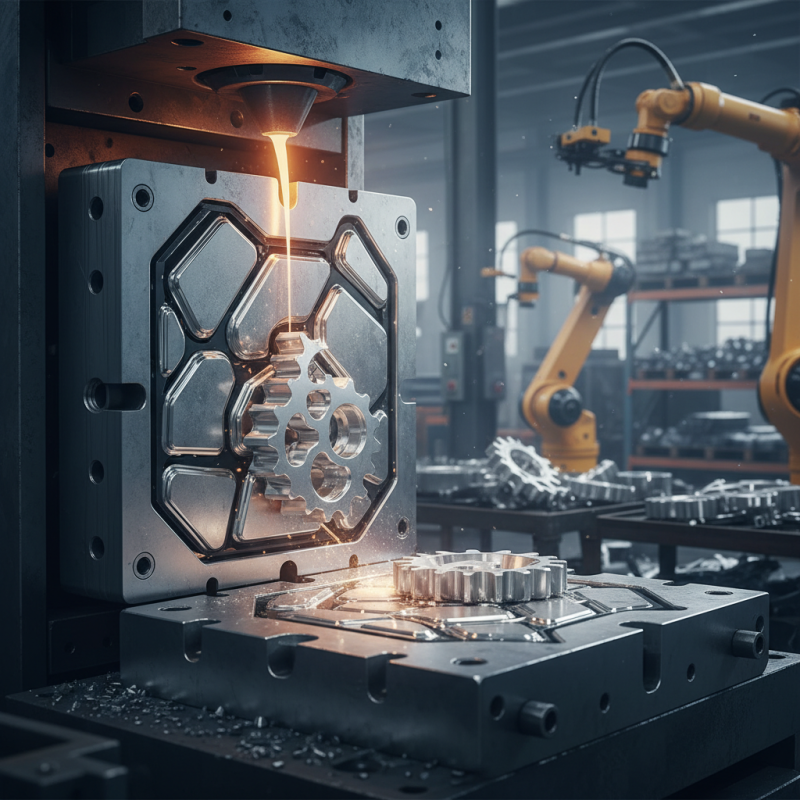
Benefits of Die Casting Molds for Enhanced Production Efficiency
Die casting molds offer significant advantages for production efficiency. They can significantly reduce cycle times due to the rapid cooling and solidification of molten metal. According to a study by the American Foundry Society, die casting can achieve production rates of up to 60 parts per hour, which is much higher compared to traditional methods. This high throughput can lead to lower labor costs and increased output.
Additionally, die casting molds produce highly detailed and consistent parts. The process allows for tight tolerances, often within ±0.005 inches. This precision minimizes the need for extensive post-processing or quality checks. However, achieving this level of accuracy requires careful design and maintenance of molds. Even minor imperfections can affect overall efficiency and product quality.
Despite these benefits, the initial investment in die casting molds can be substantial. The costs involved in creating high-quality molds need to be justified by the production volume. Companies must analyze their needs carefully. If production volume is low, it may take time to realize the benefits. Thus, understanding the balance between upfront costs and long-term gains is critical for manufacturers.
Cost Savings through Reduced Material Waste in Die Casting Processes
Die casting molds offer significant cost savings through reduced material waste. In traditional manufacturing, excess materials often end up as scrap. However, die casting allows for precise control over the amount of metal used. This efficiency leads to thinner, stronger parts with less waste.
By optimizing the design and material flow, manufacturers can create intricate shapes without the need for extensive machining. This process minimizes leftover materials. It’s important to remember that not all designs are perfect from the start. Continuous testing and optimization are key to improving efficiency. Gathering feedback from the manufacturing processes can enhance mold designs further.
Tips: Aim for simplicity in your designs. Complex shapes might seem appealing, but they can lead to increased waste. Regularly review your mold efficiency to identify areas of improvement. Sometimes, less is indeed more when it comes to die casting design.
Improved Precision in Manufacturing with High-Quality Die Cast Mold Designs
Die casting molds play a crucial role in enhancing manufacturing precision. High-quality die cast mold designs can significantly reduce production errors. This precision stems from the ability to create complex shapes with tight tolerances. When used correctly, the molds ensure uniformity across all produced parts. However, achieving this level of precision requires ongoing refinement in design and technique.
A common challenge is maintaining the integrity of molds under high pressure. Over time, molds can wear down, leading to slight variations in shape. This can affect the final product's fit and function. Manufacturers must regularly inspect and replace molds to avoid costly mistakes. Effective maintenance strategies are vital in addressing these issues.
Investing in advanced design technology can yield better mold designs. Computer-aided design (CAD) software allows for detailed simulations before mold production. Yet, not all manufacturers utilize these technologies effectively. Some continue to rely on outdated methods, which can hinder improvement. Balancing tradition and innovation is essential for true manufacturing advancement.
Increased Production Speed: The Advantage of Die Casting Over Other Methods
Die casting molds offer remarkable advantages when it comes to manufacturing. One of the key benefits is the increased production speed they provide. According to recent industry reports, die casting can produce thousands of parts in a single day. This is significantly faster than traditional methods like sand casting or machining. For example, die casting typically completes a cycle in 30 to 90 seconds. In comparison, other methods may take several minutes for similar results.
The efficiency of die casting comes from its ability to create complex shapes quickly. It allows for tighter tolerances and better surface finishes, reducing the need for extensive post-processing. A study by the American Foundry Society shows that die casting can achieve dimensional tolerances of ±0.005 inches. This precision can cut down the time and cost associated with adjustments. However, relying solely on this method raises concerns. The initial investment for die casting molds is high, and there is potential waste if designs are not optimized.
Furthermore, the high production speed may lead to overlooked quality checks. Fast production can compromise the time spent on quality assurance processes. Some manufacturers may feel pressure to push production limits, leading to defects in the final product. Finding a balance between speed and quality remains a challenge within the industry.
Versatility of Die Casting Molds Across Various Industries and Applications
Die casting molds play a crucial role in various industries. Their versatility allows manufacturers to create complex shapes with high precision. In automotive production, die casting molds produce intricate engine blocks. These molds ensure durability and performance, meeting strict industry standards.
In the aerospace sector, die casting molds are equally important. They are used to manufacture lightweight components that resist corrosion. This enhances the safety and efficiency of aircraft. Moreover, the electronics industry benefits from die casting as well. Molds help create intricate housings for devices, supporting advanced technologies.
Despite their advantages, challenges exist. Maintaining molds can be costly. Small defects can lead to significant issues in production. Manufacturers need to invest in regular maintenance and quality checks. Effective management of these aspects is vital for long-term success in die casting. The need for continuous improvement and innovation remains.