
1-208-754-4884

What Are the 2026 Best Granite Support Blocks?

Choosing the 2026 best granite support blocks requires more than comparing prices or polished product photos. These blocks must provide steady, even support for heavy granite slabs during fabrication, transport, installation, and storage. A reliable option should resist crushing, moisture, vibration, and surface wear. It should also fit the slab’s weight, thickness, and working environment.

The strongest evaluations examine block dimensions, load ratings, material consistency, and contact surfaces. Dense rubber, reinforced polymer, and carefully finished composite materials may perform differently under pressure. Sharp edges can mark a polished surface. Uneven blocks can create stress points. Small details matter. Experienced fabricators also check whether blocks remain stable on wet floors or uneven worktables. Manufacturer testing helps, but real workshop feedback adds valuable context.

There is no universal winner. A support block that works well for a kitchen countertop may be unsuitable for a thick commercial slab. Some ratings may reflect controlled conditions rather than daily workshop use. That limitation deserves attention. Before purchasing, compare verified specifications with your actual lifting equipment, slab dimensions, and handling routine. The best granite support blocks should balance strength, grip, durability, and replaceability without creating new risks. This guide explores leading options for 2026, while recognizing that practical results can vary between brands, surfaces, and users. Expect useful comparisons, but question impressive claims. Real performance is what remains after repeated use.
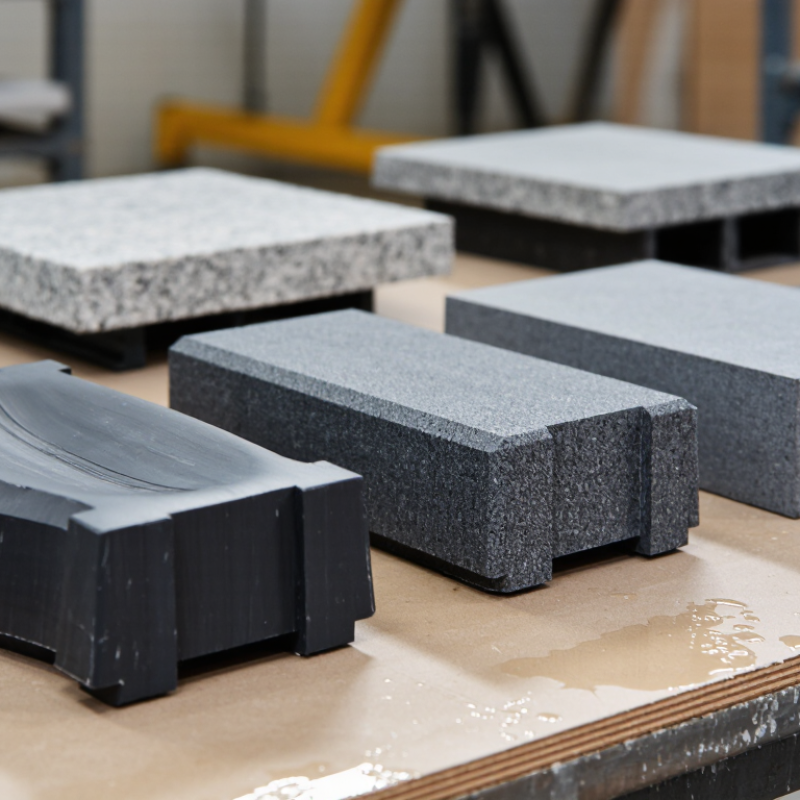
What Are the 2026 Best Granite Support Blocks?

What Granite Support Blocks Are and Why They Matter

Granite support blocks are solid, cut pieces of natural stone used to carry, raise, or stabilize heavy surfaces. They may support countertops, steps, equipment bases, garden structures, or masonry components. Unlike thin decorative stone, these blocks are designed to transfer weight into a stable foundation.

Their importance comes from strength and stability. Granite resists compression, moisture, insects, and temperature changes. It also stays firm when properly placed on compacted ground or a prepared concrete base. The block must match the load, span, and installation conditions. A small block under excessive weight can create pressure points and cause cracks. Leveling matters too.

Details deserve attention.

Experienced installers inspect each block for deep fissures, uneven edges, and hidden weakness. Natural stone is not perfectly uniform. Color variation is normal, but structural fractures are not. A rough underside can improve grip, while a polished face may slide under vibration or rain. Drainage should remain clear around outdoor supports.

I once underestimated how quickly soft soil could shift a heavy stone assembly. That mistake changed my inspection routine. Now, I check soil firmness, contact area, and water movement before selecting dimensions. For structural applications, a qualified engineer should verify the design. “Strong” is not the same as “suitable.”

Key Features of High-Quality Granite Support Blocks

What Are the 2026 Best Granite Support Blocks?

High-quality granite support blocks should protect surface-plate accuracy, not merely carry weight. ASME B89.3.7-2013 emphasizes stable support systems that limit plate deflection during measurement. ISO 8512-2 also addresses granite surface plates and their verification. These standards make support geometry a practical quality issue.

Look for dense, fine-grained granite with consistent contact surfaces. Each block should resist crushing, moisture changes, and long-term wear. A broad, polished contact face helps distribute load evenly. Adjustable leveling hardware is useful when floors settle or temperature changes. However, adjustment alone cannot correct poor block placement. That is an easy mistake to make. Experienced technicians often check contact marks, plate movement, and repeat readings before accepting a setup. Temperature stability matters too. A sudden 2°C change can affect large precision assemblies, especially when the plate and supports warm differently.

Tips: Match block height and load capacity to the plate. Keep contact faces clean and dry. Inspect for chips every month. Record leveling readings. Recheck after relocating the plate. NIST dimensional metrology guidance repeatedly links reliable results with controlled environment, traceability, and documented checks. In practice, the “best” block is not always the hardest one. It is the block that maintains stable contact, supports the intended load, and fits the laboratory’s verification routine. A perfect specification can still fail in a poorly maintained workspace.

What Are the 2026 Best Granite Support Blocks? - Key Features of High-Quality Granite Support Blocks

Evaluation Dimension Recommended Quality Benchmark Typical Granite Range or Option Why It Matters How to Verify
Compressive Strength Select material with compressive strength suitable for the calculated service load and safety factor. Approximately 100–250 MPa for many sound granites; actual values vary by stone and test method. Helps the block resist crushing under concentrated or continuous loads. Request an independent compressive-strength test report for the specific lot.
Water Absorption Lower absorption is preferred for outdoor, wet, and freeze–thaw applications. Commonly about 0.1%–1.0% by mass, depending on porosity and granite type. Lower moisture uptake reduces staining, weathering, and freeze-related damage risk. Check a water-absorption result tested to the applicable stone standard.
Density Use dense, uniform stone without visible voids, open seams, or weak inclusions. Typically about 2,630–2,750 kg/m³. Higher density generally supports durability and stable performance under load. Compare the declared density with the test report and inspect the cut faces.
Dimensional Accuracy Choose blocks machined to project tolerances, with parallel bearing faces. Typical custom machining tolerance: approximately ±1–3 mm, subject to size and specification. Accurate dimensions improve alignment and distribute pressure more evenly. Measure length, width, height, squareness, and face flatness on delivery.
Bearing-Face Flatness Top and bottom faces should be sawn, ground, or polished as required by the application. Ground or precision-machined faces are preferable for equipment and structural leveling. Reduces rocking, point loading, and uneven contact stresses. Use a straightedge, feeler gauge, or specified dimensional inspection method.
Surface Finish Match the finish to the required friction, appearance, and contact condition. Sawn, flamed, bush-hammered, honed, or polished surfaces are common options. Textured finishes can improve slip resistance, while smooth faces aid precise leveling. Confirm the specified finish and check for chips, cracks, and uneven treatment.
Abrasion Resistance Use dense granite with a durable finish where blocks are exposed to movement or traffic. Granite commonly has a Mohs hardness of approximately 6–7. Helps the surface resist wear from handling, vibration, and repeated contact. Review abrasion testing when the block will be used in high-wear conditions.
Thermal Stability Allow for thermal movement in the design, especially where blocks support machinery or outdoor equipment. Approximate linear thermal expansion: 5–9 × 10⁻⁶/°C for many granites. Limits alignment changes and stress caused by temperature variation. Use project-specific thermal data when temperature changes are significant.
Crack and Defect Control Blocks should be free from through-cracks, open veins, delamination, and unstable inclusions. Natural color variation is acceptable; structural discontinuities require engineering review. Defects can reduce effective load capacity and accelerate failure. Carry out visual inspection and, for critical uses, ultrasonic or other non-destructive testing.
Load Distribution Design Size the block so the supported load remains within the allowable bearing capacity of the stone and base. Common custom sizes include approximately 100–300 mm in width or height, but dimensions must be engineered. A larger contact area lowers bearing pressure and improves stability. Calculate load, contact area, eccentricity, and safety factor before installation.
Outdoor Durability Select low-absorption stone and a finish appropriate for the local climate. Granite is generally suitable for outdoor use when properly selected and installed. Improves resistance to rain, sunlight, temperature changes, and freeze–thaw exposure. Review regional freeze–thaw requirements and provide drainage where needed.
Installation Safety Use stable, level foundations and lifting methods suitable for the block weight. Granite weighs roughly 2.63–2.75 tonnes per cubic metre. Proper handling reduces dropping hazards, instability, and damage during placement. Confirm the mass, lifting points, base condition, and applicable site safety procedures.

Note: Granite properties vary by quarry, stone type, orientation, moisture condition, specimen size, and test method. Final block dimensions and allowable loads should be confirmed by a qualified engineer for the intended application.

How to Compare the Best Granite Support Blocks in 2026

Comparing the best granite support blocks in 2026 requires more than checking color and price. Start with verified load capacity, block dimensions, and surface flatness. ASTM C170/C170M evaluates compressive strength, while ASTM C880/C880M measures flexural strength. Ask suppliers for current test reports, not general claims. A block supporting a 500-kilogram slab needs a clear safety margin, especially during lifting or vibration.

Material consistency also matters. The U.S. Geological Survey’s Mineral Commodity Summaries identifies granite as a major dimension-stone material, but natural variation remains unavoidable. Inspect grain structure, cracks, edge chips, and moisture staining under strong light. Dense granite usually feels stable and resists abrasion, yet density alone does not prove safe performance. Compare water absorption data from ASTM C97 testing. Check tolerances against your machine or storage frame. A two-millimeter mismatch can create rocking, point loading, or uneven stress. That detail is easy to overlook.

Tips: Measure the actual contact area before ordering. Prefer matched pairs with documented dimensions and batch traceability. Place a thin, non-slip interface only when the equipment manufacturer permits it. Avoid blocks with repaired corners or hidden filling. In my view, visual inspection is useful, but insufficient. Recheck after delivery. Granite can look perfect and still fail a closer review. Cost comparisons should include replacement risk, inspection time, and handling weight—not only the invoice price.

Choosing Blocks for Different Granite Installation Needs

What Are the 2026 Best Granite Support Blocks?

Choosing Blocks for Different Granite Installation Needs

The best granite support block depends on the slab, span, and installation environment. A kitchen overhang needs different support than a stair tread or outdoor stone bench. Measure the load path carefully before choosing a block. Solid, non-compressible materials usually provide steadier support than soft plastic. Check the manufacturer’s load rating and match it to the granite thickness. Never judge strength by appearance alone.

Short spans may need compact blocks with precise height control. Larger slabs require wider bearing surfaces and closer support spacing. For wet areas, choose blocks that resist moisture, corrosion, and repeated temperature changes. Uneven floors may benefit from adjustable systems, but adjustment should not replace proper leveling. Granite can crack under concentrated pressure. A thin leveling pad may help distribute contact, but it must suit the load.

Tips: Place supports directly beneath structural stress points, not only near visible edges. Use a straightedge to find rocking or gaps. Keep the granite clean during fitting, since grit can create pressure spots. Leave room for natural movement where the surrounding design requires it. On one installation, I once trusted a visually flat surface too quickly. It later needed correction. That experience reinforced a simple lesson: recheck measurements after dry fitting, especially near corners and seams. When uncertain, have a qualified stone professional review the span, block spacing, and anchoring method.

Safe Installation, Maintenance, and Replacement Guidelines

What Are the 2026 Best Granite Support Blocks?

The best granite support blocks are dense, stable, and rated for the slab’s actual load. Choose non-compressible stone, engineered polymer, or structural metal supports with documented capacity. Avoid soft wood, damaged masonry, and unverified spacers. The Natural Stone Institute’s Dimension Stone Design Manual stresses continuous load paths and adequate bearing surfaces. This matters because granite can weigh more than 18 pounds per square foot at 3 centimeters thick. Measure twice.

During installation, place supports on a level, firm base. Keep each block fully seated, with no rocking or visible gaps. Use mechanical lifting equipment for large slabs, not improvised leverage. The U.S. Bureau of Labor Statistics reported 1,075 fatal construction injuries in 2023, showing why lifting plans and exclusion zones deserve attention. A qualified installer should verify span, overhang, joint stability, and nearby plumbing or electrical risks. Do not rely on appearance alone.

Inspect supports every six months and after impact, settlement, or water exposure. Look for cracks, corrosion, crushed edges, staining, and uneven granite joints. Small cracks matter. Replace any block with permanent deformation or uncertain capacity. Replacement should follow the original load path, with temporary supports installed before removing the old block. Record dimensions, material, inspection dates, and observed movement. I would not treat manufacturer-style load figures as universal; actual performance depends on span, contact area, and installation quality. Consult a structural professional when the slab carries heavy equipment or has an unusual overhang.

Article Source: