10 Best Hastelloy Alloy Tube Suppliers for Global Buyers
Buying Hastelloy Alloy Tube is rarely a simple price comparison. Global buyers must evaluate corrosion resistance, alloy grade, dimensions, testing, and delivery reliability. A tube that looks suitable on a quotation may fail under acids, chlorides, heat, or repeated pressure cycles. Practical details matter.
This guide reviews ten leading Hastelloy tube suppliers for international purchasing teams. It considers product range, manufacturing capability, inspection procedures, certifications, traceability, and communication quality. Common grades may include Hastelloy C-276, C-22, B-2, and related nickel-based alloys. However, availability differs between suppliers. Some focus on seamless tubes, while others provide welded products, custom sizes, or finished components. Buyers should compare technical data with project specifications and recognized standards, such as applicable ASTM requirements.
Look closely at material certificates, heat numbers, dimensional reports, and independent inspection options. Ask how suppliers protect tubes during cutting, packing, and ocean transport. A scratched surface or mixed batch can create costly problems later. Lead time also deserves careful attention. “In stock” may not mean ready for export.
No supplier is perfect. A polished website proves little. Even careful screening has blind spots. This overview offers a structured starting point, not a substitute for technical verification. Confirm grade, application temperature, pressure conditions, testing scope, payment terms, and after-sales support before placing an order. Reliable suppliers welcome precise questions. That response is informative in itself.
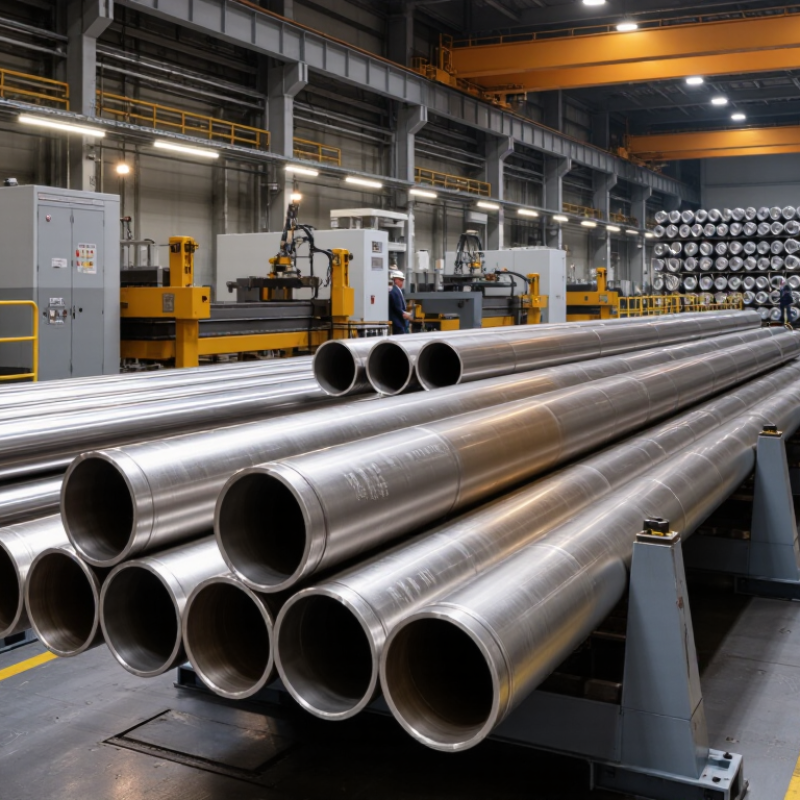
What Are Hastelloy Alloy Tubes and Why Are They Used?
Hastelloy alloy tubes are nickel-based tubes containing significant chromium and molybdenum. Some grades also include tungsten or iron. This chemistry helps the tube resist pitting, crevice corrosion, oxidation, and stress corrosion cracking. The material is often selected for chemical reactors, heat exchangers, scrubbers, and sour-gas equipment. It performs well where hot acids and chlorides attack ordinary stainless steel.
The NACE IMPACT study estimated that corrosion costs the global economy about US$2.5 trillion annually, equal to roughly 3.4% of global GDP. Hastelloy tubes cannot remove that entire risk. They can, however, extend service life in severe process environments. A tube carrying hot hydrochloric acid may face sudden wall loss at a weld or tube sheet. Proper alloy selection matters. So do solution annealing, weld qualification, and positive material identification. ASTM B622 and B626 provide widely used specifications for seamless and welded nickel-alloy tubes.
Nickel supply also influences purchasing decisions. The U.S. Geological Survey reported approximately 3.6 million metric tons of global nickel mine production in 2023. Prices and availability can therefore change project budgets. Higher alloy content usually means higher material cost, fabrication cost, and inspection demands. That assumption is not perfect. A cheaper tube may create repeated shutdowns, while an expensive tube may still fail without correct design. Buyers should compare corrosion data, operating temperature, pressure, weld condition, and inspection records before approving a supplier. Small details matter.
How to Evaluate Hastelloy Tube Suppliers for Global Purchasing
How to Evaluate Hastelloy Tube Suppliers for Global Purchasing
A reliable supplier should prove more than attractive pricing. Request heat-level traceability, chemical analysis, mechanical results, and dimensional records for every tube lot. ASTM B622 covers seamless nickel-alloy tubes, while ASTM B626 addresses welded tubes. The supplier should identify the exact standard edition used. Small detail, but important.
USGS Mineral Commodity Summaries 2025 estimated global nickel mine production at about 3.7 million metric tons in 2024. This scale does not guarantee stable tube quality. Nickel availability, melting location, and production capacity still affect delivery risk. Ask for recent production evidence, realistic lead times, and contingency plans for restricted raw material. Fast promises deserve careful questions.
For a shortlist of ten suppliers, compare certificates line by line. Check alloy designation, tube size, wall tolerance, hydrostatic testing, PMI, and non-destructive examination. Confirm whether an independent laboratory can verify results. ISO 9001 certification supports process control, but it is not proof of metallurgical performance. A clean certificate can still hide weak sampling. I would also request two recent customer references from similar corrosive-service applications. That step takes time. It often reveals more than a polished website.
Key Standards, Grades, and Quality Checks for Hastelloy Tubes
Hastelloy tubes serve demanding equipment exposed to heat, acids, chlorides, and high pressure. Global buyers should evaluate suppliers through documented standards, material expertise, and repeatable inspection practices. A low price means little when chemistry or wall thickness is inconsistent.
Common specifications include ASTM B622 for seamless tubes and ASTM B626 for welded tubes. ASME SB622 and SB626 may apply to pressure equipment projects. Grade selection depends on service conditions. Alloy C276 offers strong resistance to many aggressive environments. Alloy C22 performs well against oxidizing media and localized corrosion. Alloy B2 suits reducing acids but requires careful welding control. Confirm the UNS designation, temper, dimensions, and heat-treatment condition before ordering.
Do not trust certificates alone. Request heat numbers, complete mill test reports, and positive material identification records. Check nickel, chromium, molybdenum, and tungsten levels against the specified range. Inspect tube length, outside diameter, wall thickness, ovality, and surface condition. Hydrostatic or pneumatic testing may be required, while eddy-current testing can reveal discontinuities. Welded tubes deserve extra attention at the seam and heat-affected zone. Traceability must continue from raw material to packing.
In practice, packaging often gets overlooked. Tubes need clean caps, dry wrapping, and protection from dents. Supplier audits, sample approval, and independent inspection can reduce surprises. No checklist is perfect. A rushed inspection can still miss a subtle defect. Record every deviation and question unclear test results before shipment.
Top Hastelloy Alloy Tube Suppliers for International Buyers
For international buyers, the best Hastelloy alloy tube suppliers offer more than attractive prices. They provide traceable material certificates, stable production capacity, and clear export documentation. Buyers should check alloy grades, tube dimensions, wall thickness, and delivery tolerances before placing an order. Hastelloy tubes must withstand severe corrosion, heat, and chemical exposure. Supplier experience matters here.
Ask for recent inspection reports, hydrostatic test records, and independent laboratory results. A reliable supplier should explain melting routes, heat treatment, surface finishing, and packaging methods. Wooden cases, sealed plastic wrapping, and moisture protection can prevent damage during long ocean shipments. Small details matter. Communication speed also reveals operational discipline. Delayed answers may signal weak technical support, although this is not always true.
International projects often require custom lengths, welded or seamless construction, and strict documentation formats. Confirm these points in writing. Compare production lead times, minimum order quantities, payment terms, and after-sales handling. Visiting a factory can provide useful evidence, but a polished tour proves little by itself. I would also request samples from different batches. One successful sample cannot confirm long-term consistency. That limitation deserves attention.
The strongest suppliers usually combine metallurgical knowledge with practical export experience. They understand customs paperwork, protective packing, and destination-specific requirements. Buyers should still verify every claim through test records and contractual inspection clauses. Trust is useful. Evidence is better.
How to Compare Pricing, Delivery, and Technical Support
10 Best Hastelloy Alloy Tube Suppliers for Global Buyers
How to Compare Pricing, Delivery, and Technical Support
Comparing Hastelloy alloy tube suppliers requires more than checking the lowest quotation. Request a clear price breakdown for tube size, wall thickness, quantity, testing, packaging, and freight. Include inspection fees and documentation costs. Cheap is not cheap. A reliable quotation should state the alloy grade, applicable standard, dimensional tolerances, and certificate requirements. Ask whether the price includes positive material identification, hydrostatic testing, or third-party inspection.
Delivery claims also need careful checking. Confirm whether the tubes are ready stock, semi-finished, or produced after order confirmation. Ask for a realistic manufacturing schedule, not only a promised shipping date. Review minimum order quantities and the supplier’s ability to handle partial shipments. In my experience, small details matter, such as moisture-resistant packaging and protective end caps. A delayed test report can hold up an entire project.
Technical support separates a trader from a capable supplier. The team should review drawings, corrosion conditions, operating temperature, and connection methods. They should explain whether the selected grade fits the application. Request sample certificates and traceability records before placing a large order. Ask for previous inspection procedures, but protect confidential project information. Some suppliers answer quickly but provide shallow advice. That is worth questioning. A practical comparison sheet can score price, delivery accuracy, document quality, response time, and corrective-action support. No supplier scores perfectly, including those with strong technical teams. Reliability often appears after a problem, not during the sales call.
10 Best Hastelloy Alloy Tube Suppliers for Global Buyers
This anonymous benchmark compares supplier profiles using three practical purchasing criteria: price competitiveness, average delivery lead time, and technical support. Price is shown as a normalized index where 100 represents the lowest benchmarked cost; delivery is measured in working days; technical support is scored from 0 to 100 based on documentation, material certification, and engineering response capability.