2026 Best Injection Machine Robot for Your Manufacturing Needs?
The rising demand for efficiency in manufacturing has spotlighted the Injection Machine Robot industry. According to a recent report by MarketsandMarkets, the global market for injection molding machines is projected to reach USD 12.3 billion by 2026, showcasing a compound annual growth rate (CAGR) of 4.8%. These robots enhance production speed, reduce labor costs, and ensure product precision, thus meeting the needs of modern manufacturing environments.
Expert Mark Thompson, a leading figure in automation technology, states, “Injection Machine Robots are revolutionizing the way manufacturers operate.” His words encapsulate the shift toward automation. Companies now face pressure to adapt quickly or risk falling behind. The integration of Injection Machine Robots not only speeds up production but also brings challenges. Implementing advanced robotics often requires significant upfront investment and technical training for staff.
While the benefits are clear, concerns about job displacement and the learning curve for employees persist. Many firms must reassess their existing workflows. This transition may not always be seamless. Understanding the nuances of adopting an Injection Machine Robot is crucial. The balance between innovation and practicality remains a vital consideration for manufacturers moving forward.
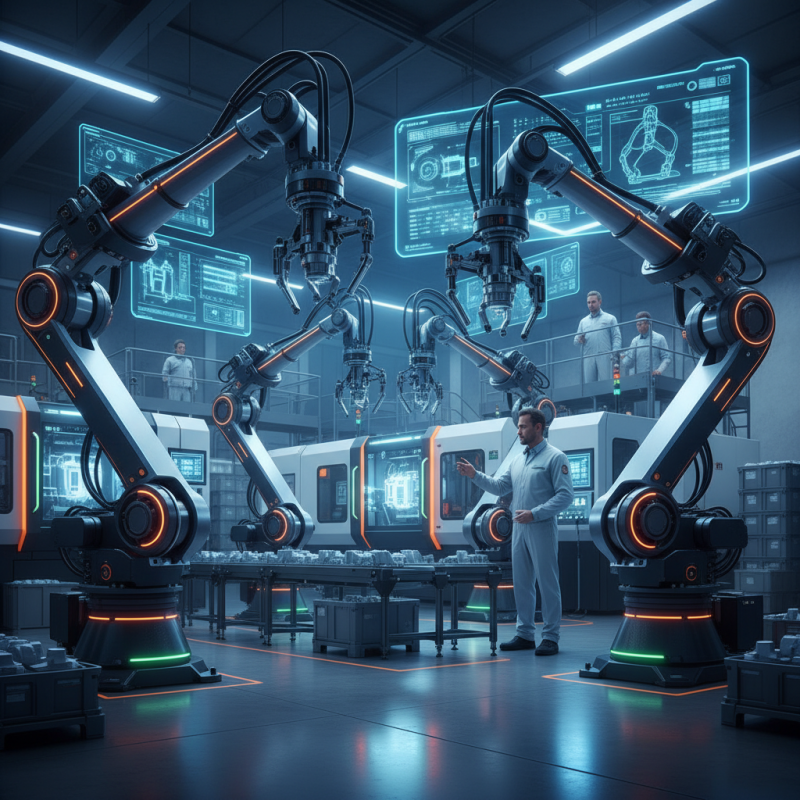
2026 Injection Machine Robots: Trends in Automation and Efficiency
As industries evolve, the demand for automation rises. Injection machine robots are at the forefront of this change. They enhance production efficiency and minimize waste. Factories are now integrating these robots for quicker operations. Many manufacturers are keen on reducing lead times. This aligns perfectly with the need for faster turnaround.
However, not all implementation is flawless. Some companies face challenges during the transition. Integration with existing systems can be complex. Training staff to work alongside robots requires time and effort. Moreover, initial investment costs can be daunting for smaller manufacturers. It’s essential to weigh these factors carefully before committing to automation.
Trends indicate a focus on smart technology. Enhanced sensors and AI can improve decision-making in real-time. This means better quality control and fewer errors. Yet, there’s a constant need to balance technology with human oversight. Relying solely on automation might lead to oversights. Reflecting on these challenges is crucial for long-term success in manufacturing.
Key Features of Top Injection Machine Robots for Manufacturing
When selecting an injection machine robot, key features are crucial for effective manufacturing. Look for precision in operation. A machine that delivers consistent results can save time and resources. Speed is another important factor. A robot capable of rapid cycles can boost productivity significantly.
Flexibility is essential too. Choose machines that can handle various materials and production needs. This adaptability can lead to new opportunities in manufacturing.
Tips: Assess your specific needs before purchasing. Sometimes, less advanced models work well. Focus on the features most relevant to your operations. It’s vital to understand the technology behind each machine. This approach ensures you make an informed choice. Remember, the best robot is not always the most expensive one. Prioritize value over brand names.
2026 Best Injection Machine Robot for Your Manufacturing Needs
| Model | Payload Capacity (kg) | Speed (mm/s) | Precision (mm) | Degrees of Freedom | Energy Consumption (kW) |
| Model A | 100 | 500 | 0.02 | 6 | 5 |
| Model B | 80 | 600 | 0.03 | 5 | 4.5 |
| Model C | 120 | 550 | 0.025 | 7 | 6 |
| Model D | 90 | 640 | 0.022 | 6 | 5.2 |
| Model E | 110 | 580 | 0.021 | 6 | 5.5 |
Industry Data: Performance Metrics of Injection Molding Robots
When considering injection molding robots for your manufacturing needs, performance metrics play a crucial role. These robots are essential for enhancing productivity. They perform repetitive tasks with precision. Metrics such as cycle time, payload capacity, and repeatability highlight their efficiency. A robot with a shorter cycle time can significantly boost throughput. Assessing how quickly a robot can execute each cycle is key.
Moreover, payload capacity affects the type of projects you can handle. Robots that can manage heavier molds allow for larger production runs. However, it’s not just about numbers. Consider the repeatability rate, the robot's ability to produce consistent results. Variability can lead to defects and increased waste.
Adopting advanced technology does come with challenges. Implementing these robots requires staff training and adjustments in workflow. Sometimes, integration with existing systems is not seamless. As companies invest in automation, reflection on these hurdles is vital. Striking a balance between automation benefits and real-world complexities is essential for success in manufacturing.
Cost-Benefit Analysis of Investing in Injection Machine Robots
Investing in injection machine robots can transform your manufacturing process, but a cost-benefit analysis is essential. The initial investment might seem steep. However, the long-term gains can outweigh the expenses. Enhanced precision and reduced waste often lead to significant savings. Productivity can increase dramatically. Robots work tirelessly, 24/7, providing consistent output.
There are hidden costs to consider, too. Maintenance and training can add to your budget. Staff may need to adjust to new technology. Some may resist changes, slowing the transition. This could lead to temporary disruptions in production. Balancing human resources with robotic efficiency is crucial.
Ultimately, assessing your business needs is vital. Will robots enhance your production strategy? Consider trial periods before a full commitment. Analyze the specific tasks automation will handle. Reflect on the potential risks versus rewards. Each manufacturing environment is unique. Only through careful consideration can you determine if injection machine robots are the right move for you.
Future Innovations in Injection Machine Robotics for Manufacturing Growth
The evolution of injection machine robotics is set to redefine manufacturing. Innovative technologies are emerging, focusing on efficiency and precision. These advancements aim to minimize waste and maximize productivity. Robots are becoming faster and smarter, adapting to various production needs. The integration of AI enables machines to learn from data. This leads to better decision-making in real-time.
However, not all innovations come without challenges. The initial cost of adopting advanced robotics can be significant. Smaller manufacturers may struggle to keep pace with larger competitors. Training staff to operate new technology poses another hurdle. Many organizations face a steep learning curve. Also, issues with reliability can arise, necessitating continuous improvement.
Additionally, the compatibility of new machines with existing systems can be problematic. It takes time to fully integrate new robotics into established workflows. Thus, while the future seems bright, industry players must navigate these complexities. Achieving seamless operations will require ongoing reflection and adaptation. Embracing change, while managing growing pains, is essential for long-term success.
2026 Best Injection Machine Robot for Your Manufacturing Needs