
1-208-754-4884

Top Car Wiper Blade Suppliers for Global Buyers

For global buyers, choosing a car wiper blade supplier is a practical sourcing decision, not just a price comparison. Car Wiper Blades must clear rain, road spray, and fine dust without leaving distracting streaks. A blade that works well in a showroom can behave differently after weeks of heat, cold, and repeated use.

Grand View Research estimated the global automotive wiper market at about USD 5.2 billion in 2023 and forecasts continued growth through 2030. Its report points to vehicle production, replacement demand, and product innovation as key market factors. Estimates vary, though, because reports may define wipers and related systems differently. Buyers should treat market size as context, not a supplier scorecard. Small details matter: connector fit, rubber consistency, packaging, and how clearly a supplier documents testing.

Visibility researcher Dr. Michael Flannagan of the University of Michigan Transportation Research Institute has emphasized that vision is a driver’s primary source of information. That principle gives wiper sourcing real weight. A supplier’s claims deserve scrutiny. Ask for product specifications, fitment coverage, quality-control records, and evidence supporting performance claims. Then compare lead times and communication, not just unit cost. One awkward truth: a polished catalogue cannot reveal how blades perform after months on a vehicle. This guide examines leading suppliers for global buyers, while recognizing that no single ranking fits every market, climate, or purchasing volume.
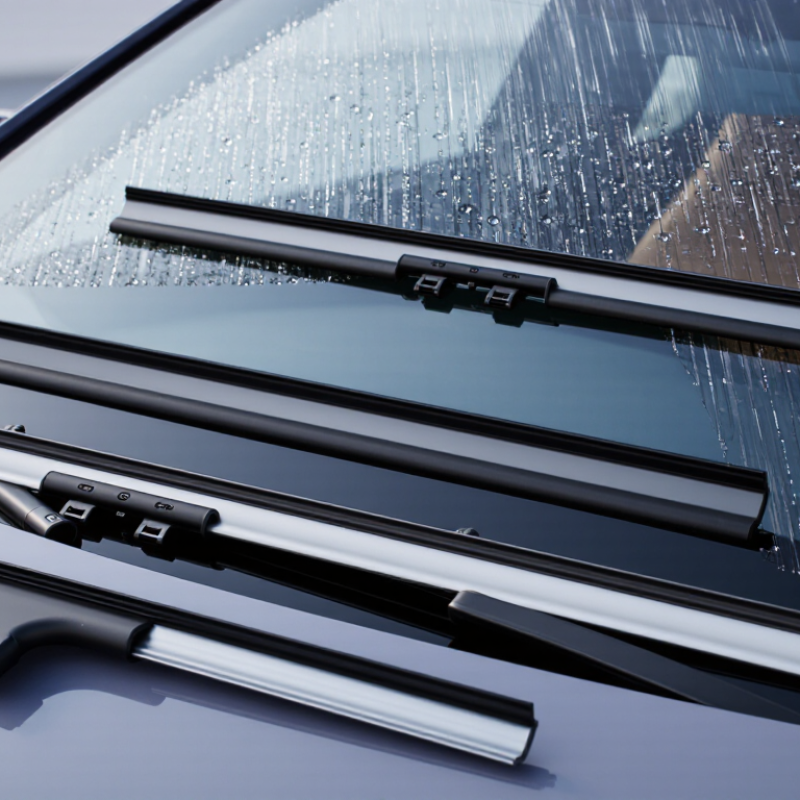
Top Car Wiper Blade Suppliers for Global Buyers

Understanding the Global Car Wiper Blade Supplier Market

The global car wiper blade supplier market is becoming more technical and regionally diverse. Fortune Business Insights estimates the automotive windshield wiper market will grow at roughly 5% annually through 2032. Its analysis links growth to vehicle production, replacement demand, and stricter visibility expectations.

Grand View Research also identifies aftermarket replacement as a major revenue driver. This matters for global buyers, because demand continues after a vehicle leaves the factory. Suppliers therefore need stable rubber compounds, accurate curvature, and packaging that survives humid sea freight. In practical audits, buyers should check wiping performance at low temperature, high speed, and heavy rain. One laboratory test is not enough.

Production location remains important. Asia offers broad manufacturing capacity and competitive tooling costs, while Europe and North America can provide shorter regional delivery times. However, these advantages vary by supplier and product segment. Buyers should request ISO 9001 records, material traceability, batch samples, and evidence of automotive quality controls such as IATF 16949. Forecasts are useful, but they are not guarantees. Report definitions also differ, especially between original equipment and aftermarket sales. That detail is easy to miss. A careful sourcing team should compare defect rates, warranty claims, container lead times, and communication quality before judging price. Low unit cost can become expensive when blades arrive warped, adapters are missing, or replacement deliveries are late.

Key Wiper Blade Types and Vehicle Compatibility Standards

Global buyers should compare suppliers by wiper type, fitment data, and testing evidence, not by price alone. Conventional framed blades suit many flat or moderately curved windshields. Beam blades use a flexible spine and often perform better on sharply curved glass. Hybrid blades combine a framed structure with an aerodynamic shell. Rear wipers usually require separate sizing and connector information.

Vehicle compatibility depends on more than blade length. Buyers should verify the exact driver and passenger measurements, arm design, connector type, and windshield curvature. Common fittings include hook, bayonet, side pin, pinch tab, and push button systems. A reliable supplier should provide vehicle application tables, production dates, material details, and sample-testing support. Compatibility records can still contain errors, especially for vehicles with regional variations. That deserves checking.

Tips: Measure the old blade before ordering. Photograph the arm connection. Confirm left-hand or right-hand drive details when applications differ. Test installation on actual vehicles, including light rain and dusty roads. Check whether the rubber edge remains stable after repeated wiping. A blade that fits tightly may still leave chatter marks. Suppliers with traceable quality inspections and clear replacement procedures offer greater confidence for international distribution. Small packaging details also matter; bent frames often arrive after poor carton protection.

Evaluating Supplier Quality, Certifications, and Production Capacity

Selecting top car wiper blade suppliers requires more than comparing prices. OICA reported 93.5 million motor vehicles produced worldwide in 2023. That scale demands stable supply, repeatable quality, and flexible regional support. Ask suppliers for recent ISO 9001 certificates, IATF 16949 status, and scope details. A certificate should cover the actual manufacturing site. Not just the head office.

Quality evidence must be practical. Review rubber compound test results, wiping-cycle records, low-temperature tests, and corrosion data. Supplier control plans should identify critical dimensions and inspection frequency. PPAP documentation can reveal process discipline before mass production begins. According to the ISO Survey 2022, more than one million ISO 9001 certificates were reported globally. Certification helps, but it does not replace factory audits. I have seen polished documents hide weak traceability. That risk deserves attention.

Tips: Request three months of production records, not one impressive sample. Compare declared capacity with injection machines, assembly lines, molds, and staffing. Check whether backup tooling exists. Ask for monthly output during peak season. A supplier claiming 500,000 blades monthly should show line-level evidence. Also inspect packaging, barcode control, and batch retention. These details affect recalls and customer complaints. Capacity can look strong on paper. Seasonal labor changes may still reduce consistency.

Comparing Pricing, Minimum Orders, Customization, and Logistics

Top Car Wiper Blade Suppliers for Global Buyers

A reliable supplier should be judged beyond the lowest unit price. Standard blades often quote between US$1.20 and US$3.80 per piece in factory-level sourcing, depending on rubber grade, connector design, and packaging. These figures are practical RFQ benchmarks, not fixed market prices. Ask for separate costs for adapters, printing, cartons, and testing. Hidden charges can damage an attractive quotation.

Minimum orders commonly range from 1,000 to 10,000 pieces per model. Lower MOQs may increase tooling or packaging costs. Customization can include logo printing, private packaging, spoiler shape, rubber coating, and adapter combinations. Confirm whether samples use production materials. They should. Testing against SAE J903 requirements can help verify wiping performance, corrosion resistance, and attachment security. A 2023 World Bank Logistics Performance Index report shows major differences in customs, infrastructure, and shipment reliability across markets, so supplier selection must include delivery records.

Logistics deserves equal attention. UNCTAD’s Review of Maritime Transport reports that ships carry over 80% of global merchandise trade by volume. Ocean freight remains economical for bulk orders, but port delays can disrupt seasonal demand. Request carton dimensions, pallet loading plans, HS classification support, and delivery terms before signing. Air freight suits urgent samples, not routine replenishment. That is expensive. Some supplier promises still look vague, especially around lead times. Recheck them with a small trial order and inspect random cartons before scaling up.

Top Car Wiper Blade Suppliers for Global Buyers

A qualitative screening framework comparing common supplier types across four buyer priorities. Scores are illustrative planning ratings—not verified supplier performance or quotations.

Ratings use a 1–5 scale, where 5 is more favorable to the buyer. Actual prices, minimum orders, customization options, and shipping timelines vary by product specification, destination, and supplier; confirm them directly before purchasing.

Selecting the Right Wiper Blade Supplier for Global Purchasing

Top Car Wiper Blade Suppliers for Global Buyers

Selecting a wiper blade supplier for global purchasing takes more than comparing unit prices. Buyers should check production capacity, material specifications, and documented quality controls. Ask how suppliers test rubber flexibility, metal-frame strength, and blade pressure across different temperatures. Useful evidence includes inspection records, sample results, and clear procedures for handling defects. Details matter.

Compatibility deserves close attention. A blade that fits one vehicle model may not suit another arm type or windshield curve. Request fitment data, connector options, and samples for physical checks before placing a large order. Test them on dry glass only as instructed, then observe wiping performance in controlled wet conditions. Look for streaks, chatter, uneven contact, and noisy movement. One sample is not enough.

Global purchasing also depends on communication and logistics. Confirm packaging dimensions, carton labeling, lead times, and how shipment changes are reported. Ask whether replacement components or technical drawings are available when specifications change. Compare quotations using the same order quantity and delivery terms; otherwise, low prices can be misleading. A polished spreadsheet may still miss small differences in testing or packaging. I would not treat a supplier’s claims as proof without records, though document review alone cannot reveal every production issue. Regular sample checks can expose problems early.

Top Car Wiper Blade Suppliers for Global Buyers - Selecting the Right Wiper Blade Supplier for Global Purchasing

Supplier profile Common product scope What global buyers should verify Best suited for Key purchasing consideration
OEM and automotive-program supplier Wiper systems or blades developed to vehicle-program specifications Documented engineering capability, validation procedures, traceability, and relevant quality-system certifications Vehicle manufacturers and buyers with formal engineering requirements Confirm program approval, testing scope, development lead time, and change-control process.
Aftermarket replacement supplier Replacement blades and application-specific fitment options Vehicle-application coverage, fitment data quality, connector compatibility, and packaging accuracy Distributors, retailers, and repair networks serving replacement markets Check catalog coverage, cross-reference accuracy, minimum order quantities, and replenishment capability.
Private-label and contract manufacturer Products manufactured or packaged to a buyer's specifications Sample approval process, production controls, packaging options, and ownership of tooling or artwork Importers and retailers building a house brand or custom product range Agree on specifications, inspection criteria, intellectual-property terms, and responsibility for compliance documentation.
Regional distributor or sourcing partner Locally stocked blades, assorted fitments, and distribution support Authorized sourcing where applicable, stock availability, local service, and product-document access Buyers prioritizing local inventory and shorter delivery routes Review stock depth, delivery terms, returns handling, and continuity of supply.
Export-focused manufacturer Products prepared for shipment to multiple international markets Export documentation experience, packaging suitability, production capacity, and destination-market requirements Importers purchasing across borders or serving several countries Clarify Incoterms, shipment planning, customs paperwork, lead times, and procedures for handling defects.

Buyer note: Supplier capabilities vary. Verify specifications, test reports, certifications, fitment data, and commercial terms directly before placing an order.