
1-208-754-4884

How to Choose the Best Pallet Rack in 2026?

Choosing the right Pallet Rack in 2026 starts with the work your warehouse actually does. A forklift turning into a narrow aisle, a pallet resting unevenly on a beam, or a fast-moving SKU stored too far away can expose weaknesses in a design. These details matter more than a glossy product sheet. The best system must fit your building, inventory, handling equipment, and plans for growth.

The 2024 MHI Annual Industry Report found that 55% of surveyed supply chain leaders were increasing technology investment. That shift can affect rack decisions: automation, inventory visibility, and changing order patterns may alter aisle widths, storage density, and access needs. MHI CEO John Paxton described the sector as undergoing “a profound transformation.” His point is relevant, though technology alone cannot fix poor layout assumptions. Rack Manufacturers Institute guidance also stresses using properly rated components and keeping load information clear. Verify specifications with qualified suppliers and engineers.

This guide will help you compare selective, double-deep, drive-in, and other rack types against practical operating needs. It will also cover load capacity, clearances, installation quality, inspections, and future flexibility. A denser layout may look efficient on paper. It can become awkward when a forklift cannot reach a pallet safely, or when inventory changes faster than expected. No rack choice is perfect. The useful question is whether the system remains safe, accessible, and workable under real warehouse conditions—not just on opening day.
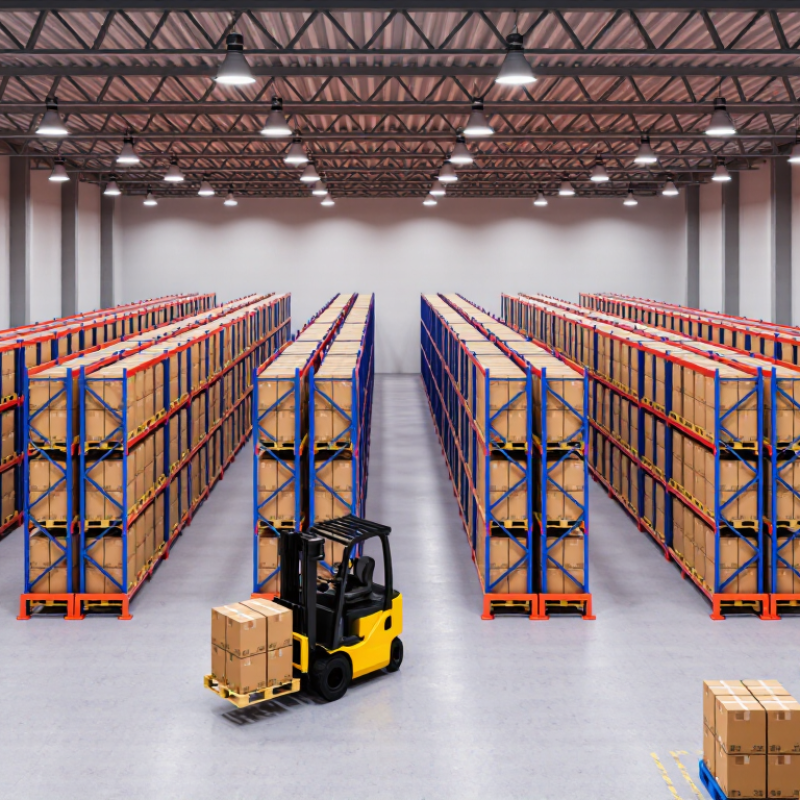
How to Choose the Best Pallet Rack in 2026?

Assess Your Inventory, Pallet Types, and Storage Goals

How to Choose the Best Pallet Rack in 2026?

Assess Your Inventory, Pallet Types, and Storage Goals

Start with the load, not the rack catalog. Record each pallet’s length, width, height, and loaded weight, including occasional oversized loads. The common 48-by-40-inch pallet is only a starting point; measure the pallets actually moving through your building. Note which items turn quickly, which sit for months, and how many pallet positions each product needs. A rack plan built around average loads can fail when the heaviest pallet arrives.

MHI’s 2024 Annual Industry Report found that 55% of surveyed supply-chain leaders planned to increase technology investment. That makes future picking and automation goals worth considering, even if upgrades are not immediate. Select rack depth and aisle width around the equipment and picking methods you use, while leaving room for safe access. One uncomfortable detail: inventory records may not match what is physically stored. Verify them on the floor before sizing bays. A few odd pallets can change the layout.

Tips: Measure loaded pallets, not empty ones. Check beam capacity against the full load, and keep a simple inventory map by SKU and turnover. If storage needs are uncertain, leave a modest expansion area rather than filling every bay on day one.

How to Choose the Best Pallet Rack in 2026

Compare common pallet footprints before deciding on rack depth, beam length, and storage layout.

The chart shows nominal dimensions for common pallet formats. Measure your actual loaded pallets and confirm their orientation, weight, and overhang before specifying rack components. Rack capacity, aisle width, handling equipment, building clearances, and storage goals should also be checked with a qualified rack designer.

Measure Warehouse Space and Determine Required Load Capacity

When choosing pallet rack in 2026, start with the warehouse as it is, not as a floor plan suggests. Measure clear ceiling height, wall-to-wall width, and usable floor depth. Note columns, doors, lights, sprinklers, and uneven surfaces. Small errors matter. Leave room for forklifts to turn and workers to move safely; a rack that fits on paper may obstruct daily traffic.

Measure twice. Then map the proposed rack rows and aisles, including space needed to load and retrieve pallets. Check the tallest stored unit against beam levels and overhead obstructions. Do not count every inch as usable height. A forklift mast, raised load, or sprinkler clearance can change the practical limit.

Determine the heaviest pallet load you expect, including the pallet itself, and confirm whether capacity is listed per beam level or per rack frame. Loads should match the rack’s rated configuration and be distributed as specified. Ask a qualified rack professional to review unusual loads, floor conditions, or unclear ratings. Your first estimate may be imperfect; record assumptions and recheck them against actual inventory before ordering.

Compare Pallet Rack Designs for Access, Density, and Workflow

Pallet rack selection starts with how often workers need to reach each load. Selective rack gives direct access to every pallet, making it practical for warehouses with many SKUs or frequent order changes. The trade-off is wider aisles and fewer storage positions per square foot. Drive-in rack stores pallets several positions deep, increasing density when loads are consistent and turnover is predictable. It usually follows last-in, first-out handling. Push-back rack also stores multiple pallets deep, while carts move loads toward the aisle. Convenient, but not flawless: damaged pallets can interrupt cart movement.

Match the design to the actual workflow, not just the floor plan. Watch a forklift turn with a full pallet, then check whether replenishment blocks picking during busy hours. Small details matter. Measure pallet dimensions, load weights, aisle clearances, and available building height before comparing capacity. A drawing can look efficient while leaving too little room for real equipment or imperfect pallets. That assumption deserves a second look. Density should account for usable pallet positions and daily throughput, not merely how tightly the rack fits on paper. A site review by a qualified storage professional can help verify loads, clearances, and operating constraints before installation.

Check Safety Features, Building Codes, and Equipment Compatibility

How to Choose the Best Pallet Rack in 2026?

A rack should fit the building, the load, and the equipment—not just the available floor space. The U.S. Bureau of Labor Statistics’ 2023 Survey of Occupational Injuries and Illnesses reported 4.8 recordable cases per 100 full-time workers in warehousing and storage. That figure makes safe access and stable loads practical priorities. OSHA standard 29 CFR 1910.176(b) requires stored materials to be secure against sliding or collapse. Check local building and fire codes, then have a qualified professional review seismic conditions, floor capacity, anchoring, and sprinkler clearances. Codes vary by location.

Inspect rack frames, beam connections, anchors, and load plaques. ANSI MH16.1 provides design criteria for steel storage racks; confirm the selected system and its stated capacity suit your loads. Match rack depth and aisle width to the actual forklift turning radius, mast height, and load dimensions. A few centimeters can matter. Compatibility should be checked using the equipment’s specifications, not a quick visual estimate. I would still recheck after any layout change.

Tips: Measure the tallest pallet, loaded fork height, and narrowest turning point. Keep clearances documented. Ask a qualified rack engineer to review unusual loads, damage, or proposed changes. Don’t guess.

How to Choose the Best Pallet Rack in 2026? - Check Safety Features, Building Codes, and Equipment Compatibility

Rack Type Best Suited For Storage Access and Density Equipment Compatibility Safety and Building-Code Checks Key Information to Confirm Before Choosing
Selective pallet rack Warehouses with many product types, frequent picking, or a need to access individual pallets. Direct access to each pallet; generally lower storage density than systems that store pallets several positions deep. Commonly served by counterbalance or reach trucks. Aisle width must match the selected truck and its operating requirements. Check rated load plaques, upright and beam condition, anchorage, frame protection, and required sprinkler and egress clearances. Confirm the rack design with the locally adopted building code and applicable structural requirements. Pallet dimensions and weights, beam levels, clear height, aisle layout, floor condition, and the truck manufacturer’s aisle and lift-height specifications.
Double-deep rack Operations seeking more pallet positions than a selective layout while retaining access to a range of products. Stores pallets two positions deep; the rear pallet is less accessible and typically requires the front position to be moved first. Usually requires a deep-reach truck or an appropriate attachment. Confirm reach, load center, lift height, and aisle requirements with the truck supplier. Verify rack capacity for the actual load configuration, truck clearances, visibility, and protection at exposed rack ends. Changes to rack layout or components should be reviewed by a qualified designer. SKU turnover, pallet depth and condition, truck reach capability, required access sequence, and the effect of the layout on picking time.
Drive-in / drive-through rack Large quantities of similar products with relatively low SKU variety. High storage density because trucks enter the rack lanes. Drive-in systems generally load and retrieve from the same end; drive-through systems can be accessed from opposite ends. Requires trucks able to enter rack lanes and operate within the specified clearances. Check truck dimensions, turning behavior, mast height, and pallet-handling method. Truck impact risk is higher within lanes. Assess guide rails, column protection, entry clearances, load-support rails, anchorage, and the fire-protection design for the specific building and storage arrangement. Number of pallets per SKU, loading sequence, lane depth, pallet quality, inventory rotation needs, and the operating procedure for entering and exiting lanes.
Push-back rack Multiple pallets of the same product stored in each lane where access from the aisle is preferred over driving into the rack. Stores several pallets deep on carts or a sloped rail system. Typically provides higher density than selective rack, with less direct access to each pallet. Forklifts load and retrieve pallets from the aisle; the system’s cart design and pallet dimensions must be suitable for the intended loads. Confirm the engineered capacity of beams, carts, and rails; inspect moving components and stops; and train operators on the system’s loading and retrieval sequence. Lane depth, pallet dimensions and weight consistency, product mix, cart maintenance requirements, and the impact of last-in, first-out retrieval.
Pallet-flow rack High-throughput operations that benefit from first-in, first-out product rotation, such as dated or batch-controlled inventory. Gravity-fed lanes move pallets from the loading side toward the picking side. Storage density can be high, but lane design and product flow must suit the load. Forklifts typically load from one side and retrieve from the other. Check pallet dimensions, underside condition, and load stability for the flow equipment. Review flow-control devices, lane stops, loading and unloading access, fire-protection arrangements, and maintenance procedures. Do not exceed the system’s engineered load limits. Required rotation method, pallet consistency, load stability, lane length, throughput, and procedures for clearing a stopped or damaged pallet.
Cantilever rack Long, bulky, or irregularly shaped goods that do not fit readily on standard pallet beams, such as pipe, lumber, or sheet material. Open-front arms provide flexible storage for long items; capacity depends on the rack configuration and how loads are distributed. May be served by forklifts or other material-handling equipment suited to the stored item’s length and weight. Confirm aisle and handling clearances. Check column and arm capacity, base anchorage, load distribution, arm stops where needed, and protection from vehicle impact. Store items securely to prevent rolling, sliding, or overhang hazards. Item length, weight, shape, center of gravity, support spacing, loading method, and whether the material needs restraints or dedicated supports.

Selection and compliance note: Rack capacity is specific to the engineered configuration, including beam spans, upright frames, bracing, connections, anchorage, load placement, and site conditions; there is no single safe capacity that applies to every rack of a given type. Before installation or alteration, check the locally adopted building and fire codes, permit requirements, seismic and floor conditions, and applicable standards. In the United States, OSHA’s powered industrial truck rules include requirements for truck condition and for employer approval before certain truck modifications; local authorities and qualified rack designers should confirm requirements for the project. Keep rack load information visible, train operators, and promptly assess damaged components.

Compare Total Costs and Choose a Rack System That Can Grow with You

A pallet rack quote shows only part of the cost. Compare the purchase price with delivery, installation, floor preparation, and any changes needed for forklifts or aisles. Not always. A low-cost system can require more labor if workers must travel farther or handle pallets awkwardly. Calculate cost per usable pallet position, not just the price per frame.

Walk the warehouse before choosing. Measure clear height, aisle widths, doorways, and the space around columns. Check pallet dimensions and loaded weights against the rack’s rated capacity. A few inches can affect how many positions fit, while an overloaded beam creates a serious safety risk. Have a qualified rack professional review the layout and load requirements.

Plan for change, too. If inventory may grow, choose a system that can accept compatible beams or additional bays, and confirm those parts will remain available. Leave space for likely changes in product mix, equipment, and traffic; filling every aisle today may create costly rearrangement later. Growth forecasts are imperfect. I would rather see a practical expansion plan than pay for empty capacity that may never be used. Track inspection, repair, and downtime costs alongside the initial investment.