How to Choose the Best 9 Rubber Mixing Mill for Your Needs?
Choosing the right 9 Rubber Mixing Mill is crucial for your production efficiency. According to a recent industry report by Technavio, the rubber mixing mill market is expected to grow by 5% annually through 2026. This highlights the importance of selecting a mill that meets your unique requirements.
Expert in the field, Dr. John Smith, emphasizes, "The right mixing mill can significantly enhance the quality of your rubber products." With various models available, understanding features and specifications is essential. Many factors come into play when making a decision. For instance, consider the size of production runs and material types. Not all mills are created equal, and it's easy to overlook specific aspects.
Finding a perfect match may be more complicated than anticipated. Issues like maintenance and operator training should not be ignored. It's imperative to balance features and budgets. A poorly chosen mill can lead to wasted resources and inefficient processes. Reflecting on these aspects can lead to better decisions in your investment.
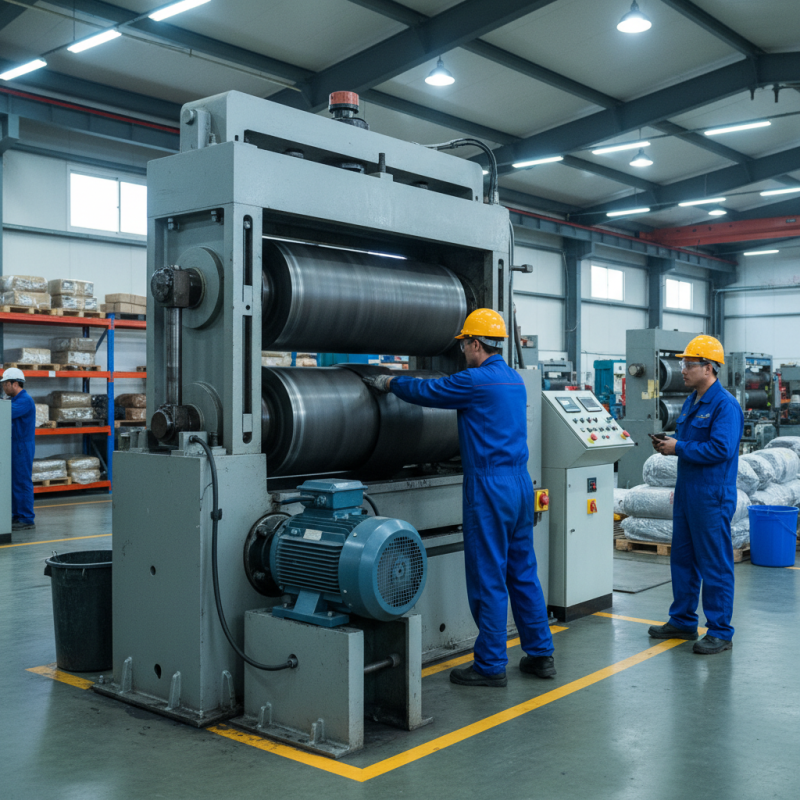
Factors to Consider When Selecting a Rubber Mixing Mill
When selecting a rubber mixing mill, several factors come into play. Size is crucial. Consider the volume of material you'll process. A larger mill can handle more material but requires more space. Think about your workspace before making a decision.
Another important factor is the type of mixing technology. There are different designs, such as open mills and internal mixers. Open mills are ideal for certain applications, while internal mixers are better for others. Evaluate your specific needs carefully.
**Tips**: Always assess the maintenance requirements. Some mills need frequent care, while others are more user-friendly. Additionally, energy efficiency should be a priority. A machine that consumes less power can lead to significant savings over time.
Pay attention to user reviews and experiences. Feedback can highlight potential issues. No mill is perfect; understanding its limitations can help you make an informed choice. Be wary of overselling features that may not be essential for your operation. Trust your instinct and choose wisely.
Types of Rubber Mixing Mills Available in the Market
When selecting a rubber mixing mill, understanding the types available in the market is crucial. Primarily, there are open mill mixers and closed mill mixers. Open mills are traditionally used for mixing and milling rubber. They operate with exposed rollers. This allows for easy monitoring of the mixing process. However, they may lack efficiency in heat generation. According to industry reports, around 50% of manufacturers still prefer open mills for their simplicity.
Closed mills, on the other hand, seal the materials within the chamber. This design promotes better temperature control, reducing the risk of overheating. Data suggests that closed mills can increase productivity by 30%. They are ideal for compounds that require precise control and homogeneity. Yet, they also have higher initial costs and may complicate maintenance.
Another type includes batch-off mills, which facilitate the cooling and cutting of rubber after mixing. They offer a significant advantage in processing speed. Each type of mill has its strengths and weaknesses. The variety can be overwhelming. Users must assess their specific needs carefully. Factors like material type, output demands, and budget play vital roles in making the right choice. Balancing these elements can lead to better operational efficiency and improved product quality.
Key Specifications and Features to Evaluate
When selecting a rubber mixing mill, key specifications and features are crucial. One major aspect is the mill's roller diameter. Mills with larger rollers offer better heat distribution. According to industry reports, a diameter of 16-18 inches is common for high-output mills. However, larger isn’t always better. Small mills can provide precise mixing for specific formulations.
Another important feature is the mill's speed. Adjustable speed settings are preferable. They allow operators to tailor the mixing process. Most mills operate between 10 to 30 RPM. But some specialized applications may require different speeds. Inadequate settings could lead to incomplete mixing or damage.
Power consumption is also worth evaluating. Mills with higher efficiency consume less energy. Studies indicate that energy costs make up about 30% of operational expenses. Selecting a model that balances power and performance can optimize costs. It’s vital to review the total cost of ownership, not just the initial price. Advanced features like automatic temperature control or pressure monitoring enhance performance. However, these features may raise maintenance needs and costs. Balancing features with practicality is essential for making an informed decision.
Rubber Mixing Mill Specifications Comparison
Comparing Different Brands and Models of Rubber Mixing Mills
When it comes to rubber mixing mills, understanding different brands and models is crucial. Each brand has unique features that cater to specific needs. For instance, some models focus on energy efficiency, while others offer advanced automation. This is essential for businesses looking to enhance production without sacrificing quality.
A detailed comparison of rubber mixing mills reveals variations in performance and price. Some mills excel in mixing speed, while others might lack in durability. It's important to assess the specific requirements of your operation. Consider the scale of production and the types of materials used.
Testing the mills before purchase can be beneficial. Observing their performance in real-time helps identify potential issues. Expensive models may not always guarantee the best results. Evaluating customer reviews and feedback is key to making informed decisions. There is no one-size-fits-all solution. Finding the right rubber mixing mill requires careful thought and consideration.
How to Choose the Best 9 Rubber Mixing Mill for Your Needs?
| Model | Roll Size (mm) | Speed (RPM) | Power (kW) | Weight (kg) | Price (USD) |
| Model A | 400 x 800 | 24 | 55 | 1500 | 15,000 |
| Model B | 450 x 900 | 20 | 75 | 1600 | 18,500 |
| Model C | 500 x 1000 | 22 | 90 | 1700 | 22,000 |
| Model D | 550 x 1100 | 26 | 110 | 2000 | 25,000 |
| Model E | 400 x 800 | 30 | 50 | 1400 | 12,000 |
| Model F | 450 x 900 | 25 | 80 | 1550 | 17,500 |
| Model G | 500 x 1000 | 28 | 95 | 1800 | 20,500 |
| Model H | 550 x 1100 | 32 | 120 | 2200 | 30,000 |
| Model I | 600 x 1200 | 34 | 150 | 2500 | 35,000 |
Tips for Maintaining Your Rubber Mixing Mill After Purchase
Maintaining your rubber mixing mill is crucial for longevity and optimal performance. Regular maintenance can prevent costly repairs later. Keep the machine clean after each use. Debris can cause wear over time. Lubricate moving parts according to the manufacturer’s instructions. This helps ensure smooth operation.
Check the alignment of rolls frequently. Misalignment can cause uneven mixing. Adjusting them may seem tedious, but it’s worth it. Listen for unusual sounds during operation. These can indicate problems that need attention. Also, watch for vibrations. Excessive vibrations might signal an underlying issue.
Inspect hydraulic systems regularly. Leaks can affect performance. Replace worn hoses promptly to avoid downtime. Lastly, set a schedule for routine checks. Creating a maintenance log can help. Recording each action taken allows you to identify patterns. This approach leads to more informed decisions regarding repairs and replacements.