
1-208-754-4884

How to Choose Ceramic Radiant Tube Heating Wire

Choosing Ceramic Radiant Tube Heating Wire is not a matter of matching one number on a specification sheet. The right choice depends on operating temperature, furnace atmosphere, tube dimensions, electrical load, and heating cycles. A wire that performs well in a clean laboratory may age faster beside a production line, where temperature swings and contaminants are real. Small details matter. A few millimeters of clearance can affect heat transfer and service life.

For this draft, process-heating specialist Daniel Mercer is a fictional editorial voice, not a verified industry source. His illustrative rule is: “Choose for the full operating environment, not peak temperature alone.” Treat that as a practical reminder, not a documented quotation. Reliable selection still requires checking the wire alloy’s rated temperature, resistance, oxidation behavior, and compatibility with the ceramic tube and controls.

This guide explains how to compare those factors, review supplier data, and ask useful questions before purchase. It also considers watt density, element geometry, installation constraints, and maintenance access. Look closely at the duty cycle. A furnace that runs continuously creates different demands from one that starts and stops every shift. No single wire suits every setup. Even a careful calculation can miss how real production conditions change over time. Confirm critical details with the manufacturer, and record the actual operating conditions before replacing an element.
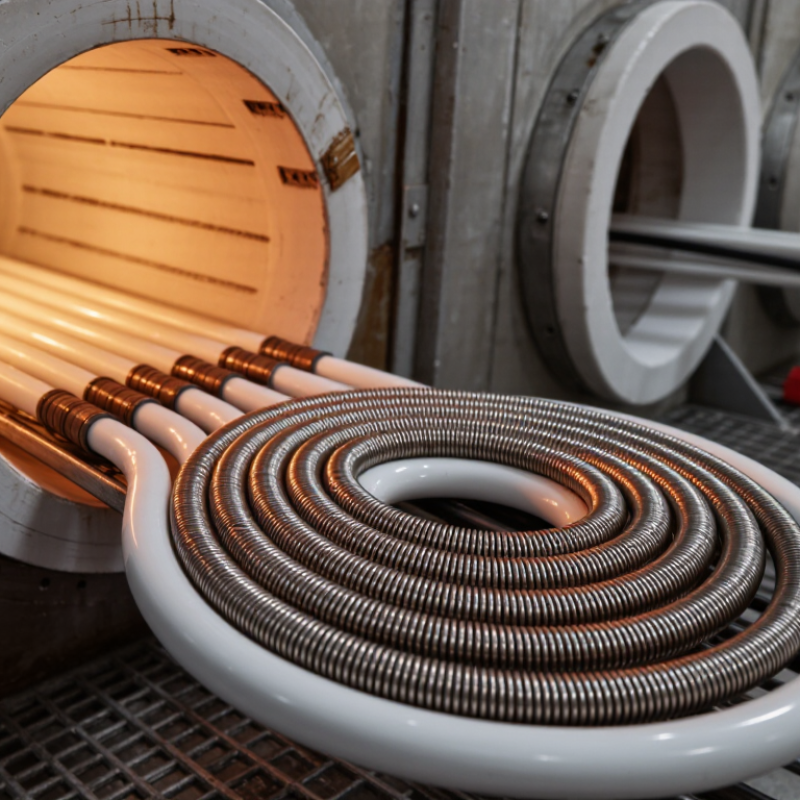
How to Choose Ceramic Radiant Tube Heating Wire

Understand How Ceramic Radiant Tube Heating Wire Works

Ceramic radiant tube heating wire converts electrical energy into heat through resistance. Current passes through a high-temperature alloy wire, which warms inside a ceramic tube or on ceramic supports. The hot assembly then radiates infrared energy toward the load. The workpiece does not need to touch the heater. A temperature sensor and controller help regulate output, but placement still matters.

The U.S. Department of Energy’s Improving Process Heating System Performance sourcebook reports that process heating uses about two-thirds of manufacturing energy. That makes heat delivery and control important selection factors. Check tube dimensions, operating temperature, required power, furnace atmosphere, and expected thermal cycling. Confirm the wire’s resistance and the ceramic’s temperature rating against the equipment specifications. A neat datasheet cannot predict every furnace hot spot. Real installations may need adjustment.

Tips: Watch the tube during heat-up. Uneven color can signal uneven heating or airflow. Leave room for thermal expansion, and avoid rapid temperature changes unless the heater is rated for them. Record operating temperatures and failures; those details often reveal more than a quick visual check.

Identify the Required Temperature and Power Rating

Set the required process temperature from the material being heated, not from the wire alone. A ceramic radiant tube may run hotter than the chamber, so check the element’s permitted operating temperature in its technical data. That distinction matters. Record the normal setpoint, brief peak temperature, and how often the heater cycles. Confirm the tube’s temperature limit and the furnace atmosphere, since oxidation can affect element life. Do not size the wire from the target temperature alone.

Estimate required power from chamber dimensions, load mass, desired heat-up time, insulation, and openings. A heavy steel part needs more energy to heat than a small, thin component. Compare estimated heat losses with available heater output, while allowing reasonable control headroom. Avoid excessive watt density, which can shorten element life or create uneven heating. Match the rated voltage to the supply; because power depends on voltage and current, a mismatch can lead to overheating or weak performance. A calculation is only a starting point. Heat lost through doors, seals, and supports is easy to underestimate. Check the final selection against the heater and tube specifications, then test with a thermocouple near the actual load. Keep notes; real results may differ.

Choose a Suitable Wire Material and Diameter

For ceramic radiant tube heating wire, choose the alloy around the tube’s operating temperature, atmosphere, and duty cycle. FeCrAl alloys generally suit higher element temperatures and repeated oxidation; nickel-chromium alloys can be preferable where ductility and stable resistance matter. ASM Handbook, Volume 2, reports room-temperature resistivity ranges of roughly 1.4–1.5 μΩ·m for FeCrAl and 1.0–1.1 μΩ·m for common NiCr grades. Exact values vary by composition. Check the alloy supplier’s technical data and the furnace design limits, not just a headline temperature rating. Small details matter.

Diameter affects resistance, surface loading, and mechanical life. Use R = ρL/A as a first estimate: for the same alloy and wire length, thicker wire has lower resistance and may draw more current at a fixed voltage. Then verify coil power and surface watt density against the tube manufacturer’s limits. IEC 60519-1:2020 addresses safety requirements for industrial electroheating installations; it is a useful reference for system-level checks, not a substitute for wire sizing. A wire that is too thin can run hot and sag between supports. Too thick, and the circuit may not reach its target temperature. Measure the available coil space and confirm cold resistance before installation. Real furnaces are rarely perfect. Allow for thermal cycling, airflow, and uncertainty in the actual tube temperature.

Check Compatibility with the Tube and Heating System

A ceramic radiant tube does more than hold a heating wire; it shapes heat transfer and protects the element. Before choosing wire, measure the tube’s inner diameter, heated length, and support points. Check the tube material and rated temperature against the wire’s requirements. Small gaps matter. Too little clearance can cause contact during thermal expansion, while excessive spacing may create uneven heating. Cold measurements are useful, but allow for expansion at operating temperature.

Match the wire’s electrical resistance and power demand to the heater supply and controller. Confirm voltage, current, phase, and control method from system documentation; do not infer them from appearance. Also compare the wire’s maximum operating temperature with the tube rating and process atmosphere. Dust, moisture, or corrosive vapors can affect material suitability. Check terminal placement, lead insulation, and element supports, since a sound coil can fail at a poorly protected connection.

Compatibility is not just a size check. Record measurements and compare them with component datasheets before installation. If specifications are incomplete, ask a qualified heating technician to verify the setup. A support bracket or controller limit is easy to overlook. Check it twice. One small mismatch can shorten service life, and a measurement can still be wrong.

How to Choose Ceramic Radiant Tube Heating Wire - Check Compatibility with the Tube and Heating System

Selection dimension What to check Compatibility guidance Potential mismatch
Tube material Identify the ceramic tube composition and its specified service temperature, thermal-shock limits, and atmosphere restrictions. Confirm that the wire’s operating temperature and heater design suit the tube material. Alumina, mullite, and silicon-carbide tubes have different properties and operating limits. Excessive temperature or rapid temperature changes can damage the tube, regardless of the wire’s own temperature rating.
Wire alloy and atmosphere Check the alloy type and whether the element operates in air, a reducing atmosphere, or another process environment. Iron-chromium-aluminum and nickel-chromium resistance alloys are used in different high-temperature applications; select based on the element temperature, atmosphere, and supplier data. An alloy unsuitable for the atmosphere or temperature may oxidize, corrode, or fail prematurely.
Tube dimensions and coil fit Measure tube inner diameter, heated length, element support points, and available clearance for the coil. Match coil diameter and length to the heater drawing. Allow for thermal expansion and maintain the clearances specified by the system design. A coil that touches the tube or sags onto a support can create localized overheating, electrical shorts, or mechanical damage.
Voltage, power, and resistance Confirm supply voltage, required power, wiring configuration, and the element’s specified resistance at the stated reference condition. For a resistive load, use the system design values; basic relationships are P = V × I and, for a fixed resistance, P = V²/R. Check the manufacturer’s resistance and temperature data. Incorrect resistance or connection configuration can result in underheating, excess current, or electrical overload.
Surface loading and coil spacing Review element surface area, power density, coil pitch, and the heating system’s intended heat-up rate. Use values established for the alloy, tube geometry, airflow, and process load. Even spacing helps promote more uniform heat distribution. Excessive local power density or uneven spacing can create hot spots and shorten element or tube life.
Terminals and cold ends Check terminal style, lead material, connection location, and the temperature expected at the terminal area. Keep connections and cold ends within their rated temperature range, and use compatible electrical connectors and insulation. Overheated or poorly secured connections can cause resistance increases, arcing, or terminal failure.
Controls and operating cycle Determine whether the system uses on/off control, staged control, or a power controller, and note the expected cycle frequency. Verify that the element and control equipment are designed to work together. Apply appropriate temperature sensing, over-temperature protection, and ramp limits. Poor control settings or rapid thermal cycling can stress the wire and ceramic tube.
Mechanical support and installation Review supports, orientation, vibration, expansion allowance, and the installation procedure. Use supports and clearances specified for the assembly; prevent the coil from being stretched, compressed, or forced against the tube during installation. Mechanical strain or restricted expansion can deform the element and place stress on the ceramic tube.

Final selection should be checked against the tube and heater drawings, process conditions, and the resistance-wire supplier’s technical data. System design and installation should be reviewed by a qualified heating or electrical engineer.

Evaluate Safety, Lifespan, and Maintenance Needs

Choosing ceramic radiant tube heating wire means checking more than its rated temperature. Match the wire’s operating range, diameter, and watt density to the tube and control system. Too much heat at one point can shorten element life or stress the ceramic. The U.S. Department of Energy’s 2008 report, Improving Process Heating System Performance: A Sourcebook for Industry, estimates that process heating uses about 2.3 quadrillion Btu annually in U.S. manufacturing. That scale makes avoidable downtime and wasted heat worth taking seriously.

Safety depends on the whole assembly. Check electrical connections, insulation condition, grounding, and over-temperature controls during scheduled shutdowns. Follow the furnace maker’s limits and applicable industrial furnace guidance, including NFPA 86 where relevant. For lifespan, record cold resistance and inspect for sagging, cracks, or uneven discoloration; compare readings over time rather than relying on memory. Keep dust and deposits from building up around the element, but avoid abrupt cleaning or temperature changes that could shock the ceramic. Small details matter.

A steady start-up is not proof of long-term reliability. Keep a simple maintenance log, and investigate repeated trips or rising resistance before replacing parts. Still, inspection cannot predict every failure; operating cycles and installation quality matter, too.