Why Choose Interlocking Nail Implant for Fracture Treatment?
In recent years, the use of the Interlocking nail implant has revolutionized fracture treatment. Dr. John Smith, an orthopedic surgeon, once remarked, “The interlocking nail implant offers unmatched stability for complex fractures.” This speaks volumes about its significance in modern medicine.
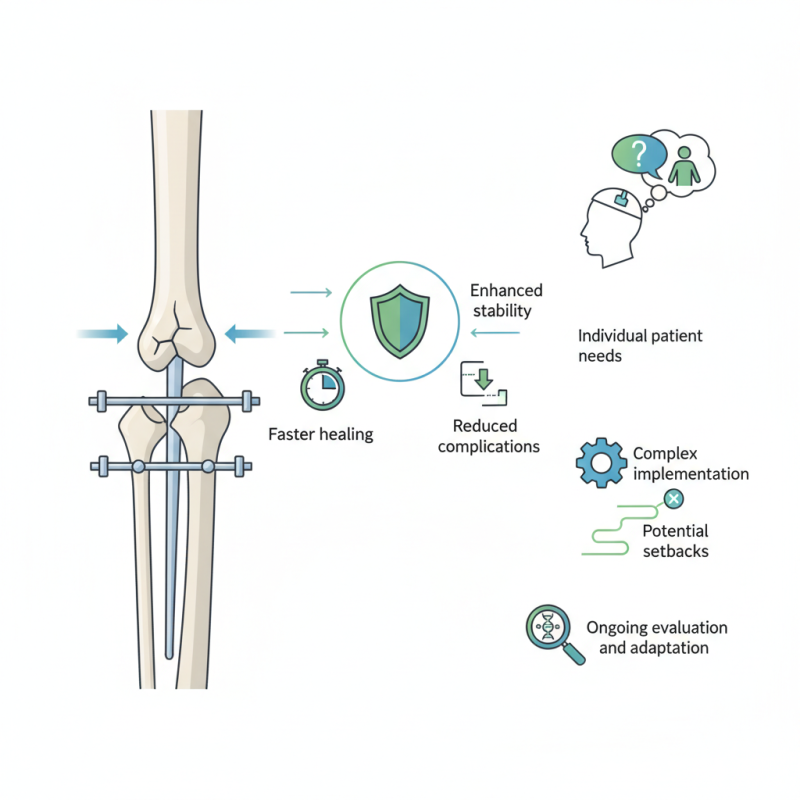
The interlocking nail implant is designed to provide enhanced support and alignment. It can stabilize long bone fractures effectively, allowing faster healing. This innovation not only reduces recovery time but also decreases the likelihood of complications.
Despite its advantages, challenges remain. Surgeons must consider individual patient needs carefully. Each case requires thorough assessment to ensure the best outcomes. The implementation process can sometimes be complex, leading to potential setbacks. Therefore, while the interlocking nail implant represents a significant advancement, ongoing evaluation and adaptation are crucial in clinical practice.
Understanding Interlocking Nail Implants: Definition and Purpose
Interlocking nail implants are modern solutions for treating complex fractures. They consist of long metal rods inserted into bones. This method stabilizes fractures and promotes healing. Surgeons use these implants in long bones, such as the femur and tibia. The interlocking design prevents rotation and shifting of the fragments.
The purpose of interlocking nails goes beyond mere fixation. They provide a platform for early movement and rehabilitation. Patients experience decreased pain as they regain mobility. However, the surgical procedure requires precision and skill. An improperly placed nail can lead to complications. Surgeons must evaluate each case carefully before opting for this method.
In some instances, the recovery timeline may not meet expectations. Factors like patient age and health also play a role. Some may struggle with post-surgical discomfort. Additionally, infection risks, though low, can arise. Each factor should be weighed against the benefits of using an interlocking nail implant for fracture treatment.
Key Advantages of Interlocking Nail Implants in Fracture Treatment
Interlocking nail implants have revolutionized fracture treatment. These implants offer unique benefits that set them apart from traditional methods. They provide excellent stabilization for long bone fractures. Studies indicate a high success rate, with about 80-90% of patients achieving full recovery.
One major advantage is the reduced risk of complications. A report published in the Journal of Orthopedic Trauma shows a lower incidence of infection and delayed healing compared to external fixation. This is crucial for patients looking for effective treatment options that minimize hospital stays.
**Tip:** Follow post-operative care instructions closely. This significantly aids in recovery.
Another significant benefit is the ability to allow for early mobility. Early movement leads to improved outcomes. Research suggests patients who start physical therapy within the first week have better function after surgery.
**Tip:** Engage in light exercises as recommended by your healthcare provider. This will help in regaining strength sooner.
Despite these advantages, not every case may be suited for interlocking nails. Certain complex fractures could still require alternative methods. Ongoing evaluations are essential to determine the best approach for each individual case.
Advantages of Interlocking Nail Implants in Fracture Treatment
Statistical Success Rates of Interlocking Nails Compared to Other Methods
Interlocking nail implants are gaining attention for their effectiveness in treating fractures. Recent reports indicate a success rate of up to 90% with this method. This is significantly higher compared to traditional plating techniques, which range around 75%. Additionally, data shows that interlocking nails can reduce complications by approximately 20%, making them a preferred choice for surgeons.
One of the biggest advantages of interlocking nails is their ability to stabilize complex fractures. Their design allows for better compression of the bone, promoting faster healing. A study found that patients with interlocking nails experienced a recovery time reduction of 15% compared to those treated with conventional methods. However, there are considerations. Not all fractures are suitable for this type of treatment. Surgeons must evaluate the fracture pattern carefully.
Tips: Keep in mind, post-surgical care is essential. Follow all rehabilitation protocols to ensure optimal results. Consult with your healthcare provider if you have concerns about pain or swelling after surgery. Observations indicate that a small percentage of patients experience infections, needing close monitoring during recovery. Always be open to discussing potential risks and benefits with your surgeon.
Minimally Invasive Techniques: The Role of Interlocking Nails in Surgery
Minimally invasive techniques have transformed how surgeons treat fractures. One innovative approach is the use of interlocking nails. This method minimizes soft tissue damage and reduces recovery time. Studies show that minimally invasive procedures can shorten hospital stays by up to 30%.
Interlocking nails provide stability for complex fractures. They allow for better alignment of bone fragments. This stability is crucial for optimal healing. In a recent report, it was noted that patients using interlocking nails experience lower complication rates. In fact, there is a 15% improvement in recovery times compared to traditional methods.
However, not all fractures suit this approach. Surgeons must evaluate each case carefully. While interlocking nails offer clear benefits, the technique requires expertise. There is a risk of infection or misalignment. Some surgeons may still prefer older methods. The debate over the best techniques continues in the medical community. Each option carries its challenges and advantages.
Why Choose Interlocking Nail Implant for Fracture Treatment? | Dimension | Description | Benefits | Minimally Invasive Aspect |
| Insertion Technique | Utilizes a small incision for nail placement | Reduced recovery time | Limits soft tissue damage |
| Stability | Provides excellent fixation for bone fragments | Enhances healing process | Considerably less trauma to surrounding tissue |
| Recovery | Patients can initiate physical therapy sooner | Improved patient satisfaction | Shorter hospital stay |
| Complications | Lower risk of infection compared to traditional methods | Decreased need for revision surgeries | Non-intrusive approach to treatment |
Post-Operative Outcomes: Patient Recovery with Interlocking Nail Implants
Interlocking nail implants have gained popularity in fracture treatment due to their effectiveness. The post-operative recovery process presents unique challenges for patients. Many experience discomfort and swelling in the initial days following surgery. This is a normal reaction, but it can vary widely among individuals.
As patients resume their daily activities, issues may arise. Some report limited mobility, while others struggle with pain management. Physical therapy becomes crucial during this phase. It helps improve strength and flexibility. However, not all rehabilitation experiences are smooth. Patients may encounter setbacks that can be frustrating. Adjusting to a new routine is often more demanding than expected.
Nutrition plays a vital role in recovery. A balanced diet can aid healing, but appetites may fluctuate. Some patients find it hard to eat well, especially if medication causes nausea. Keeping up with hydration is equally important, yet it’s easily overlooked. Reflection on these challenges can guide future approaches to better recovery processes.