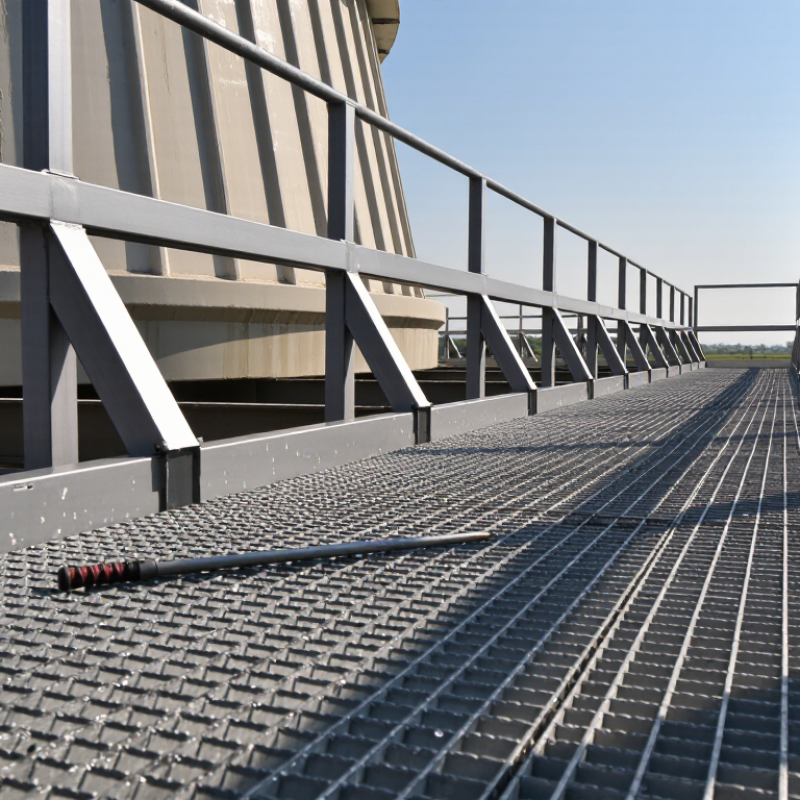
| Material | Carbon steel grating with hot-dip galvanized zinc coating | Outdoor walkways, platforms, drainage covers, industrial access areas, and moderate-to-severe atmospheric exposure | Confirm the base steel grade, welding quality, coating process, and certificate of conformity |
| Manufacturing Standard | NAAMM MBG 531 for steel bar grating design, fabrication, and terminology | Projects specified for North American engineering and construction practice | Request the applicable edition and confirm that the supplier’s drawings follow the required load tables |
| Zinc Coating Standard | ASTM A123/A123M or ISO 1461 for hot-dip galvanized fabricated steel products | General structural and access applications requiring corrosion protection | Check coating mass or thickness, visual finish, uncoated areas, and repair requirements |
| Galvanizing Repair | ASTM A780/A780M-compliant repair using an approved zinc-rich repair system or equivalent method | Cut edges, drilled holes, welding damage, and small transport or installation defects | Ensure damaged areas are cleaned and repaired according to the specified standard before service |
| Bearing Bar Size | Common choices include 25 × 3 mm, 25 × 5 mm, 32 × 5 mm, and 40 × 5 mm | Light pedestrian use through heavier industrial platforms and service areas | Select by clear span, design load, deflection limit, support condition, and required safety factor—not by size alone |
| Bearing Bar Spacing | Typical center-to-center spacing: 30, att 32, or 40 mm | 30–32 mm spacing is commonly selected where smaller openings and improved walking comfort are needed; 40 mm can reduce weight and cost | Check heel safety, tool-drop risk, drainage needs, and local accessibility requirements |
| Cross-Rod Spacing | Typical spacing: 50, 76, or 100 mm, depending on the grating system | Closer spacing provides a denser walking surface; wider spacing may improve drainage and reduce material use | Confirm the opening dimensions and whether the project restricts falling objects or footwear penetration |
| Surface Type | Plain surface or serrated surface | Plain grating suits relatively clean areas; serrated grating is preferred where oil, water, mud, or ice may reduce traction | Confirm slip-resistance requirements and whether serrations are applied to bearing bars, cross bars, or both |
| Load Category | Pedestrian traffic, maintenance trolley, equipment access, or vehicle loading | The correct grating depends on uniformly distributed load, concentrated load, span, and support layout | Obtain a stamped or signed load calculation where the grating supports people, equipment, or vehicles |
| Deflection Target | Common project limits include L/200 or L/240, subject to the governing specification | Controls vibration, user comfort, equipment stability, and perceived structural stiffness | Confirm whether the limit applies to live load, total load, or a specific project design code |
| Panel Dimensions | Panel length and width should be based on the support grid, lifting limits, access routes, and transport constraints | Smaller panels simplify handling and replacement; larger panels can reduce installation joints | Require a shop drawing showing bearing direction, support locations, cut-outs, and panel identification |
| Support Bearing | Provide adequate end bearing on structural supports; the exact minimum depends on the design standard and support detail | All platforms, walkways, trenches, and removable covers | Verify bearing length, support width, fastener clearance, and that bearing bars run in the designed span direction |
| Fixing Method | Grating clips, saddle clips, bolted clamps, or welded attachments | Clips are useful for removable panels; welding can provide permanent restraint where permitted | Specify the number and position of fixings, anti-lift protection, and corrosion repair after field welding |
| Safety Accessories | Kick plates, nosing, stair treads, handrails, toe guards, and removable lifting handles | Elevated platforms, stairs, walkways, maintenance zones, and areas with falling-object risks | Coordinate accessory dimensions with the applicable building, workplace-safety, and accessibility requirements |
| Indicative Material Cost | Approximately US$45–120 per m² for standard hot-dip galvanized steel grating, excluding freight and installation | Budget-stage comparison for standard panels with common bar sizes and spacing | Obtain a project quotation because steel weight, panel size, cut-outs, quantity, coating, and market conditions significantly affect price |
| Fabrication Cost Factors | Cut-outs, border bars, toe plates, stair nosing, special tolerances, nonstandard dimensions, and additional galvanizing work | Projects with equipment penetrations, irregular layouts, or prefabricated installation requirements | Ask for separate pricing for raw panels, fabrication, galvanizing, packaging, testing, and delivery |
| Lead Time | Often about 3–8 weeks for standard production after approved drawings; custom or high-volume orders may take longer | Planning procurement, site installation, and replacement-panel requirements | Request a written schedule covering drawing approval, fabrication, galvanizing, inspection, and shipment |
| Supplier Quality Evidence | Material certificates, galvanizing records, dimensional inspection reports, load calculations, and traceable delivery documents | Safety-critical, regulated, export, and industrial projects | Check whether documents identify the actual batch, panel numbers, standards, test results, and inspection criteria |
| Packaging and Delivery | Bundled panels with separators, clear labels, lifting points, and protection against distortion during transport | Large projects requiring staged installation or crane and forklift handling | Confirm bundle weight, lifting instructions, delivery sequence, unloading responsibility, and damage-reporting procedure |
| Total Cost of Ownership | Evaluate purchase price, installation labor, fasteners, maintenance access, replacement ease, corrosion protection, and service life | Long-term infrastructure, industrial plants, utilities, marine-adjacent, and hard-to-access locations | Choose the lowest compliant lifecycle cost rather than the lowest initial unit price |