
1-208-754-4884

How to Choose the Best Udon Noodle Machine for Your Business

Choosing an Udon Noodle Machine is not just a matter of comparing prices or production speeds. It affects noodle texture, staff workload, floor space, and how steadily your kitchen can meet demand. A machine that looks impressive in a brochure may struggle with your dough recipe or daily volume. Small details matter: the width of the worktable, the time needed for cleaning, and whether one worker can adjust the rollers safely.

A useful expert quotation belongs here: “[Insert a verified quotation about matching noodle-machine capacity to production needs],” says [name of a verified udon-equipment specialist]. Confirm the expert’s identity and exact wording before publication. That check is not glamorous. It matters. Buyers deserve advice they can trace, not a polished quote with no reliable source.

This guide will help you compare machines by capacity, adjustment range, construction, maintenance, and supplier support. It will also consider the less tidy questions, such as whether your team has enough room to handle dough before and after rolling. A higher output rating is not automatically better. If the machine runs faster than your staff can portion or cook the noodles, the extra capacity may sit unused. Think about your actual service: bowls per hour, peak periods, available operators, and the texture your customers expect. Then compare those needs with what each machine can consistently deliver. Some trade-offs will remain. That is worth admitting.
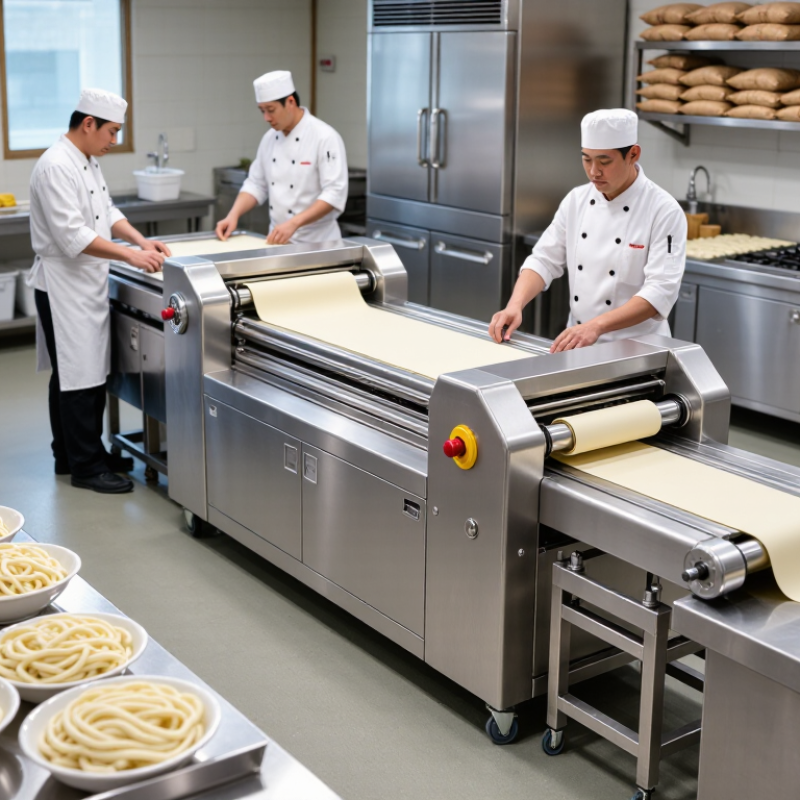
How to Choose the Best Udon Noodle Machine for Your Business

Assess Your Business’s Udon Production Needs

Before comparing machines, measure actual udon demand across a normal week. Count bowls sold by hour, not just daily totals. A lunch shop may need a sharp production surge between 11:30 and 1:30, while a retailer may need steady batches for chilled packs. Include dough mixing, resting, cutting, and cleanup in your timing. The noodle maker is only one step.

The National Restaurant Association’s 2024 State of the Restaurant Industry report projected $1.1 trillion in U.S. restaurant and foodservice sales and 15.7 million jobs. These broad figures do not predict udon demand, but they show the scale and labor pressure facing foodservice operators. For your own estimate, record peak-hour orders and staff time for at least two weeks. Keep a little headroom. Not too much.

Then calculate the machine’s usable output per hour, rather than relying only on advertised maximum capacity. Check whether that figure assumes a particular dough recipe, noodle thickness, or uninterrupted operation. A small kitchen might favor a compact unit that one worker can clean quickly. A central kitchen may need larger batches, extra drying or cooling space, and room for safe handling. Your first forecast may miss seasonal swings. Review it after a busy month.

Compare Types of Udon Noodle Machines

Udon noodle machines generally fall into three groups: manual sheeters and cutters, semi-automatic machines, and integrated production lines. With a manual setup, staff mix the dough separately, pass it through adjustable rollers, and cut the sheet into strands. This option fits a small kitchen with modest daily demand, but thickness and portion size depend heavily on operator technique. Hands stay busy.

Semi-automatic machines reduce repetitive rolling or cutting while leaving some steps to staff. They can suit restaurants that need steadier portions without dedicating much floor space to production. Check the roller width and cutting options against your planned noodle size; a machine may handle one dough batch well but struggle with another. Dough hydration and resting time also affect how smoothly it feeds.

Integrated lines combine stages such as mixing, sheeting, and cutting, making them better suited to regular, higher-volume output. They usually need more space, setup, and cleaning time, so compare real production needs rather than relying only on the stated hourly capacity. Ask to see the machine process a dough batch similar to yours, and inspect how easily flour and dough residue can be removed. A common mistake—and an easy one to make—is choosing for a busy weekend, then paying for unused capacity all week. Texture matters.

How to Choose the Best Udon Noodle Machine for Your Business – Compare Types of Udon Noodle Machines

Machine type Typical functions Best suited to Advantages Considerations What to check before buying
Manual pasta-style roller and cutter Rolls dough into sheets and cuts it into strands; mixing and kneading are usually done separately. Very small kitchens, test batches, or businesses making limited quantities by hand. Low equipment complexity, compact footprint, and direct control over each batch. Requires substantial operator effort and time; many models are not designed for thick, firm udon dough or continuous commercial use. Roller strength, maximum sheet width, available cutting widths, cleaning access, and suitability for the dough firmness used in your recipe.
Countertop electric sheeter and cutter Uses powered rollers to reduce dough into sheets; a cutter attachment or separate cutter forms noodles. Small restaurants and food businesses with steady but limited daily production. Reduces manual rolling effort and can provide more consistent sheet thickness than hand rolling. Dough mixing, resting, and portioning may still be separate steps; the machine may need pauses between batches. Motor duty rating, roller gap adjustment, sheet width, cutter options, electrical requirements, and whether parts are removable for cleaning.
Commercial sheeter with a separate cutter Processes larger dough portions through adjustable rollers, then cuts sheets into noodles using a separate unit or attachment. Restaurants, central kitchens, and small producers that need repeatable batches. Offers more control over sheet thickness and noodle width; components can often be selected for the desired workflow. Requires space for multiple machines and handling between sheeting and cutting; throughput depends on operators and batch size. Roller and cutter capacity, compatible dough size, adjustment range, spare-part availability, and the time required to clean each unit.
Integrated semi-automatic udon machine Combines several steps, commonly sheeting and cutting; the operator may still load dough, fold sheets, or transfer noodles. Businesses seeking a more streamlined process without investing in a full production line. Can reduce handling between operations and improve consistency when settings and dough preparation are controlled. Automation level varies by model; some preparation and quality checks remain manual. Included process steps, operator requirements, adjustment options, changeover time, safety guards, and cleaning procedure.
Automatic noodle production line May connect dough mixing, feeding, sheeting, folding, cutting, and conveying; the exact configuration depends on the line. High-volume manufacturers or central production facilities with established recipes and demand. Can reduce manual transfers and support repeatable, continuous production when correctly configured. Higher purchase and installation requirements, greater space and utility needs, and more complex maintenance and changeovers. Rated output for your specific dough, line layout, power and utility needs, sanitation design, installation support, and service availability.

Selection note: Machine capabilities and output vary by model, dough formulation, noodle dimensions, and operating conditions. Confirm specifications with the supplier and, where possible, test the machine using your own udon dough before purchase.

Evaluate Capacity, Features, and Ease of Use

Choosing an udon noodle machine starts with your busiest service period, not an attractive hourly rating. Estimate how many portions staff must prepare during that rush. Then compare that figure with the machine’s usable output, including dough feeding, cutting, and pauses for adjustments. A small restaurant may value steady batches over maximum speed. A central kitchen may need greater capacity and room for continuous production. Check the expected portion size, too.

Features should solve real production problems. Adjustable rollers help control noodle thickness, while interchangeable cutters support different widths. A reliable dough-feeding system can reduce uneven sheets and wasted dough. Look for accessible safety guards and parts that staff can remove for cleaning. Ask how often blades, belts, or other wear components need inspection. More settings are not always better. Complicated controls can slow a busy shift.

Ease of use matters every day. Check whether one worker can load dough, adjust settings, and collect noodles without awkward lifting. Measure the machine against your available counter space, and listen to it during operation if possible. Ask for a trial using your own dough recipe; flour and hydration can change how smoothly dough feeds. Training may still take longer than expected. Leave time for cleaning between batches, and confirm that routine maintenance instructions are clear.

How to Choose the Best Udon Noodle Machine for Your Business

Compare production needs with a practical machine capacity target. The example assumes a 25% capacity buffer for demand peaks and downtime.

How to use this: Divide your planned daily output by production hours to find the required hourly output, then allow extra capacity for busy periods. For example, 120 kg per day over 6 hours requires 20 kg/hour; with a 25% buffer, target about 25 kg/hour. Confirm rated output with the supplier, since recipes and machine settings affect production.

Check Food Safety, Maintenance, and Durability

When comparing udon noodle machines, inspect every surface that touches dough. Food-grade stainless steel, smooth welds, and removable covers make cleaning easier. Look closely at joints where flour paste can collect. Small details matter. Ask for documentation on food-contact materials and the recommended cleaning procedure. A machine that is hard to sanitize can turn a simple end-of-shift task into a recurring risk.

Maintenance access matters during a busy service. Check whether rollers, cutters, and dough guides can be removed without special tools. Ask how often parts need inspection, and whether replacement components are readily available. Check it daily. A clear maintenance schedule helps staff spot loose fasteners, unusual vibration, or residue before these issues interrupt production. Avoid assuming that a complicated machine is automatically more capable; extra parts can mean extra cleaning and upkeep.

Durability depends on more than a heavy frame. Review the motor’s intended workload and test the machine with dough close to your usual thickness and batch size. Listen for strain, and watch whether the noodles emerge evenly. A polished exterior can be misleading. It does not reveal bearing quality or the machine’s performance after months of use. Keep in mind that supplier demonstrations rarely match every kitchen’s pace, so compare the stated capacity with your own daily production and leave room for a less-than-perfect fit.

Compare Costs and Select the Best Machine

A low purchase price can hide expensive operating costs. Compare each udon machine by total cost over five years, not by the quote alone. Include installation, dies, spare parts, cleaning time, energy use, and expected maintenance. Ask suppliers for a written estimate of routine service and replacement components. Small costs add up.

Match capacity to your busiest realistic service period. A machine rated for 80 kilograms per hour may not sustain that output with your dough recipe or staff. Request a trial using your flour blend, preferred noodle thickness, and typical batch size. Time setup, forming, cleaning, and changeovers—not just production. That is the useful number.

Labor savings also matter. A compact machine may need frequent refilling, while a larger unit can require more floor space and trained operators. Check whether its controls are clear and whether common parts can be replaced without lengthy downtime. Compare warranty coverage, response times, and local technician availability. A spreadsheet can still miss awkward workflow details; I would inspect the cleaning process before deciding. Ask for references from businesses with similar daily output, then compare their actual maintenance experience with the seller’s projections. A slightly higher price may be sensible, but not always.