1-208-754-4884

How to Choose a Forklift Actuator in 2026?
Choosing a forklift actuator in 2026 is not a simple catalog exercise. The right component must match the truck, attachment, workload, and operating environment. A warehouse forklift may need precise, frequent movement. A rough outdoor site may demand stronger sealing and impact resistance. Small differences matter. A few millimeters of travel can change attachment alignment, while excessive force can damage mounting points.
This guide explains how maintenance teams, fleet managers, and equipment buyers can evaluate each Forklift Actuator with practical confidence. We will examine load capacity, stroke length, speed, duty cycle, voltage, feedback options, and installation space. We will also consider heat, dust, moisture, vibration, and washdown exposure. Manufacturer data should be checked against the forklift service manual, not guessed from a product photo. In real workshops, compatibility failures often appear during installation, not purchasing. That is why connector type, mounting geometry, emergency behavior, and replacement support deserve equal attention.
Experience still matters. Record current actuator performance, inspect wear patterns, and ask why the existing unit failed. Was the problem overload, contamination, poor alignment, or an incorrect control signal? A reliable choice balances performance, service life, safety, and total ownership cost. The cheapest actuator may create repeated downtime. The most powerful option may be unnecessary. No checklist is perfect. Conditions change, and field testing can reveal assumptions that specifications miss. By comparing evidence carefully, readers can select a Forklift Actuator that supports stable operation in 2026 and beyond.
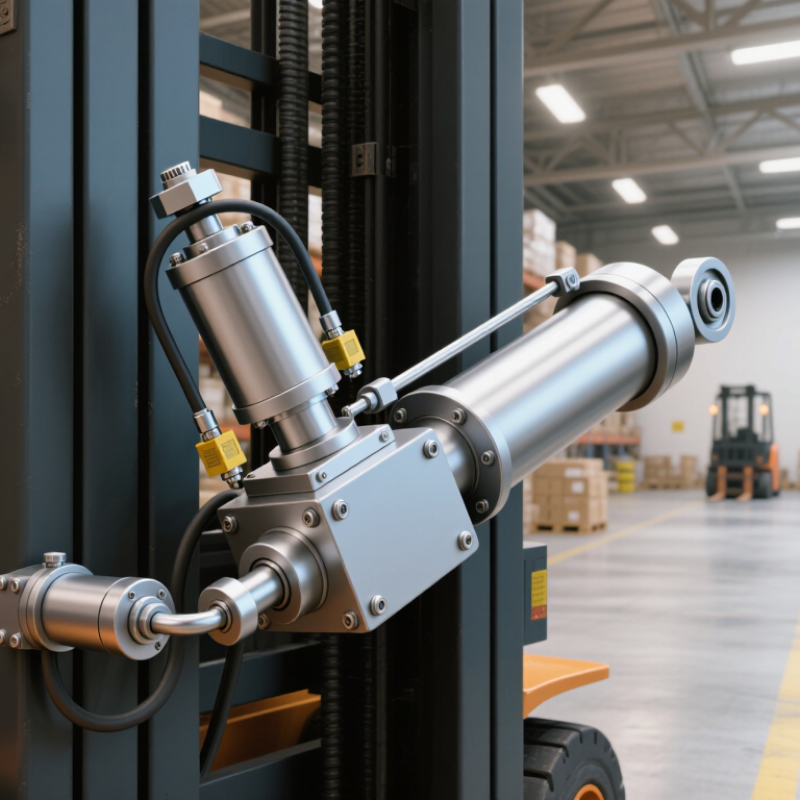
Table of Contents [Hide]
What a Forklift Actuator Is and How It Controls Machine Functions
A forklift actuator is the working device that turns an electrical, hydraulic, or mechanical command into movement. It may control mast lifting, fork tilting, side shifting, braking assistance, or attachment positioning. In simple terms, the actuator receives a signal and applies force where the operator needs it. Small component. Its size does not define its importance.
When the operator moves a lever, a sensor or valve sends an instruction to the actuator. A hydraulic actuator then moves a piston through pressurized fluid. An electric actuator uses a motor, gears, and a screw to create controlled travel. This movement changes the mast angle or raises the forks at a measured rate. The controller monitors position, load, and travel limits during operation. That feedback helps prevent sudden motion, though it cannot replace inspection.
Choosing one in 2026 requires matching force, stroke, speed, duty cycle, and operating temperature. Check the forklift’s voltage, hydraulic pressure, mounting space, and connector type before ordering. A dusty warehouse may demand better sealing than a clean indoor aisle. I have seen specifications look correct while the mounting geometry was wrong. That mistake creates delay, rework, and sometimes unsafe fork movement. Ask for test records, service guidance, and clear rated limits. Do not judge an actuator by price alone. Real performance appears under load.
How to Choose a Forklift Actuator in 2026? - What a Forklift Actuator Is and How It Controls Machine Functions
| Forklift Function | Typical Actuator Type | What It Controls | Typical Force or Torque Range | Typical Travel or Rotation | Recommended Speed | Key Selection Requirements | 2026 Selection Check |
|---|---|---|---|---|---|---|---|
| Fork and mast lift | Hydraulic cylinder system | Raises and lowers the carriage, forks, and load through the mast chain and pulley arrangement. | Cylinder force commonly ranges from approximately 20 to 150 kN, depending on rated capacity and mast design. | About 0.8–6 m cylinder or mast-related travel, depending on lift height and reeving. | Controlled hydraulic lifting; commonly about 0.15–0.60 m/s at the carriage. | Rated load, hydraulic pressure, buckling resistance, rod side-load protection, cushioning, and load-holding performance. | Verify the actuator against the truck’s load chart, maximum lift height, hydraulic pressure, and required lowering speed. |
| Mast tilt | Double-acting hydraulic cylinder | Tilts the mast forward or backward to position the load and improve load stability. | Often approximately 10–60 kN per cylinder, subject to mast geometry and truck capacity. | Typically supports around 5–12° of mast tilt in each direction. | Smooth positioning rather than maximum speed; commonly about 3–10°/s. | High side-load tolerance, precise metering, corrosion resistance, and reliable seals under frequent cycling. | Select cushioning and valve control carefully to prevent abrupt load movement at the end of tilt travel. |
| Fork positioning | Hydraulic cylinder or compact electro-hydraulic actuator | Moves forks inward or outward to accommodate different pallet widths and load shapes. | Commonly approximately 5–25 kN per positioning actuator. | Usually 0.2–1.0 m of fork adjustment, depending on attachment geometry. | Typically about 0.05–0.25 m/s for controlled fork movement. | Synchronized movement, low friction, overload protection, compact envelope, and clear visibility around the attachment. | Check the attachment’s residual capacity because added actuator and attachment weight reduces usable lifting capacity. |
| Side-shift carriage | Short-stroke hydraulic cylinder | Moves the carriage laterally without repositioning the truck. | Usually approximately 8–30 kN, depending on friction, load offset, and attachment design. | Commonly 50–150 mm total lateral travel. | Typically about 0.05–0.20 m/s. | Short retracted length, adequate lateral guidance, pressure protection, and resistance to impact loads. | Confirm that the carriage and cylinder remain within the rated load center and attachment capacity. |
| Attachment rotation | Hydraulic rotary actuator or hydraulic motor with reduction gear | Rotates drums, bins, clamps, or other attachments to orient or discharge a load. | Approximately 1–15 kN·m, depending on load inertia, eccentricity, and attachment size. | Commonly 180–360° rotation; some applications require continuous rotation. | Typically about 2–15 rpm for controlled handling. | Holding torque, braking or counterbalance control, end-stop protection, hose routing, and resistance to shock loading. | Calculate torque from load weight, center of gravity, friction, acceleration, and a suitable safety factor. |
| Clamping attachment | Hydraulic cylinder with pressure-regulated circuit | Applies and releases gripping force around cartons, rolls, appliances, or other loads. | Approximately 5–50 kN per cylinder; required force depends strongly on friction and load surface. | Often 0.1–0.8 m jaw travel. | Typically about 0.03–0.20 m/s to limit product damage. | Accurate pressure control, anti-drop protection, synchronized jaws, cushioning, and suitable contact-pad alignment. | Set grip force from the weakest allowable load condition; excessive force can deform or damage products. |
| Electric auxiliary control | Electromechanical linear actuator | Operates smaller functions such as covers, latches, sensor mounts, access mechanisms, or low-force positioning systems. | Commonly approximately 0.5–8 kN linear force. | Typically 50–500 mm stroke. | Often about 5–50 mm/s, depending on load and duty cycle. | Battery voltage compatibility, current draw, duty cycle, position feedback, mechanical locking, and ingress protection. | Use only where the actuator can fail safely; do not substitute it for a certified load-holding hydraulic system without engineering validation. |
| Operator control linkage | Electrical actuator, solenoid valve, or proportional valve actuator | Converts a lever, switch, joystick, or electronic command into hydraulic flow or mechanical movement. | Small control forces commonly range from approximately 50 N to 2 kN; valve torque is application-specific. | Usually 5–100 mm linear travel or limited rotary movement. | Fast enough for responsive control, commonly about 0.05–0.50 m/s equivalent motion. | Fail-safe behavior, proportional response, electrical noise immunity, connector sealing, and diagnostic feedback. | Prioritize predictable response and fault detection over raw speed; validate compatibility with the truck control system. |
Core selection rule: Choose the actuator by calculating required force or torque, stroke or rotation, operating speed, duty cycle, available hydraulic or electrical power, environmental protection, and fail-safe behavior. The actuator must also preserve the forklift’s rated capacity and load center.