How to Choose the Right Galvanized Nails for Your Project?
When embarking on a project that requires durability and resistance to corrosion, choosing the right galvanized nails becomes crucial. According to industry expert John Sullivan, "Using the correct galvanized nails can make or break the longevity of your work." The selection process may seem straightforward, yet the details matter significantly.
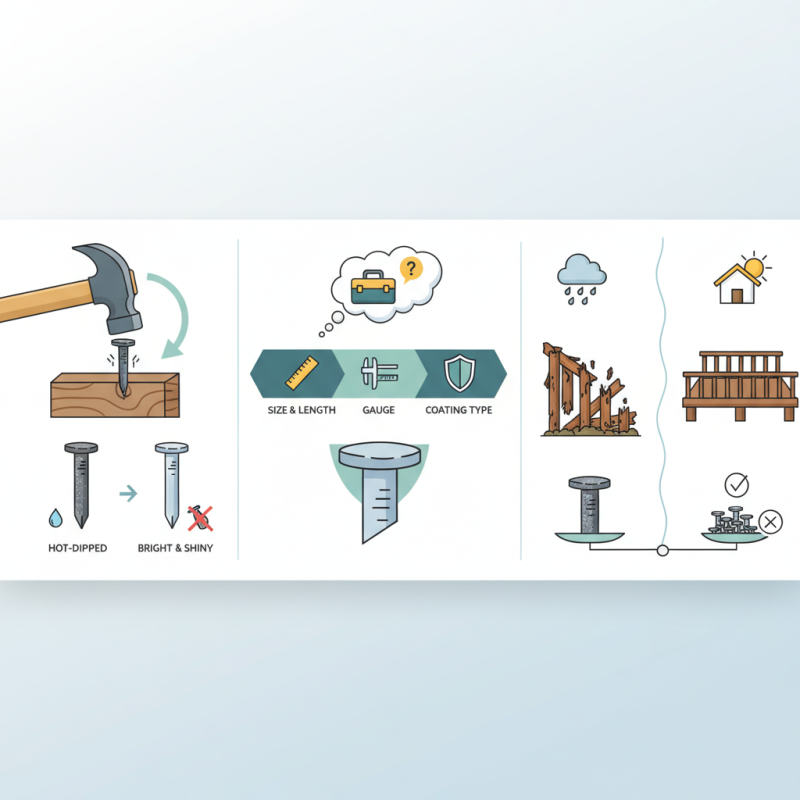
Galvanized nails come in various sizes, coatings, and types. For example, hot-dipped galvanized nails are known for their robust resistance. While bright and shiny nails may look appealing, they may not always provide the needed protection. It's easy to overlook the specifics like gauge and length, but ignoring these can lead to structural issues down the line.
Many DIY enthusiasts choose galvanized nails based solely on availability. This approach might not always yield the best results. Knowledge of the project type and environment can enhance nail selection. Rainy climates require more attention to corrosion resistance. The wrong choice could lead to rust and compromises. It is essential to weigh your options and be cautious about what you perceive as the best choice for your needs.
Understanding the Different Types of Galvanized Nails Available
When choosing galvanized nails, it's essential to understand the different types available. Galvanized nails are coated with zinc to prevent rust. The thickness of this coating varies, impacting both durability and cost. Common types include hot-dip galvanized and electro-galvanized nails. Hot-dip nails have a thicker coating, making them ideal for outdoor projects. Electro-galvanized nails, with their thinner coating, work best for indoor uses.
For your project, consider the material you're working with. Wood, for example, may require different nails than metal. Additionally, the environment plays a role. Humidity and exposure to moisture can affect nail performance. A wrong choice can lead to premature rusting. This can ruin your hard work.
Tip: Test a small area first. This helps you see how the nails hold up. Make sure you're comfortable with your choice. Sometimes, it’s easy to overlook the specifics, and a hasty decision can lead to regrets. Always think about the long term. A few extra moments spent on research can save you from future headaches.
Assessing Your Project Requirements for Nail Selection
When selecting galvanized nails for a project, understanding your specific requirements is vital. Consider the materials you will work with. If you are using treated lumber, you need nails that resist corrosion. This ensures durability and longevity. Different projects may require varying nail lengths. Shorter nails may suffice for lightweight tasks, while heavier applications demand longer options.
The thickness of the nails is another crucial factor. Thicker nails provide more strength, but may be harder to drive. This balance between strength and ease of use should be carefully evaluated. Also, think about the environment. Will the nails face moisture or extreme temperatures? Choosing the right gauge can prevent issues down the line.
It's also essential to consider how many nails you will need. Sometimes buying in bulk is cost-effective, but ensure that it aligns with your project scale. Reflect on past projects for insights. Did you choose the right size before? Analyze what worked and what did not. This reflection can guide future purchases and improve decision-making.
Selection of Galvanized Nails Based on Project Requirements
Evaluating Corrosion Resistance and Coating Types
When selecting galvanized nails for your project, understanding corrosion resistance is key. Different environments pose varied threats to nails. For instance, coastal areas with salty air increase the risk of rust. Using nails with stronger corrosion-resistant coatings can greatly enhance durability. Zinc plating is common, but not all zinc coatings are created equal.
Consider hot-dipped galvanized nails, which provide a thick layer of zinc. This method ensures a more durable coating, especially in harsh conditions. Electro-galvanized nails, while less costly, may not hold up in wet environments. Pay attention to the project's location. A simple choice can lead to greater issues down the line.
Assessing the right coatings often requires careful planning. You might overlook details when in a hurry. For outdoor projects, think about the long-term exposure to elements. Short-term savings on cheaper nails may lead to costly repairs. The right choice hinges on a balance of cost, environment, and quality. Reflect on your needs before making a decision.
Determining Nail Size and Length for Optimal Performance
Selecting the right size and length for galvanized nails can significantly influence your project's outcome. An industry report indicates that nail size affects holding strength and ease of driving. For basic carpentry tasks, nails that are 1.25 to 2.5 inches long often provide the ideal grip. However, selecting the wrong length can lead to weak connections, especially in load-bearing structures.
When considering nail thickness, a common gauge for construction nails is 16 or 18. Thicker nails generally offer better holding power. Yet, using nails that are too thick can split the wood. A frequently overlooked aspect is the material of the wood you are working with. Softwoods like pine may require shorter, thinner nails compared to hardwoods like oak.
Another factor is the environmental conditions. Galvanized nails are resistant to rust, which is crucial for outdoor projects. Still, the coating can affect the nail's grip. A 2021 study showed that in humid environments, using standard galvanized nails led to a 15% decrease in overall strength. Attention to these details can prevent future issues. It’s vital to evaluate both the materials and conditions closely to ensure optimal performance.
How to Choose the Right Galvanized Nails for Your Project? - Determining Nail Size and Length for Optimal Performance
| Nail Size | Nail Length (inches) | Suitable Materials | Recommended Use |
| 6d | 2 | Light woods, plywood | Trim work, paneling |
| 8d | 2.5 | Soft and hardwood | Framing, sheathing |
| 10d | 3 | Plywood, MDF | Roofing, decking |
| 12d | 3.25 | Heavy timber, joists | Flooring, framing |
| 16d | 3.5 | Lumber, beams | Heavy framing |
Common Mistakes to Avoid When Choosing Galvanized Nails
When selecting galvanized nails for your project, mistakes can be costly. One common error is ignoring the environment of use. Not all galvanized nails have the same level of corrosion resistance. For outdoor projects, ensure the nails are appropriate for exposure to moisture.
Another pitfall is underestimating the importance of size. Using nails that are too short can lead to weak connections. Conversely, excessively long nails may damage the material you are working with. Always measure your materials before choosing nail sizes.
Tips: Consider using a nail gauge. This tool helps you find the right nail thickness. Additionally, review your project’s material specifications. Ensure the nails you choose are compatible with the materials. Finally, don't rush the selection process. Spend time researching various options to avoid future problems.