
1-208-754-4884

How to Get a Carbon Flanges Quote in 2026?

A Carbon Flanges Quote in 2026 should be more than a price beside a product photo. It should connect the flange’s material, dimensions, pressure class, manufacturing standard, testing, and delivery terms to the buyer’s actual service conditions. Small omissions matter. A missing schedule or face type can change the quote, delay approval, or leave two suppliers pricing different products.

The market context makes careful comparison worthwhile. The World Steel Association reported 1.895 billion tonnes of crude steel production in 2023, while the International Energy Agency’s 2020 Iron and Steel Technology Roadmap identifies steelmaking as a major source of industrial emissions. These reports describe the wider steel sector, not flange prices or lead times. That distinction matters. A broad market statistic cannot replace a current, itemized supplier quotation.

For a useful comparison, request the grade, applicable standard, nominal size, pressure class, facing, quantity, origin, inspection documents, and shipping destination in writing. Then compare like with like. Even experienced buyers sometimes overlook a detail; a polished quote can still be incomplete. No verifiable quotation from a named carbon-flange specialist was supplied for this introduction, so inventing one would undermine its reliability. Obtain a traceable expert statement before publication.
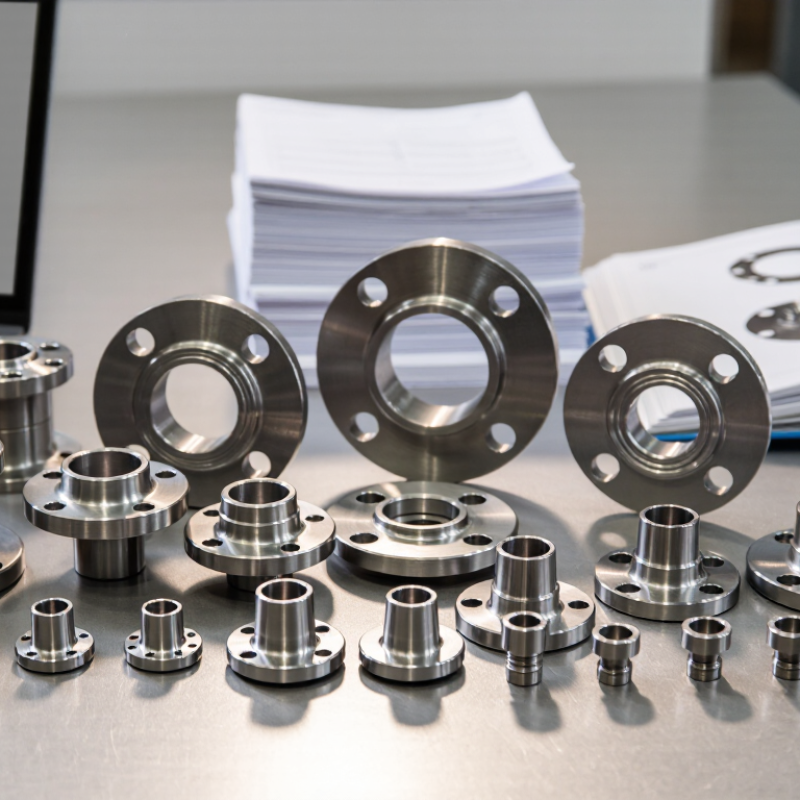
How to Get a Carbon Flanges Quote in 2026?

Determine the Carbon Flange Type and Service Requirements

A reliable carbon flange quote starts with the service conditions, not just the pipe size. Identify the fluid, design pressure, operating temperature, and any short pressure surges. Include the pipe schedule, outside diameter, and required quantity. Small details matter. A flange that fits the pipe may still be unsuitable for the process.

Then specify the flange style and facing. Common options include weld-neck, slip-on, threaded, and blind flanges, with raised-face or flat-face surfaces. ASME B16.5-2020 covers pipe flanges from NPS 1/2 through NPS 24 and pressure classes 150 through 2500. Its pressure-temperature ratings vary by material group, so a class number alone cannot confirm suitability. ASTM A105/A105M covers forged carbon-steel piping components for ambient and higher-temperature service. Confirm whether the requested material and standard match the project specification.

Also describe the operating environment. Moisture, chemicals, temperature cycling, and frequent disassembly can affect material choice, facing, and gasket selection. Not just pressure. If corrosion is possible, state the fluid composition and expected exposure rather than assuming carbon steel will perform well.

One detail is easy to miss: a quote based on incomplete service data may look precise, yet still compare the wrong flange. Cite the governing standard and share any drawing or inspection requirements with the supplier.

Specify Materials, Dimensions, Standards, and Inspection Needs

How to Get a Carbon Flanges Quote in 2026?

A useful quote starts with a complete specification. Identify the material grade, such as ASTM A105, and state the required standard. Common options include ASME B16.5 and EN 1092-1, but they are not interchangeable. Give the nominal pipe size, pressure class, flange type, facing, bore, and drilling details. If the flange must match an existing pipe, include its schedule or measured dimensions. Small details matter.

Inspection needs can affect price and lead time. State whether you need material test reports, dimensional checks, visual inspection, or specified non-destructive testing. Include any required marking, packaging, and delivery terms. It is tempting to send only a drawing; that can leave room for assumptions, especially around facing finish or tolerances. Ask the supplier to flag any mismatch before production. Then review the quote against your specification, not just the unit price.

Tips: Send a marked-up drawing and a quantity breakdown. Note the service conditions and destination, too. Keep requirements practical: extra tests add cost, and vague wording can cause delays. If a requirement is uncertain, identify it as a question rather than presenting it as final.

Prepare a Complete Request for Quotation

How to Get a Carbon Flanges Quote in 2026?
Prepare a Complete Request for Quotation

A useful request for quotation gives suppliers enough detail to price the same product. State the flange type, nominal size, pressure class, facing, and required quantity. Identify the governing standard and edition. Specify the carbon steel grade, such as ASTM A105, only when it suits your design and service conditions. Small details matter. Include the bore size and any unusual dimensions shown on your drawing.

Add the operating pressure, temperature, and service environment where relevant. These details help a supplier flag questions before quoting. Attach a clear drawing, and label critical dimensions rather than relying on a blurry scan. Request material test documentation, inspection requirements, and any needed marking or packaging. A common oversight is forgetting the delivery location and required arrival date; both can affect freight costs and lead time.

Ask suppliers to list any deviations, assumptions, and exclusions with their prices. Request separate pricing for optional tests or packaging if those may change. This makes offers easier to compare. Even a careful RFQ can miss something. Review the specification with your engineering or procurement team before sending it, especially if the flange connects to existing equipment. A few minutes of checking can prevent a quote based on the wrong face or bore.

How to Get a Carbon Flanges Quote in 2026? - Prepare a Complete Request for Quotation

Carbon Steel Flange RFQ Worksheet — Complete the fields below to help suppliers prepare a comparable quotation.

RFQ Information Example Request What to Specify
1. Flange Specification
Flange type Weld neck (WN) Identify the required type, such as weld neck, slip-on, blind, threaded, or socket weld.
Nominal pipe size NPS 4 (DN 100) State the nominal size and the dimensional system required.
Pressure class ASME Class 150 Specify the class or pressure designation required by the applicable flange standard.
Flange standard ASME B16.5 Name the governing dimensional standard and edition if the project specifies one. Confirm that the standard covers the requested size and type.
Facing Raised face (RF) Specify the facing type and any required surface-finish or gasket-contact requirements.
Bore / pipe schedule Bore to match NPS 4, Schedule 40 pipe For a weld-neck flange, provide the mating pipe outside diameter and wall thickness or schedule so the bore can be checked.
2. Material and Service Conditions
Material specification ASTM A105 carbon steel State the required material specification and grade. For low-temperature service, identify the applicable low-temperature material requirement, such as ASTM A350 LF2, if specified by the design.
Design conditions Design pressure and temperature to be confirmed by purchaser Provide design pressure, design temperature, and applicable piping code. The supplier should not infer service suitability from pressure class alone.
Corrosion / service notes Non-sour service; no special corrosion allowance stated Identify sour service, corrosive media, special cleaning, impact testing, or other project-specific requirements where applicable.
3. Quantity, Inspection, and Documentation
Quantity 24 pieces State the quantity and unit of measure. List separate quantities for each size, class, material, or facing.
Inspection requirements Standard inspection; identify any purchaser or third-party inspection requirements Specify required inspections, testing, hold points, witness points, or inspection plans. Do not assume additional testing unless stated.
Material documentation Request material test reports with the quotation State the required certificate type and traceability requirements, such as heat-number traceability, where required by the purchase specification.
Marking and traceability Mark size, class, material, standard, and heat number as required Provide project marking rules, identification format, and any restrictions on marking methods.
Coating and preservation State whether temporary rust-preventive protection or a specified coating is required Describe coating type, surface preparation, color, dry-film thickness, or preservation requirements if applicable.
4. Commercial and Delivery Information
Delivery destination City, region, country, and postal code to be supplied by purchaser Provide the delivery address or nearest port so freight and delivery terms can be quoted accurately.
Required delivery date State requested delivery date or required lead time Ask the supplier to confirm availability, production lead time, and estimated dispatch date.
Quotation currency and validity Request quotation in the purchasing currency and state the required validity period Ask for unit price, extended price, quote validity, applicable taxes or duties, and any minimum-order conditions.
Delivery terms Specify the requested Incoterms® rule and named place, if applicable Use the current applicable Incoterms® edition and identify the exact named place for the quoted delivery term.
Quote response requested Unit price, total price, lead time, packing details, exclusions, and deviations Request a clear list of inclusions, exclusions, technical deviations, and any assumptions used to prepare the offer.

Example values are illustrative only. Confirm flange dimensions, material, pressure-temperature suitability, inspection, and documentation requirements against the project design, applicable codes, and purchase specification before ordering.

Compare 2026 Pricing, Lead Times, and Supplier Terms

To compare 2026 carbon flanges quotes, send each supplier the same specification: flange type, size, pressure class, material grade, quantity, and required documentation. Small differences matter. A raised-face flange and a flat-face flange are not direct price equivalents. Include machining, coating, inspection, and packaging requirements so the quoted scope is clear.

Compare more than the unit price. Check whether freight, export packing, and testing are included, and ask how long the price remains valid. Carbon steel costs and currency changes can affect a quote, so request a clear note on any adjustment. A low price may look less attractive once delivery charges appear. That gap is easy to miss.

Lead times need the same careful reading. Ask whether the estimate covers production, inspection, and dispatch, or only factory processing. Confirm stock availability in writing, along with the expected shipping method and any delivery assumptions. Supplier terms also shape the real cost: review payment milestones, cancellation conditions, replacement procedures for nonconforming goods, and document requirements. If a term is vague, ask for it to be clarified before comparing offers. One imperfect detail can change the schedule. A short written confirmation now can prevent a longer delay later.

Verify the Quote Before Placing the Order

How to Get a Carbon Flanges Quote in 2026?

Verify the Quote Before Placing the Order

A carbon-steel flange quote is useful only when its scope matches your drawing and service conditions. Check the standard, material grade, pressure class, nominal size, facing, bore, and dimensions. Confirm the flange type, quantity, tolerances, and any coating or machining. For traceability, ask whether material test certificates will identify the heat number and match the supplied pieces. If inspection or nondestructive testing is required, put the method and acceptance criteria in writing. One small mismatch can delay installation.

Compare the commercial details line by line. Confirm currency, unit pricing, taxes, freight, packaging, delivery point, lead time, and quote validity. The OECD’s Steel Outlook 2025 projects global steelmaking excess capacity could reach 721 million tonnes by 2027. This market context makes dated price and delivery assumptions worth checking, not assuming. Ask the supplier to state exclusions and the exact revision of your drawing. Then compare the final order acknowledgement with the approved quote. A quote can look complete and still omit a crucial inspection or document. Do not rely on a verbal correction; request a revised written copy before releasing the order.