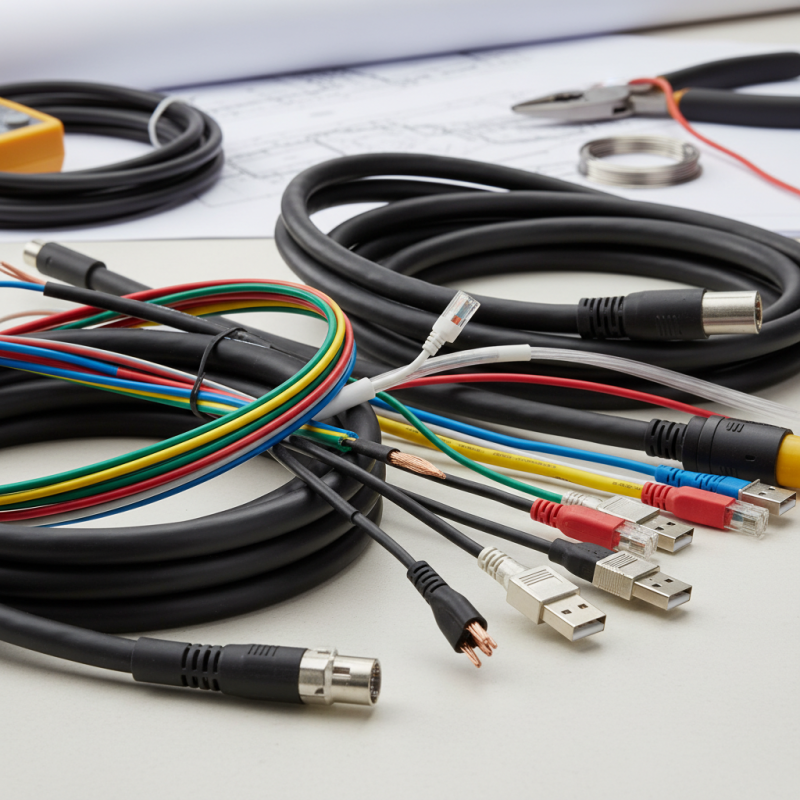
2026 How to Choose the Right Wires and Cables for Your Needs?
Choosing the right wires and cables is essential for various applications. Proper selection ensures safety, efficiency, and longevity in projects. This guide focuses on "Провода и Кабели," which play a crucial role in our daily lives.
Consider the type of task at hand. Power transmission, data transfer, or specific environmental factors all influence your choice. Factors like insulation material, wire gauge, and length determine compatibility. Many overlook these details, leading to potential hazards or failures.
Evaluating quality is equally important. Not all suppliers guarantee reliability. Researching manufacturers helps in finding the right products. Prioritize trusted brands. Making informed decisions may save future problems. Beware of shortcuts. They often lead to complications, ultimately costing more.
Understanding Different Types of Wires and Cables
Wires and cables come in many types, each designed for specific applications. Understanding these variations can greatly enhance your efficiency and safety. For instance, a power cable is quite different from a data cable. While power cables carry electricity, data cables transmit information. Misusing them can lead to serious problems.
Copper and aluminum are common materials. Copper offers better conductivity, while aluminum is lighter and often cheaper. If you are unsure which to choose, consider the distance and load requirements. High voltage requires a specific type of cable to prevent overheating. The gauge of the wire matters too. Thicker wires handle more current but may be more cumbersome.
It’s essential to think about insulation as well. Insulation materials like PVC or rubber protect wires from heat and moisture. However, each insulation type has its limitations. You might wonder about the environment where the cables will be used. Are they for outdoor or indoor use? Environmental factors can affect performance and durability.
Key Factors to Consider When Choosing Wires and Cables
When selecting wires and cables, it's essential to consider several key factors. The type of installation is crucial. For indoor use, standard PVC insulation is often sufficient. However, outdoor environments may require UV-resistant materials for durability. A report from the International Wire and Cable Conference indicates that improper insulation can lead to significant safety hazards.
Another vital aspect is the wire gauge. Thinner wires handle less current and can overheat. According to the National Electrical Code, using the correct gauge can prevent fire risks. For example, 14-gauge wire is suitable for 15-amp circuits, while 12-gauge wire is needed for 20-amp circuits. Misjudging the load can lead to inefficiencies or failures.
Consider the application's specific requirements as well. High-frequency applications require low-loss cables. Conversely, for power transmission, larger conductors are necessary. A recent report highlighted that 40% of equipment failures stem from using inappropriate cables. This statistic underscores the importance of expertise in choosing the right components.
Determining the Right Gauge and Material for Your Project
Choosing the right gauge and material for wires and cables is essential for any electrical project. Gauge refers to the thickness of the wire. Thicker wires have a lower gauge number and can carry more current. This is critical in preventing overheating and ensuring safety. For example, a 12-gauge wire is suitable for heavy-duty appliances, while a 16-gauge wire may suffice for lighter tasks.
Material is equally important. Copper is the most common choice due to its excellent conductivity. However, aluminum offers a lighter alternative at a lower cost. Consider the environment too. In humid areas, moisture-resistant insulation becomes necessary. Reflect on your project’s requirements. Are you using the cables indoors or outdoors? Examine the voltage and current requirements closely. It’s crucial to prevent future issues that could arise from improper wire selection.
Finding the right balance between gauge and material can be challenging. Often, projects involve compromises based on budget and availability. Proper research can fill these gaps. Learning from past experiences can lead to wiser choices in future endeavors.
Evaluating Environmental Conditions and Safety Standards
When selecting wires and cables, environmental conditions and safety standards are crucial. For example, temperature fluctuations can impact cable performance. A report from the International Electrotechnical Commission (IEC) highlights that cables may fail at extreme temperatures, affecting their insulation. This is especially important in regions with severe winters or harsh summers.
Moreover, safety standards like UL (Underwriters Laboratories) play a crucial role. They ensure cables meet specific requirements for fire resistance and electrical safety. According to a study by the National Fire Protection Association (NFPA), faulty wiring is a leading cause of home fires. Therefore, choosing appropriately rated cables can mitigate risks significantly.
Consider moisture exposure as well. Cables used in outdoor environments need water-resistant insulation. The Institute of Electrical and Electronics Engineers (IEEE) warns that corrosion can weaken cables over time. This emphasizes the need for regular inspections and potential replacements, highlighting a gap in many users' approach to maintenance. Ultimately, understanding these factors can guide you in selecting the right cables for your specific needs.
Cost Considerations and Budgeting for Wires and Cables
When considering wires and cables for specific applications, cost plays a critical role. According to the International Electrotechnical Commission (IEC), about 12% of the total project budget can be allocated to wiring and cabling. This illustrates how vital it is to understand cost factors. Selecting the right material is paramount. For instance, copper and aluminum are popular choices. While copper has a higher upfront cost, it offers better conductivity and longevity. This may lead to reduced maintenance costs over time.
Budgeting effectively requires a detailed understanding of project requirements. The Electrical Contractors’ Association highlights that average installation costs can vary significantly by region. Employing cost-efficient strategies, such as bulk purchasing or working with local suppliers, can lower expenses. However, compromising on quality can lead to unexpected failures. According to the Institute of Electrical and Electronics Engineers (IEEE), up to 30% of electrical system failures are due to poor-quality wiring. It's essential to weigh the long-term consequences of choosing cheaper options versus investing in reliable materials.
2026 Cost Considerations for Wires and Cables