
1-208-754-4884

Top 10 Stainless Steel Powder Suppliers for Global Buyers

For global buyers, choosing a Stainless Steel Powder supplier is a technical decision, not just a price comparison. Particle size, shape, chemistry, and cleanliness can affect flow through a feeder and the consistency of a finished part. Ask for current test data, batch traceability, and clear specifications. Look closely at the details.

Materials scientist Dr. John A. Slotwinski has worked on measurement challenges in additive manufacturing. The following is an editorial paraphrase of a principle relevant to his work, not a verbatim quotation: “Reliable powder decisions begin with reliable measurement.” That idea offers a practical lens for comparing suppliers. Claims matter less when they lack supporting data.

This guide examines ten suppliers serving international buyers, with attention to product range, documentation, production capabilities, and customer support. Availability and specifications can vary by grade and region, so confirm them directly before placing an order. A sample may look uniform in a jar, yet perform differently in a production system. Request details about testing methods, packaging, and delivery conditions. Good due diligence takes time. It can also prevent costly surprises.
Top 10 Stainless Steel Powder Suppliers for Global Buyers

Stainless Steel Powder: Types, Properties, and Applications

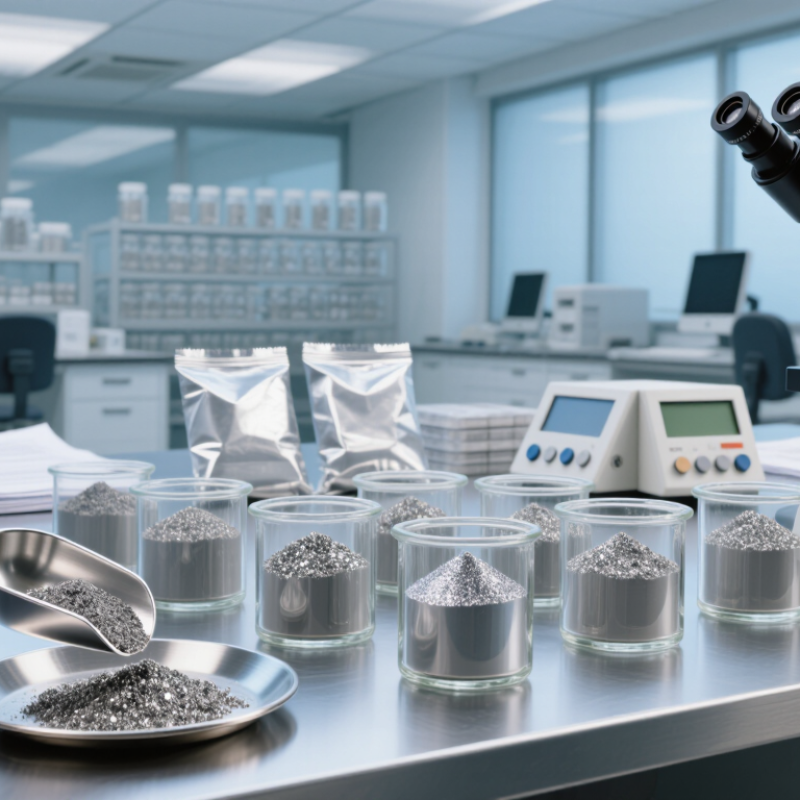
Stainless steel powder comes in several forms, and particle shape affects its behavior during production. Gas-atomized particles are often near-spherical, helping them flow smoothly through a printer and spread in even layers. Water-atomized powder is usually more irregular, which can aid compaction in press-and-sinter parts. Shape matters. Fine particles can capture detail, but may flow poorly and oxidize more readily. Coarser particles often feed more consistently, though they may limit surface finish or feature resolution. The best choice depends on the process and part.

Chromium-rich compositions form a thin passive surface film that helps resist corrosion. Nickel and molybdenum can further influence performance, depending on the alloy and service environment. These powders are used in additive manufacturing, metal injection molding, sintered components, and some coating processes. Small details count. Particle-size distribution, oxygen content, apparent density, and flow rate can affect consistency between batches. In practice, a datasheet cannot tell the whole story: powders made by different routes may behave differently, even when their stated size ranges look similar. Testing a sample with the intended equipment is a sensible step before production.

How to Assess Stainless Steel Powder Suppliers

Assess stainless steel powder suppliers through testable evidence, not catalogue claims. Request a recent certificate of analysis for each lot, covering chromium, nickel, molybdenum, carbon, and oxygen where relevant. Compare particle-size distribution with your process needs, then check morphology, apparent density, and flow using recognized test methods such as ASTM B822, B212, and B213. Details matter. A single passing sample does not prove consistent production.

Industry data provides useful context, but not a quality shortcut. The World Stainless report Stainless Steel in Figures 2024 puts global crude stainless steel production at 58.4 million tonnes in 2023. The USGS Mineral Commodity Summaries 2025 estimates 2024 nickel mine production at 3.7 million tonnes. Neither figure measures stainless powder output or supplier performance. They do underline why buyers should trace feedstock, review alloy chemistry, and ask how a supplier manages changes between lots.

Check whether the supplier can provide batch traceability, retained samples, and clear nonconformance records. Ask for particle-size results from more than one production lot; compare them with an independent lab when specifications are critical. A site audit can reveal storage practices, moisture control, and segregation between alloys. A polished certificate is not a stable process. Yet even a thorough audit has limits: production conditions may change after the visit, so ongoing verification matters.

Top 10 Stainless Steel Powder Suppliers for Global Buyers - How to Assess Stainless Steel Powder Suppliers

Buyer assessment guide: Supplier names and brands are intentionally omitted. The table lists ten practical assessment dimensions rather than ranking specific companies; requirements vary by powder grade, manufacturing process, and end use.

No. Assessment Dimension What to Check Evidence to Request Practical Benchmark
1 Grade and chemistry Confirm the exact stainless steel grade and verify that the chemistry suits the intended application. Common powder grades include 316L and 17-4 PH, but they are not interchangeable. A heat- or lot-specific certificate of analysis (CoA), with measured elemental values and the applicable specification or customer requirements. Compare reported values with the purchase specification and the relevant standard. Do not rely on a grade name alone.
2 Powder production route Establish whether the powder is gas-atomized, water-atomized, or made by another process. Production route can affect particle shape, flow, packing, and suitability for a particular process. A technical data sheet identifying the production route, plus particle images or morphology data where relevant. Match the powder characteristics to the intended use; for example, additive manufacturing commonly requires carefully controlled particle size and flow characteristics.
3 Particle-size distribution Check the complete size distribution, including the measurement method and the reported percentile values, rather than reviewing only a nominal or average size. A lot-specific particle-size report stating the test method, such as laser diffraction or sieve analysis, and the reported size range or percentiles. The accepted size band depends on the process. Require limits and measurement methods to be agreed in the purchase specification.
4 Particle morphology and flow Assess particle shape, satellites, agglomeration, and flow behavior where these affect feeding, spreading, or packing. Representative microscopy images and a flowability test report using a stated method, such as Hall or Carney flow where applicable. Compare results using the same test method and sampling approach. A flow-time value is not meaningful without its method and test conditions.
5 Oxygen and other interstitials Review oxygen, nitrogen, carbon, and other relevant interstitial elements against the grade and process requirements. A lot-specific chemical analysis showing the measured values, test methods, and acceptance limits. Set limits for the intended application before ordering; do not assume that all powders sold under the same grade have identical interstitial levels.
6 Apparent density and packing Determine whether apparent density or tap density is important for the process and whether the supplier measures it consistently. Test results that identify the applicable method, sample preparation, and powder lot. Use the same method when comparing suppliers. Apparent and tap density are different measurements and should not be treated as equivalent.
7 Quality system and traceability Review documented quality controls, lot identification, change management, and the ability to trace material from production through shipment. Current quality-system certificates where applicable, sample inspection records, and an example of lot-level documentation. Every shipment should be traceable to a defined production lot and its inspection records. Verify certificate scope and validity independently.
8 Sampling and consistency Check how samples are taken and whether the supplier monitors variation between batches and within a batch. Documented sampling procedures, batch inspection results, and retained-sample or nonconformance procedures. Agree sampling, retesting, and acceptance procedures in advance, particularly for qualification and first-article orders.
9 Packaging and transport Confirm packaging protects the powder from moisture, contamination, and damage during storage and shipment, and meets applicable transport rules. Packaging specifications, storage guidance, safety data sheet (SDS), and transport documentation appropriate to the product classification. Review packaging integrity on receipt and follow the supplier’s stated storage and handling instructions. Transport requirements depend on the powder and destination.
10 Export capability and commercial support Evaluate export documentation, delivery terms, lead-time communication, technical support, and procedures for complaints or corrective actions. A sample document pack, written delivery and claims procedures, and clear confirmation of the agreed Incoterms® rule and named place. Put grade, tolerances, inspection documents, packaging, delivery terms, and nonconformance handling in the purchase contract.

Top 10 Stainless Steel Powder Suppliers for Global Buyers

Choosing among the top stainless steel powder suppliers takes more than comparing prices. Buyers should check alloy composition, particle-size distribution, morphology, and oxygen content against their production process. A powder for metal injection molding may not suit additive manufacturing. Ask for a current certificate of analysis and confirm how each batch is sampled. Small differences matter.

For global purchasing, assess packaging, lead times, and export documentation before placing a large order. Moisture-resistant sealed containers can help protect powder during storage and transit, while clear lot identification supports traceability. Request samples when possible, then test flowability and apparent density using methods relevant to your equipment. Ask suppliers how they handle out-of-specification batches and whether technical staff can discuss process adjustments. Good support is practical, not just a polished catalog. Keep records.

A supplier’s stated tolerance may not predict performance on your production line. That gap deserves attention. Compare trial results across more than one batch, especially when consistent feeding or surface finish is important. Price still matters, but unusually low quotations may leave unanswered questions about testing, packaging, or delivery. No checklist catches every mismatch. Share your actual application and acceptance criteria, and ask for written confirmation before approving a specification.

Comparing Product Range, Quality Standards, and Global Reach

When comparing stainless steel powder suppliers, product range matters beyond the number of grades listed. Check whether the supplier offers powders suited to your process, such as gas-atomized material for additive manufacturing or water-atomized grades for powder metallurgy. Ask for particle-size distribution, alloy chemistry, morphology, and flow data for the specific lot. Details matter.

Quality claims should be supported by records. Review certificates of analysis, batch traceability, sampling methods, and documented quality systems, such as ISO 9001 where applicable. For critical applications, request test results for oxygen content and apparent density, then confirm that the measurement methods match your requirements. A tidy datasheet can still leave questions. Ask how deviations are handled and whether retained samples are available.

Global reach is more than a map of shipping destinations. Compare regional inventory, realistic lead times, export packaging, and technical support across time zones. A supplier with nearby stock may reduce delays, but only if the material is consistent between lots. Check how the supplier protects powder from moisture and contamination during storage and transit. No scorecard is perfect. Pilot orders can reveal differences that brochures miss, especially when your production equipment or handling routine is particular.

Choosing a Supplier for Your Industry and Requirements

Choosing a stainless steel powder supplier begins with the production process, not the lowest quoted price. Additive manufacturing, metal injection molding, and thermal spraying need different particle sizes, shapes, and flow behavior. Ask for a lot-specific certificate of analysis covering chemistry, particle-size distribution, oxygen content, and apparent density. Then test a representative sample using your own process settings. Small differences can affect feeding, packing, or final part quality. A polished certificate is not the same as a stable production lot.

Industry data helps explain why requirements vary. The International Stainless Steel Forum reported global stainless crude steel production of 58.4 million tonnes in 2023, down 1.7% from 2022; broad supply conditions do not guarantee powder consistency. Meanwhile, Wohlers Report 2024 valued the additive manufacturing industry at $20.035 billion in 2023, with 11.1% annual growth. That figure covers the wider industry, not stainless powder alone. For buyers, it signals the importance of checking whether a supplier can support repeat orders, technical documentation, and realistic lead times. Ask how changes between lots are managed. And verify it. A missed detail in powder storage or handling can undermine an otherwise sound specification.

Top 10 Stainless Steel Powder Suppliers for Global Buyers

Choosing a Supplier for Your Industry and Requirements

Chromium content is one factor to consider when matching stainless steel powder to an application. The ranges shown are typical grade specifications in weight percent; confirm the applicable product standard and powder lot certificate with your supplier.