China Top 10 Seamless Steel Tube Manufacturers?
China has become a major source of seamless steel tube for energy, construction, machinery, and industrial equipment. This guide examines China’s top 10 Seamless Steel Tube manufacturers through practical purchasing criteria, not promotional claims alone. A strong supplier should demonstrate stable production, clear quality systems, and consistent delivery performance.
The comparison considers manufacturing capacity, steel grades, tube dimensions, heat-treatment processes, and testing equipment. It also reviews mill test certificates, heat numbers, ultrasonic inspection, hydrostatic testing, and dimensional control. These details matter when tubes face pressure, high temperatures, corrosion, or repeated mechanical stress. Factory experience is equally important. A supplier may offer attractive prices, yet weak traceability can create costly problems later. Export records, packaging methods, response time, and after-sales support therefore receive careful attention.
Standards such as ASTM, ASME, API, EN, and relevant Chinese specifications can help buyers compare products fairly. However, certification alone does not prove every shipment is reliable. Site audits, sample verification, and independent inspection still provide valuable evidence. No ranking is perfect. Product suitability depends on the project, service conditions, required tolerances, and delivery destination. Some manufacturers disclose more information than others, which can affect their position in this overview. Buyers should confirm current certificates, production capability, and technical terms before signing a contract. The best choice is not always the largest mill. It is the manufacturer that can repeatedly provide the right Seamless Steel Tube, with documented quality and dependable communication.
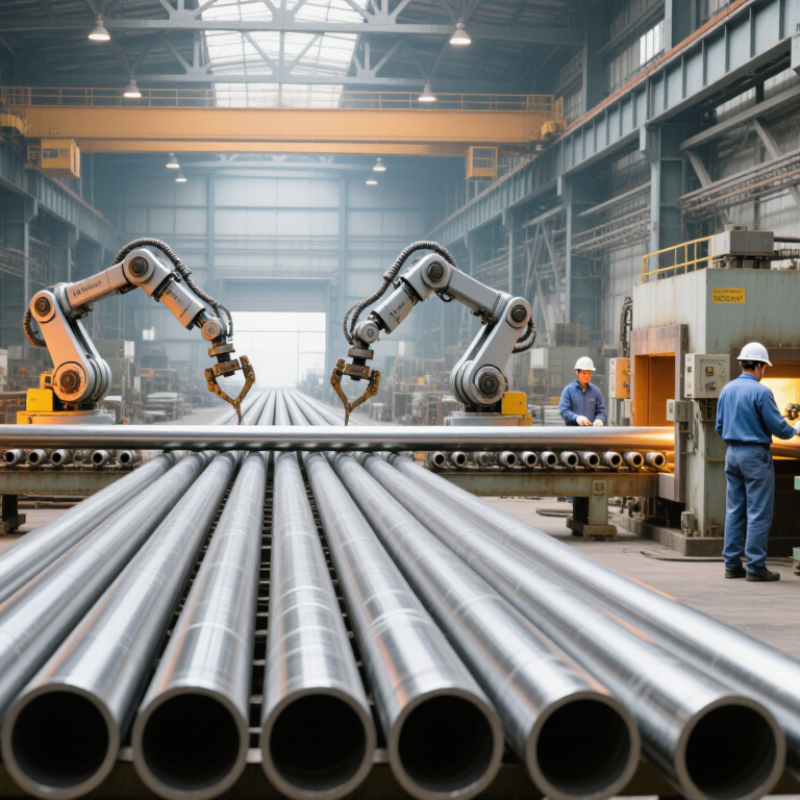
China’s Seamless Tube Sector: 1.019 Billion Tonnes of Crude Steel in 2023
China’s seamless steel tube sector sits within a massive industrial base. In 2023, China produced about 1.019 billion tonnes of crude steel. This figure shows scale, but it does not measure seamless tube quality directly.
Seamless tubes require controlled piercing, rolling, heat treatment, and dimensional inspection. A serious manufacturer should provide mill test certificates, chemical analysis, tensile results, and ultrasonic inspection records. Buyers should also check wall-thickness tolerance, straightness, surface condition, and traceability from billet to finished pipe. These details matter in boilers, oil and gas systems, machinery, and structural applications.
A “top 10” ranking needs more than production volume. It should compare export experience, certified quality systems, delivery consistency, technical support, and the ability to produce demanding grades. Factory visits can reveal practical differences, such as furnace control, storage conditions, and inspection discipline. Public information is sometimes incomplete, so rankings may contain uncertainty. That is worth admitting.
Large output brings advantages.
Yet scale can hide variation between production lines. A reliable evaluation should examine recent inspection reports, sample testing, customer references, and contract performance. Buyers may also request third-party verification before shipment, especially for high-pressure or safety-critical service. The strongest assessment combines national production data with evidence from the individual mill.
China Top 10 Seamless Steel Tube Manufacturers? — China’s Seamless Tube Sector: 1.019 Billion Tonnes of Crude Steel in 2023
Ten non-company industry indicators for China’s seamless steel tube supply chain
| No. | Industry Dimension | Verified Data or Description | Reference |
| 1 | China crude steel output in 2023 | 1,019.1 million tonnes | World Steel Association, World Steel in Figures 2024 |
| 2 | Global crude steel output in 2023 | 1,888.2 million tonnes | World Steel Association, World Steel in Figures 2024 |
| 3 | China’s share of global crude steel | Approximately 54.0%, calculated from reported 2023 output | World Steel Association data calculation |
| 4 | China crude steel output in 2022 | 1,018.0 million tonnes | World Steel Association, World Steel in Figures 2023 |
| 5 | Year-on-year change in China’s crude steel output | Approximately +0.1% in 2023 compared with 2022 | Calculated from World Steel Association figures |
| 6 | Main manufacturing routes | Hot piercing followed by hot rolling; cold drawing or cold rolling may be used for precision tubes | Common seamless tube manufacturing practice |
| 7 | Typical material categories | Carbon steel, low-alloy steel, alloy steel, stainless steel and heat-resistant steel | Classification used in international tube standards |
| 8 | Core application sectors | Oil and gas, power generation, boilers, petrochemicals, machinery, construction and automotive components | Applications covered by common seamless tube specifications |
| 9 | Common international specifications | API 5L, ASTM A106, ASTM A53 and EN 10216 are widely used reference specifications | API, ASTM and European standard publications |
| 10 | Key quality-control requirements | Chemical composition, tensile properties, dimensional tolerances, hydrostatic testing and non-destructive examination | Requirements commonly specified by API, ASTM, EN and Chinese GB standards |
Note: This table presents national, technical and application-level information only; no company or brand-level data is included.
China’s Top 10 Manufacturers: Products, Grades, Sizes, and Industry Applications
China’s top ten seamless steel tube manufacturers serve energy, construction, machinery, and transport industries. Rankings vary by output, technology, and certification scope. Their product ranges commonly include hot-finished, cold-drawn, precision, alloy, carbon, and stainless steel tubes. Each type suits different pressure, temperature, and corrosion requirements.
Common carbon grades include ASTM A106 and ASTM A53, while alloy options may include ASTM A335 grades. Stainless selections often include 304, 316, and higher-alloy grades. European projects may specify EN 10216 requirements. Available sizes range from small instrument tubes near 6 millimeters to large tubes exceeding 600 millimeters in outside diameter. Wall thickness changes with the pressure class and manufacturing route.
Cold-drawn tubes usually provide tighter dimensional control and smoother internal surfaces. Hot-finished tubes are practical for larger diameters and heavy wall sections. Applications include boiler pipes, heat exchangers, hydraulic cylinders, oilfield equipment, structural columns, and automotive components. Buyers should verify chemical composition, tensile results, ultrasonic testing, and heat-treatment records through the mill certificate. Physical sample inspection still matters. Paperwork can look complete while dimensional variation remains unnoticed. One limitation is that not every manufacturer offers every grade or size consistently, so project specifications must be checked against actual production capability.
China’s Top 10 Seamless Steel Manufacturers: Products, Grades, Sizes, and Industry Applications
Seamless steel tube production in China commonly covers carbon steel, low-alloy steel, stainless steel, boiler and heat-exchanger tubing, and pipeline grades. The chart compares representative maximum outside diameters commonly manufactured under major international product standards.
The size figures are representative standard-based maximum outside diameters, not market-share or company-specific data. Actual availability depends on grade, wall thickness, heat treatment, testing requirements, and project specifications.
Typical industry applications: ASTM A106 is widely used for high-temperature process piping; ASTM A333 supports low-temperature and impact-tested service; ASTM A335 is used in high-temperature power-generation and petrochemical systems; ASTM A312 stainless tubing is selected for corrosion-resistant chemical, food-processing, and pharmaceutical applications; API 5L seamless pipe is used for oil and gas transmission; and EN 10216 pressure tubes are applied in boilers, heat exchangers, and pressure systems.
Supplier Evaluation Using Quality Data, Lead Times, Testing, and Service Metrics
Choosing among China’s top seamless steel tube manufacturers requires more than comparing catalog prices. A reliable evaluation starts with measurable quality data, including tensile strength, yield strength, dimensional tolerance, and surface defect rates. Ask for recent mill test certificates, not only standard templates. Samples should match production material.
Lead time must be checked against actual purchase records. A quoted 20-day schedule means little if dispatch regularly slips by two weeks. Review order history, production capacity, packaging controls, and responses to urgent changes. Small details matter, such as whether tubes arrive with dry ends, clear markings, and protected threads.
Testing depth separates capable suppliers from attractive sales presentations. Confirm whether they perform ultrasonic inspection, hydrostatic testing, chemical analysis, and visual checks in-house.
Independent inspection can verify the results, especially for pressure-service applications. Service metrics also deserve numbers: response time, complaint closure time, replacement handling, and document accuracy.
A spreadsheet can look precise. It can still hide weak evidence. I would score each supplier using verified records, then speak with recent buyers where possible. One weakness should not be ignored because the price looks convenient. Quality data may also vary between batches, so periodic audits remain necessary. Even experienced purchasing teams sometimes overtrust polished certificates. That mistake deserves attention.