
1-208-754-4884

5 Best VFD 5.5kW Drives for Global Buyers?

Industrial motors consume a major share of global electricity, making drive selection a practical energy decision. The International Energy Agency’s Energy Efficiency 2023 report identifies electric motor systems as responsible for roughly half of worldwide electricity use. The U.S. Department of Energy’s Improving Motor and Drive System Performance Sourcebook also reports that motor-driven equipment represents about 68% of industrial electricity consumption in the United States. These figures explain why a correctly matched Vfd 5.5kw can influence operating costs, process stability, and equipment life.

This guide examines five VFD 5.5kW drives for global buyers, focusing on more than rated output. Each comparison considers overload capacity, input voltage range, motor-control methods, harmonic behavior, enclosure protection, cooling, commissioning tools, and service availability. A workshop application may need a compact IP20 unit, while a dusty pump room could require a protected cabinet or external enclosure. Check whether the drive supports induction and permanent-magnet motors. Confirm braking requirements before purchasing.

Standards matter. Buyers should review IEC 61800 requirements, electromagnetic compatibility documentation, and local certification such as CE, UL, or other applicable approvals. Manufacturer manuals and independent testing deserve more weight than marketplace claims. I have seen inexpensive drives perform well in light-duty service, but poor parameter support can create expensive downtime. A low price can hide integration work. No shortlist is universally best. This review therefore balances efficiency, control quality, reliability, technical support, and total ownership cost for international applications.
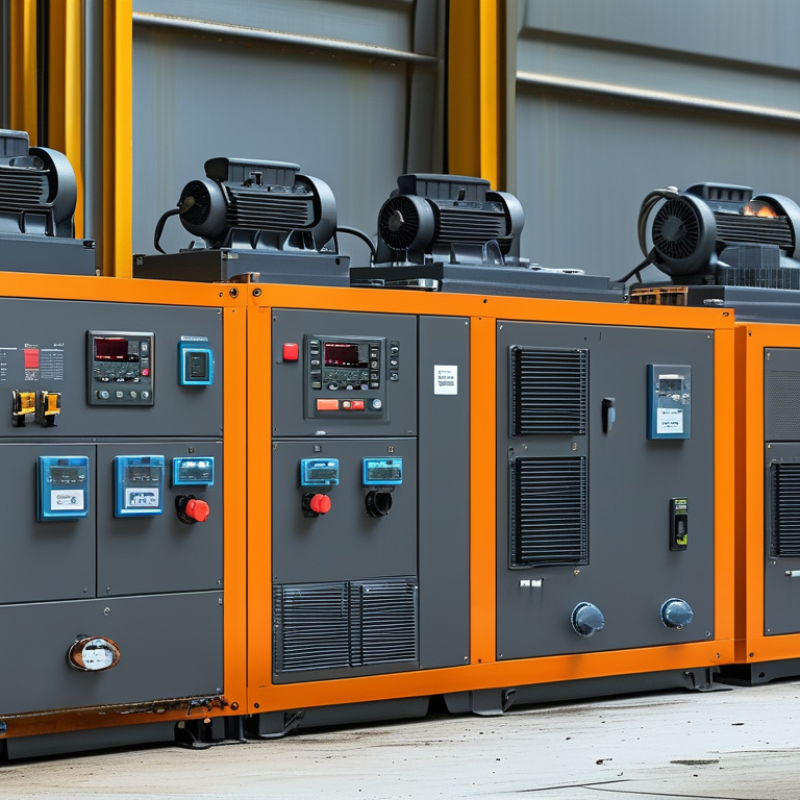
5 Best VFD 5.5kW Drives for Global Buyers?

What a 5.5 kW VFD Is and How It Controls Motor Speed

A 5.5 kW variable frequency drive, or VFD, controls an AC motor by changing its electrical frequency and voltage. This rating commonly suits motors near 5.5 kW, or approximately 7.5 horsepower. The motor may run slowly, quickly, or at a controlled speed between both points. Frequency sets the basic speed. Voltage supports the motor’s magnetic field and torque.

Inside the drive, incoming AC power becomes DC through a rectifier and DC bus. An inverter then produces a variable-frequency output using rapid electronic switching. During commissioning, I check the motor nameplate before changing parameters. Rated voltage, current, frequency, and base speed must match the drive settings. A wrong current value can cause overheating or nuisance trips. Small errors matter.

For global buyers, input voltage, phase type, grid frequency, and local installation rules need careful review. The drive should also match the application’s load pattern. Pumps and fans often use smoother acceleration, while conveyors may need stronger low-speed torque. Acceleration and deceleration times reduce mechanical shock. Braking may require additional hardware. Shielded motor cables, correct grounding, and suitable electromagnetic compatibility practices improve reliability. I have seen installations fail because the enclosure was chosen for a clean workshop, not a dusty production area. That oversight is easy to miss. A qualified technician should verify protection, ventilation, motor rotation, and emergency stopping before regular operation.

Key Criteria for Comparing 5.5 kW VFDs Worldwide

Choosing among the five best 5.5 kW VFD drives requires more than comparing price and rated power. A 5.5 kW label does not guarantee suitable performance. Check the motor’s nameplate current, voltage, phase, overload demand, and starting behavior. A pump, conveyor, and compressor may need different drive capacities. Technicians should also confirm whether the drive supports constant-torque or variable-torque operation. That detail matters.

Environmental conditions strongly affect worldwide VFD selection. Compare the enclosure rating, operating temperature, altitude limits, cooling method, and resistance to dust or humidity. A drive installed inside a hot cabinet may need extra clearance or forced ventilation. Check EMC options, braking functions, input harmonics, and regional certification documents. Communication protocols also deserve attention. Modbus, Ethernet-based control, and simple terminal wiring can change installation time. Small interfaces matter.

Long-term support is often overlooked. Review efficiency at partial load, replacement fan availability, parameter backup, manuals, and technician training. Ask whether local service can troubleshoot faults without waiting weeks for a specialist. I have seen a drive selected correctly on paper but fail in a hot cabinet because airflow was ignored. A neat comparison table can hide that weakness. Testing the actual motor and load during commissioning remains more reliable than trusting catalog figures alone.

5 Best VFD 5.5kW Drives for Global Buyers? - Key Criteria for Comparing 5.5 kW VFDs Worldwide

Comparison of representative 5.5 kW variable-frequency-drive configurations for common international industrial applications. Final selection should be confirmed against the exact regional datasheet, motor nameplate current, installation method, and local electrical code.

Drive Profile Recommended Application Typical Input and Output Nominal Motor Rating Typical Rated Output Current Overload Capability Control Functions Protection and Enclosure International Buying Considerations Key Advantage
Drive 1
General-Purpose Compact
Pumps, fans, conveyors, mixers, and standard machine tools Three-phase 380–480 V AC input; variable-frequency three-phase motor output; output frequency typically 0–400 Hz 5.5 kW at 400 V class Approximately 12–13 A, depending on the motor-duty rating and thermal class Typically 150% of rated current for 60 seconds and 180% for short-duration acceleration V/f control, sensorless vector control, ramp control, multi-step speeds, built-in PID, and programmable digital inputs IP20 cabinet-mounted enclosure; overcurrent, overvoltage, undervoltage, overload, and overtemperature protection Suitable for 50 Hz and 60 Hz systems; verify EMC filter, braking resistor compatibility, and regional terminal markings Best overall value
Drive 2
High-Performance Vector
Hoists, extruders, heavily loaded conveyors, compressors, and applications requiring high starting torque Three-phase 380–480 V AC input; three-phase output; adjustable frequency typically up to 400 Hz 5.5 kW normal-duty rating; may require derating for heavy-duty operation Approximately 12–14 A, with separate normal-duty and heavy-duty current ratings Typically 150% for 60 seconds; some configurations provide up to 180–200% for short acceleration periods Sensorless vector control, optional closed-loop feedback, torque boost, flying start, auto-tuning, and torque limitation Usually IP20; STO may be available on safety-oriented versions; electronic motor thermal protection is standard Confirm encoder-card availability, STO certification, braking-unit requirements, and motor cable length limits Best for torque
Drive 3
HVAC and Pump Optimized
Fans, centrifugal pumps, air-handling units, cooling towers, and water-treatment systems Three-phase 380–480 V AC input; variable-frequency three-phase output; commonly configured for 50/60 Hz motors 5.5 kW normal-duty rating Approximately 11–13 A for pump or fan duty Typically 110–120% for 60 seconds, appropriate for variable-torque loads Energy-saving V/f modes, PID sleep and wake functions, cascade pump control, fire-mode input, and multiple preset frequencies IP20 or IP21 depending on the cabinet design; built-in protections for dry run, overload, phase loss, and overtemperature Check compatibility with pressure sensors, bypass panels, harmonic limits, and local requirements for emergency operation Best for energy efficiency
Drive 4
Wide-Voltage Global Model
Export machinery, OEM equipment, packaging lines, and installations with varying supply conditions Three-phase 200–240 V or 380–480 V class, depending on the selected model; three-phase motor output 5.5 kW at the applicable voltage class Approximately 24–27 A at 200–240 V, or 12–14 A at 380–480 V Typically 150% for 60 seconds under constant-torque duty V/f and sensorless vector control, motor auto-tuning, programmable logic functions, Modbus communication, and fault logging Generally IP20; optional EMC filtering, DC-link terminals, dynamic braking connection, and coated-board versions may be available Confirm the exact voltage class because current, cable size, fusing, and braking components change significantly between voltage ranges Best for export projects
Drive 5
Protected-Environment Model
Dusty workshops, pump rooms, food-processing support areas, outdoor panels, and retrofit installations Three-phase 380–480 V AC input; three-phase variable-frequency output; frequency range commonly 0–400 Hz 5.5 kW at 400 V class Approximately 12–13 A at standard ambient conditions Typically 150% for 60 seconds under constant-torque duty V/f, sensorless vector control, PID, preset speeds, automatic restart, sleep mode, and remote keypad capability IP55 or IP66 enclosed configuration; protection commonly includes overcurrent, short circuit, phase loss, overload, and overtemperature Verify enclosure certification, cooling clearance, cable glands, ambient-temperature derating, humidity limits, and corrosion resistance Best for harsh locations
Selection note: A 5.5 kW motor should not be matched by power alone. Compare the drive’s output current with the motor nameplate current, then check overload class, supply voltage, ambient temperature, enclosure rating, EMC requirements, braking needs, communication protocol, and required safety functions.

Five Leading 5.5 kW VFD Options for Global Buyers

Choosing among five leading 5.5 kW VFD options requires more than comparing prices. A sensorless-vector drive suits pumps, conveyors, and fans needing stable torque at low speed. A heavy-duty model handles frequent starts and short overloads. A compact IP-rated drive fits dusty workshop panels. A low-harmonic option can reduce network distortion. A regenerative drive suits hoists or test rigs where braking energy returns to the supply.

The application decides the winner. IEA Energy Efficiency 2023 reports that electric motor systems consume roughly half of global electricity. Even small efficiency gains matter. For a 5.5 kW motor, check rated current before power rating. Confirm 380–480 V compatibility, 50 or 60 Hz operation, overload capacity, and ambient-temperature derating. A drive rated for 150% overload for one minute may be safer than a cheaper unit with a higher headline power.

Small details matter. Look for IEC 61800 compliance, EMC filtering, braking control, and multilingual parameter access. The U.S. Department of Energy’s Motor Systems Market Assessment also emphasizes system-level savings, not drive efficiency alone. A correctly sized pump, cable, and motor can outperform a sophisticated inverter. I would not treat any comparison table as final. Installation quality, cooling clearance, and commissioning settings often decide reliability. That part is easy to underestimate.

Performance, Compatibility, and Cost Comparison

5 Best VFD 5.5kW Drives for Global Buyers?

Performance, Compatibility, and Cost Comparison

A 5.5kW variable frequency drive should match the motor, load profile, and local power supply. The best options usually fall into five practical categories: compact drives, heavy-duty drives, pump-focused drives, sensorless vector drives, and cabinet-ready models. Compact units suit conveyors and fans with stable loads. Heavy-duty versions handle frequent starts, high inertia, and short overload periods. Pump-focused drives can reduce pressure fluctuations and unnecessary energy use.

Performance depends on more than the rated kilowatts. Check overload capacity, speed accuracy, braking support, cooling design, and operating temperature. A sensorless vector drive often provides stronger low-speed torque for mixers or hoists. A basic VFD may cost less, but it can struggle during repeated acceleration. I have seen this mismatch create nuisance trips and overheated motors. That detail is easy to miss.

Compatibility deserves equal attention. Confirm input voltage, phase arrangement, motor current, enclosure rating, communication protocols, and regional certification requirements. A 5.5kW rating alone is not enough. Some drives accept single-phase input but require output derating. Others need external braking resistors or line reactors. Total cost includes installation, shielding, filters, spare fans, and technical support. The cheapest purchase can become expensive after rewiring and downtime. My comparison would favor documented parameters over attractive pricing, although real site conditions can still change the ranking.

How to Select the Right 5.5 kW VFD for Your Application

5 Best VFD 5.5kW Drives for Global Buyers?

How to Select the Right 5.5 kW VFD for Your Application

Choosing a 5.5 kW VFD requires more than matching motor power. Check the motor’s rated voltage, full-load current, frequency, and connection method. The drive’s output current should meet or exceed the motor’s continuous requirement. For pumps and fans, a standard overload rating may work. Conveyors, mixers, and compressors often need stronger overload capacity and starting torque. Confirm this from the technical datasheet, not from the product label alone.

Field experience shows that installation conditions matter. A dusty workshop may need a suitable enclosure and better cooling clearance. Long motor cables can increase electrical stress, so cable length limits and output filtering deserve attention. Select control modes carefully. Sensorless vector control can improve low-speed torque, while simple V/f control may suit stable fan loads. Check input voltage tolerance, braking requirements, communication options, and local compliance documents before ordering.

Tips: Record the motor nameplate data with a clear photograph. Compare rated output current, not only kilowatts. Test acceleration and deceleration with the real load. Leave space around the drive for airflow. A small detail, but important. I have seen selections fail because the enclosure became too hot, even when the power rating looked correct. Recheck ambient temperature, altitude, duty cycle, and maintenance access. Perfect calculations still need practical review.

Article Source: