
1-208-754-4884

China Top 10 Hydronic Heat Transfer Plate Manufacturers

China has become an important source of hydronic heating components, including plates used to transfer heat between fluid circuits. This guide introduces ten manufacturers of Hydronic Heat Transfer Plates and the details buyers can compare. Plate dimensions, channel patterns, material thickness, and connection options all affect system compatibility. Small differences matter.

Hydronic design specialist John Siegenthaler, author of Modern Hydronic Heating, has emphasized the importance of matching system components to operating conditions. A concise paraphrase of that principle is: “Good heat transfer depends on matching flow, temperature, and surface area.” It is a useful lens for comparing suppliers, not a substitute for engineering review. Product specifications should be checked against the intended fluid, pressure, temperature range, and installation method. Ask for drawings and test documentation where available. A polished catalog is not enough.

The manufacturers in this overview are presented as candidates for closer evaluation, rather than as a universal ranking. Production capacity and customization options can vary by model and order size. Some information may also require direct confirmation with the supplier. That is worth admitting. A plate that performs well in one installation may not suit another, even when the dimensions appear similar. Careful specification, clear communication, and appropriate verification help buyers make a more informed shortlist.
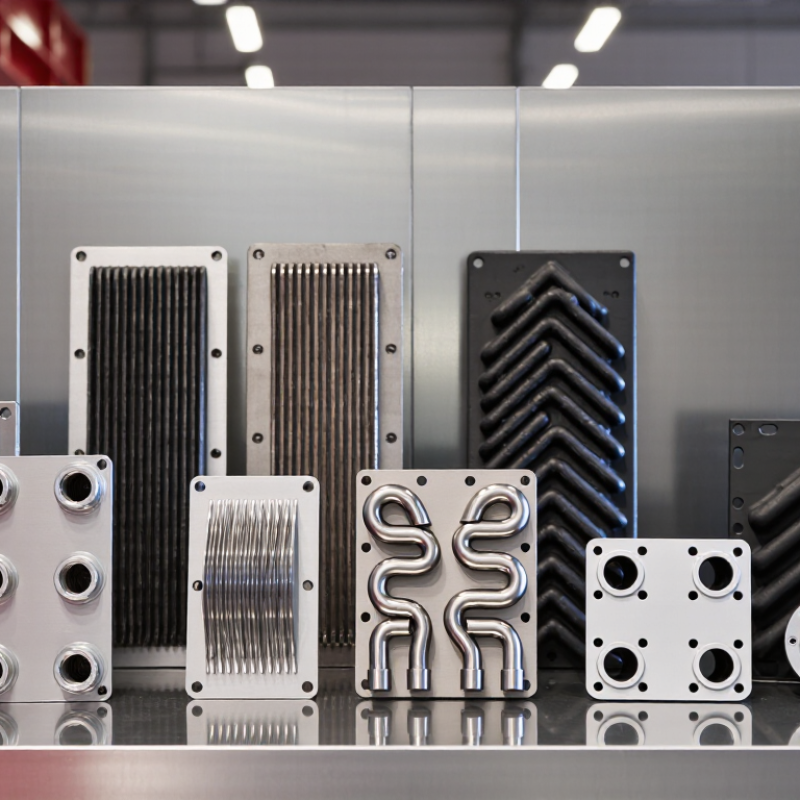
China Top 10 Hydronic Heat Transfer Plate Manufacturers

Hydronic Heat Transfer Plates: Structure and Operating Principles

Hydronic Heat Transfer Plates: Structure and Operating Principles

A hydronic heat transfer plate is usually a shaped strip of aluminum fitted around a water-heating tube. Its channel holds the tube close to the plate, creating broad metal-to-plastic contact. The plate may sit beneath a wood subfloor or between floor joists, depending on the system design. Aluminum spreads heat across a wider area than the tube alone can reach. Small gaps matter. Poor contact can leave cooler stripes in the floor.

Warm water flows through the tubing and transfers heat into the plate by conduction. The plate then passes that heat to the flooring above. The floor surface releases warmth into the room through radiation and natural convection. Simple in principle. Actual performance depends on water temperature, tube spacing, plate coverage, insulation, and how firmly the assembly is installed. Insulation below the pipes helps direct heat upward instead of warming a crawlspace or lower room.

Installation details deserve careful attention. A plate that is bent, loose, or poorly matched to the tubing may distribute heat unevenly. The neat diagram is rarely the whole story; real floors include joists, gaps, and changing materials. Plate thickness can influence heat spreading, but it does not replace correct system design. Measuring surface temperatures after operation can reveal cold bands early. A little unevenness may be acceptable, though persistent hot or cold patches are worth investigating.

Hydronic Heat Transfer Plates: Structure and Operating Principles

Water’s specific heat capacity affects how much thermal energy a hydronic system can carry. The chart shows approximate values for liquid water at 1 atm; a plate transfers heat between fluid circuits through its conductive surface without mixing them.

Values are approximate, in kJ/(kg·K), based on standard liquid-water property data (IAPWS). Actual heat transfer also depends on flow rate, plate geometry, materials, and temperature difference.

Key Materials and Manufacturing Processes

Hydronic heat transfer plates rely on close contact between tubing and a conductive surface. Aluminum is widely used because it is lightweight, corrosion-resistant when properly specified, and easy to form. Copper conducts heat faster, but its higher cost can limit its use. Material choice should reflect water chemistry, operating temperature, plate geometry, and expected service life.

Manufacturing typically combines coil slitting, roll forming or stamping, edge finishing, and dimensional inspection. Grooves must match the tube closely; loose contact creates air gaps and weakens heat transfer. Burrs matter, too. They can damage tubing during installation. According to the International Energy Agency’s The Future of Heat Pumps (2022), heat pumps can deliver three to five units of heat per unit of electricity. That makes effective heat transfer components increasingly relevant, though the figure describes system performance, not plate efficiency.

Recycled content is another design consideration. The International Aluminium Institute reports that recycling aluminum requires about 5% of the energy needed to produce primary aluminum. Still, recycled feedstock can vary in composition, so manufacturers need material verification and consistent process controls. A bright finish proves little. In practice, flatness, groove depth, and repeatable fit deserve closer attention. Even careful inspection can miss problems that appear only after installation.

How to Evaluate Chinese Heat Transfer Plate Manufacturers

When comparing Chinese hydronic heat transfer plate manufacturers, look beyond catalog ratings. Ask what alloy they use, how plates are formed, and how each production batch is checked. A plate may look uniform, yet small channel-depth differences can affect flow and heat transfer. Request material certificates, dimensional records, and pressure-test results linked to a sample or batch. Reliable suppliers explain test conditions, not just headline capacity. Details matter.

Check whether the engineering team can discuss your operating range: fluid, inlet temperatures, design pressure, flow rate, and fouling risk. Request a drawing and sample, then compare port alignment, plate thickness, surface finish, and gasket fit. Ask how the factory manages tooling changes, rejected parts, and repeat orders. Arrange a factory visit or independent inspection when practical. A fast quote helps, but it cannot replace evidence. Ask for proof. Price is only one signal; delivery commitments and documentation should also fit your project schedule. Even a careful audit cannot predict every production issue. Set acceptance criteria in writing, and consider a small pilot order before scaling up.

China Top 10 Hydronic Heat Transfer Plate Manufacturers - How to Evaluate Chinese Heat Transfer Plate Manufacturers

Anonymous supplier-evaluation scorecard: compare up to 10 manufacturers using the same project requirements and request verifiable evidence for each item.

No. Evaluation Dimension What to Compare Evidence to Request Practical Evaluation Basis
1 Product and Process Fit Experience with the required plate type, such as stamped plates, gasketed plate heat exchangers, or brazed plate units. Product drawings, process descriptions, and examples of comparable applications with confidential details removed if necessary. Confirm the manufacturer can supply the specified plate geometry, joining method, and production volume.
2 Material Specification Specified alloy, thickness, surface condition, and suitability for the intended water or glycol mixture and operating environment. Material certificates, purchase specifications, and traceability records. For stainless steel sheet, check the stated grade against the applicable specification, such as ASTM A240 or EN 10088, where relevant. Compare the actual material designation and certificate to the project specification; do not rely on a generic description such as “stainless steel.”
3 Design Pressure and Temperature Allowable operating limits for the complete product or assembly, including the effect of plate design, brazing, gaskets, and connections. Product datasheet, design documentation, and pressure-temperature limits for the exact model or configuration. Limits must meet the project design conditions. Values should be tied to a defined model and configuration, not presented as universal figures.
4 Thermal Performance Data Heat-transfer capacity, pressure drop, flow rate, and operating conditions used to generate the performance data. Selection calculation or test report stating fluid, inlet and outlet temperatures, flow rates, and calculation or test method. Compare suppliers under identical design conditions; a capacity figure without its test or calculation conditions is not directly comparable.
5 Dimensional Control Plate dimensions, corrugation or channel geometry, port positions, flatness, and agreed tolerances. Approved production drawings, inspection plans, and sample dimensional inspection reports. Evaluate conformity against the customer-approved drawing and specified tolerances rather than an unspecified “standard tolerance.”
6 Joining and Sealing Quality Controls for brazing, welding, gasket installation, or other joining processes used in the supplied product. Process-control records, qualified procedures where applicable, and inspection criteria for joints or seals. Confirm that the process and inspection method match the product construction and the relevant project requirements.
7 Leak and Pressure Testing Test method, test pressure, duration, acceptance criteria, and whether testing is performed on each unit or by sampling. Written test procedure, sample test records, and batch or serial-number-linked results where available. Test conditions and acceptance criteria should be agreed before production and be appropriate to the product design.
8 Quality Management and Traceability Documented quality controls, nonconformance handling, inspection records, and traceability from material to finished goods. Current quality-management certificate with scope and validity details, plus sample inspection and traceability records. Check that any certificate is current and covers the relevant manufacturing site and activities; certification alone does not prove product performance.
9 Corrosion and Fluid Compatibility Compatibility of plate materials, brazing materials, gaskets, and other wetted components with the specified fluid chemistry. Wetted-material list, gasket or braze-material specifications, and written operating limitations. Assess the complete wetted-material combination against the project fluid and water-treatment conditions; no single material is suitable for every fluid.
10 Delivery, Documentation, and Support Quoted lead time, production capacity, packaging, spare-parts availability, warranty terms, and technical-response process. Written quotation, delivery schedule, packing specification, warranty terms, and list of supplied technical documents. Compare commitments in writing, including document scope and delivery assumptions; confirm export packaging and after-sales responsibilities for the destination market.

Comparison note: This table is an evaluation framework, not a verified ranking or a claim about specific manufacturers. Apply the same project specification to every supplier and validate product-specific claims with current documents and agreed tests.

China’s Top 10 Hydronic Heat Transfer Plate Manufacturers

China’s Top 10 Hydronic Heat Transfer Plate Manufacturers

China’s hydronic heat transfer plate suppliers serve heating, hot-water, and industrial systems. Their market is growing alongside heat-pump adoption. The International Energy Agency’s The Future of Heat Pumps report states that global heat-pump sales rose 11% in 2022, while European sales grew 39%. These figures indicate demand for heat-pump components, but they do not measure plate sales directly. That distinction matters when comparing manufacturers.

A useful top-ten review should examine measurable details, not just catalogue claims. Check plate material, thickness tolerance, channel geometry, and pressure-test records. Ask for corrosion data and performance results under stated temperatures and flow rates. A plate that looks well formed under workshop lighting may still perform poorly if its channels distribute water unevenly. Small details count. The comparison is not perfectly clean: suppliers may use different test conditions, making headline efficiency figures difficult to compare. Requesting the same operating assumptions helps buyers assess output, service access, and replacement needs more reliably.

Applications and Industry Developments in China

China Top 10 Hydronic Heat Transfer Plate Manufacturers

China’s hydronic heat-transfer plates serve district heating substations, commercial buildings, hospitals, and industrial process loops. In a heating substation, plates transfer heat between the primary network and a building’s closed water circuit. This separation helps control pressure and water quality. The fit matters. Plate selection depends on flow rate, temperature difference, pressure, and water chemistry—not just nominal capacity.

China’s National Bureau of Statistics reported an urbanization rate of 66.16% in 2023, supporting continued demand for building heating and cooling systems.
The UNEP and GlobalABC 2023 buildings report estimated that buildings and construction produced 37% of global energy- and process-related carbon emissions in 2022.

This pressure is encouraging lower-temperature heating, heat-pump integration, and recovery of industrial waste heat. Plate exchangers can connect these sources to existing hydronic loops, but poor sizing may raise pumping demand or reduce heat transfer.

Maintenance matters, too. Hard water can leave scale on narrow channels, while frequent load changes test seals and controls. Many systems now use monitoring to track temperatures and pressure drops. Yet published performance figures are not always comparable across operating conditions. Buyers should review tested data, service access, and expected fouling—not only catalogue ratings.