2026 Top Rubber Pump Impeller Types and Their Applications?
In the dynamic world of industrial applications, the significance of the Rubber Pump Impeller cannot be overstated. According to John Smith, an expert in pump manufacturing, "Choosing the right Rubber Pump Impeller enhances efficiency and longevity." This expertise guides many engineers in selecting the ideal impeller for various tasks.
Rubber Pump Impellers are vital in industries ranging from agriculture to wastewater management. Their flexibility and resistance to wear make them suitable for handling corrosive fluids. However, not all rubber impellers are created equal. Some may not withstand specific operating conditions, leading to premature failure. Engineers must assess their options carefully.
Understanding different types of Rubber Pump Impellers is crucial for optimizing performance. Each type serves distinct applications, and the wrong choice can result in inefficiencies. Continuous research and testing are essential to avoid costly mistakes. As growers and manufacturers evolve, selecting the right Rubber Pump Impeller will remain a critical decision for future success.
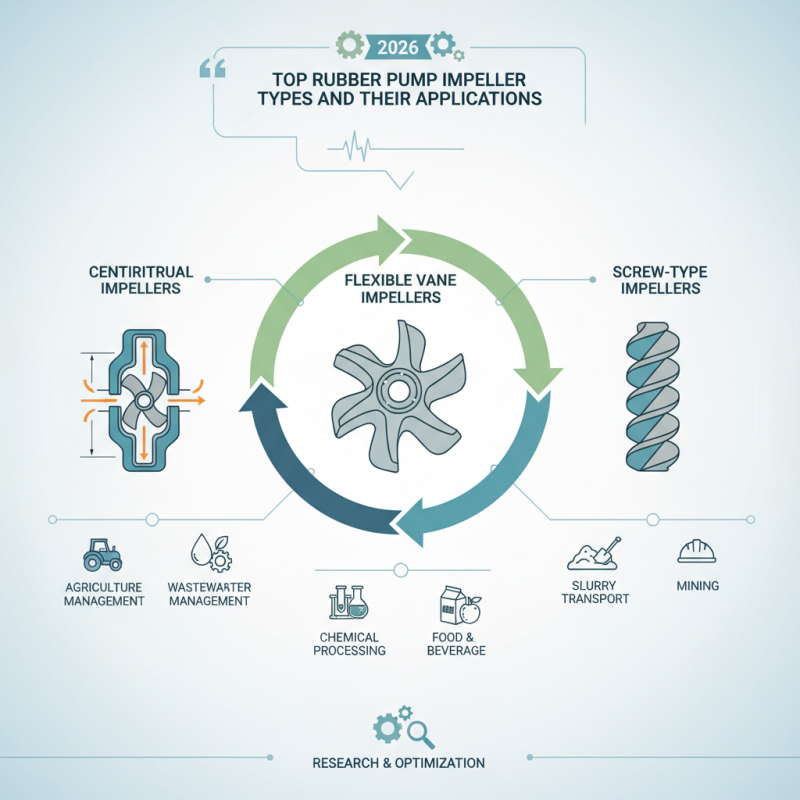
Types of Rubber Pump Impellers and Their Characteristics
When exploring rubber pump impellers, their characteristics vary widely. Each type is designed for specific applications, impacting performance and efficiency. A key type is the open impeller. It allows fluids to flow freely, making it ideal for handling solids in wastewater treatment. However, it can struggle with high-viscosity fluids. There’s room for improvement in efficiency with this design.
Another common design is the closed impeller. This type features blades that are enclosed between two discs. It works well in high-pressure environments, making it suitable for industrial applications. Yet, the complexities of this design can lead to challenges in maintenance and repair. Users often find themselves reflecting on the balance between performance and ease of upkeep.
Vortex impellers are also notable for their unique design. They create a swirling motion, maintaining flow without the need for contact with solid particles. While effective, they may not be the best choice for all types of fluids. Users should consider specific requirements before making a decision. Choosing the right impeller type can be a challenge but is critical for optimal pump performance.
Applications of Different Rubber Pump Impeller Types
Rubber pump impellers come in various types, each suited for specific applications. For instance, flexible rubber impellers work well in low-pressure environments. They excel in transferring liquids with solid particles, like pulp and paper. These impellers are often found in wastewater treatment facilities.
Another common type is the volute impeller. This design allows for efficient fluid movement. It is particularly effective in applications requiring high flow rates. You might see these in agricultural irrigation systems. However, they can struggle with viscous fluids. That's a point to consider for your project.
Tip: Always assess the fluid characteristics before selecting an impeller type. Compatibility is crucial for optimal performance.
Cam impellers are also worth mentioning. They provide a steady flow of fluids and are ideal for chemical processing. Yet, they might not handle abrasive liquids well. Thus, careful material selection is vital.
Tip: Regular maintenance can extend the life of your rubber impellers. Inspect them frequently for wear and tear.
Advantages of Rubber Impellers in Various Industries
Rubber impellers are increasingly important in various industries due to their unique advantages. They offer excellent flexibility and resilience. This makes them ideal for handling abrasive materials in wastewater treatment plants. They can absorb shocks without losing their shape. This property significantly reduces maintenance needs.
In the food and beverage sector, rubber impellers have a unique edge. They prevent contamination, ensuring safe product processing. Their ability to operate at varying temperatures adds to their versatility. However, one must consider the wear and tear over time. The right choice of rubber composition is critical for longevity. Some applications may still encounter challenges related to chemical compatibility. This aspect often requires careful evaluation.
Rubber impellers also shine in the chemical industry. They effectively pump corrosive liquids without degrading. Their lightweight nature simplifies installation and reduces energy costs. Nonetheless, they require periodic inspections. This helps identify any signs of wear early on. Companies sometimes overlook this need, leading to unexpected downtimes. Keeping track of maintenance schedules is essential for optimal performance.
2026 Rubber Pump Impeller Types and Their Applications
This chart illustrates the distribution of different types of rubber pump impellers employed across various industries in 2026. Centrifugal impellers dominate the market, showcasing their versatility and efficiency, while diaphragm and peristaltic types are also noteworthy for specific applications.
Maintenance and Performance Optimization for Rubber Impellers
Maintaining rubber pump impellers is crucial for optimal performance. Regular inspections help identify wear and degradation. Rubber impellers wear out due to abrasion and chemical exposure. Reports suggest that proper maintenance can reduce operational costs by up to 15%. Monitoring temperature and pressure is vital. These factors influence the lifespan significantly.
Performance optimization is achievable with the right practices. Lubrication is a key factor that many overlook. Properly lubricated impellers can operate more efficiently. Studies highlight that well-maintained rubber impellers can achieve flow rates 10% higher than poorly maintained ones.
However, not all issues are evident. Vibration problems can arise, often unnoticed. This can lead to significant performance drops. It's essential to address such issues proactively. Small anomalies can escalate into costly repairs. Regular audits of performance metrics help catch these early. A structured approach can lead to a sustainable improvement in the rubber impeller's functional life.
Future Trends in Rubber Pump Impeller Design and Usage
The rubber pump impeller market is evolving. Designers are increasingly focusing on eco-friendly materials. According to a recent market research report, the demand for sustainable materials is expected to grow by 25% in the next five years. This shift reflects an industry-wide trend towards reducing environmental impact.
Innovations in 3D printing technology are transforming rubber impeller production. This process allows for intricate designs that traditional methods struggle to reproduce. In 2026, it is anticipated that 30% of new rubber impellers will be created using this technique. However, there are challenges. The longevity and durability of 3D-printed components require further evaluation.
Moreover, smart technology is making its way into rubber pump design. Sensors embedded in impellers can monitor performance in real-time. This data can lead to improved efficiency and predictive maintenance. Yet, integrating such technologies may raise costs and complicate designs. Manufacturers must balance innovation with practicality to ensure success in the future.
2026 Top Rubber Pump Impeller Types and Their Applications
| Impeller Type | Material | Application | Efficiency | Future Trends |
| Open Impeller | Natural Rubber | Wastewater Treatment | High | Increasingly used in clean water applications due to lower maintenance needs. |
| Closed Impeller | Neoprene | Chemical Processing | Very High | Focus on improving resistance to various chemicals. |
| Vortex Impeller | SBR Rubber | Heavy Slurry Applications | Medium | Development towards better performance in extreme conditions. |
| Semi-Open Impeller | EPDM | Agricultural Irrigation | High | Shifting towards lightweight designs for easier handling. |
| Magnetic Impeller | Silicone Rubber | Vacuum Handling | Very High | Innovations geared towards automation and minimizing leaks. |