Top 10 Tungsten Alloy Turning Manufacturers Worldwide?
Choosing a reliable tungsten alloy machining partner requires more than comparing company names or advertised prices. This guide examines the Top 10 Tungsten Alloy Turning Manufacturers Worldwide through practical and verifiable criteria. It focuses on machining experience, material traceability, dimensional control, production capacity, and customer support. Tungsten alloy components often appear small, yet their density and hardness demand disciplined tooling and stable processes.
The review considers manufacturers serving industries such as aerospace, medical equipment, electronics, defense-related engineering, and industrial balancing applications. It looks for evidence of CNC turning capability, inspection equipment, quality certifications, and consistent tolerance management. Details matter. A clean inspection report, a traceable material certificate, and a carefully protected threaded part can reveal more than a polished website. Delivery performance and technical communication also deserve attention.
No global ranking is perfect. Public information may be incomplete, outdated, or presented from a marketing perspective. That limitation should be acknowledged. Buyers should confirm current equipment, alloy grades, tolerances, surface requirements, and regulatory responsibilities directly with each supplier. A manufacturer experienced with molybdenum-tungsten alloys may not automatically excel at every Tungsten Alloy Turning project. Small differences in tooling, coolant control, or burr removal can affect final performance. This article therefore provides a structured starting point, not a substitute for technical audits or sample approval. The strongest candidates combine documented expertise with transparent communication and repeatable results. That balance is not always easy to verify.
Tungsten Alloy Turning: Definition, Materials, and Applications
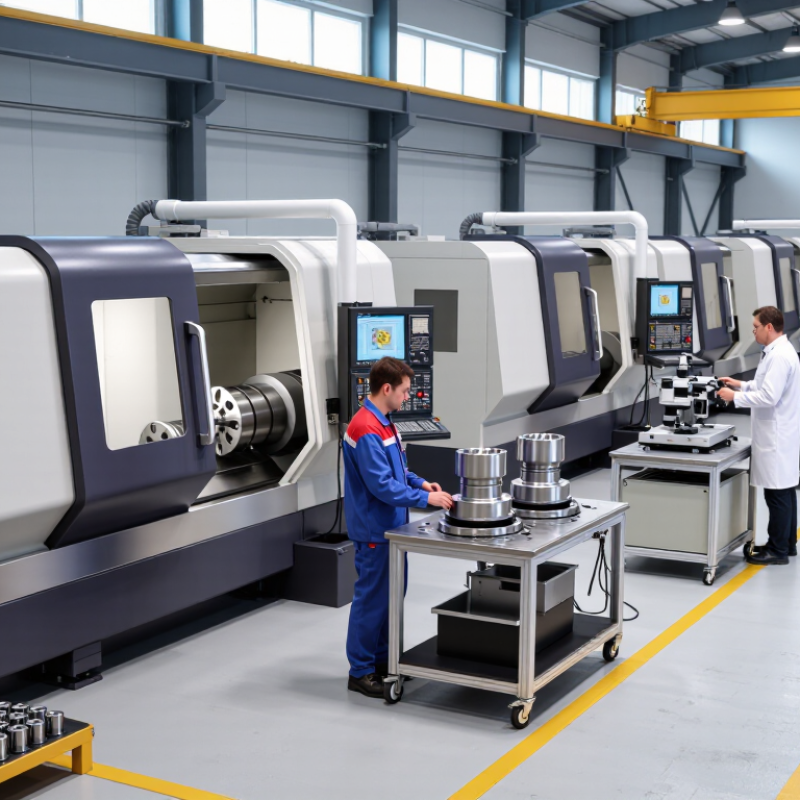
Tungsten alloy turning is the controlled removal of material from a rotating tungsten-based workpiece. A cutting tool shapes it into rings, pins, sleeves, or precision counterweights. These alloys usually contain tungsten with nickel-iron or nickel-copper binders. Their density can approach 19 g/cm³, while their hardness and brittleness challenge ordinary machining methods.
In experienced workshops, machinists often use rigid CNC lathes, sharp carbide tools, and carefully managed coolant. Low cutting speeds can reduce heat, but excessive pressure may cause edge chipping or surface tearing. A small burr on a 2 mm edge can affect assembly. It is easy to overlook.
Manufacturers serving aerospace, medical equipment, robotics, and vibration-control industries may produce high-density components with tight dimensional tolerances. Tungsten alloy turning supports compact counterweights, balancing rotors, shielding parts, and inertial devices. Inspection commonly includes coordinate measurement, surface-finish testing, density verification, and visual checks under magnification. Material certification also matters, especially when parts enter regulated engineering systems.
A cutting chart is only a starting point. Binder composition, tool geometry, workpiece size, and machine rigidity can change the result. One supplier may achieve excellent dimensions but leave a rough finish. Another may improve the finish while increasing tool wear. Buyers should examine process records, inspection frequency, sample parts, and realistic tolerance commitments before comparing manufacturers worldwide.
Key Criteria for Evaluating Global Turning Manufacturers
Selecting the top 10 tungsten alloy turning manufacturers requires more than comparing equipment lists. A reliable evaluation begins with proven experience in difficult, high-density materials. Ask how long the manufacturer has machined tungsten alloys and which grades it regularly processes.
Look for turning centers with stable rigidity, controlled coolant delivery, and suitable carbide or diamond tooling. Small errors matter. A tolerance drift of a few microns can affect assembly fit and product performance. Review sample parts, inspection reports, and documented process controls rather than relying on polished claims.
Technical expertise should include tool-life management, chip control, surface-finish measurement, and heat reduction. Manufacturers should explain their methods clearly. Vague answers deserve caution. Check whether engineers use calibrated coordinate measuring machines and maintain traceable inspection records. This supports reliability across repeat orders and different production sites.
Communication is another practical test. A strong supplier confirms drawings, material certificates, tolerances, packaging details, and delivery risks before cutting metal. Ask for a realistic pilot run. It can reveal chatter, burrs, or unstable dimensions early. No scorecard is perfect. Cost may receive too much attention, while engineering support gets ignored. I have seen low quotations become expensive after repeated corrections. A balanced review should examine quality history, technical depth, capacity, compliance, response time, and corrective-action discipline. These criteria make a global comparison more credible and less dependent on marketing language.
Top 10 Tungsten Alloy Turning Manufacturers Worldwide
Selecting the top 10 tungsten alloy turning manufacturers worldwide requires more than counting machines. A dependable review examines CNC turning accuracy, material traceability, density control, and experience with tungsten-nickel-iron alloys. ASTM B777 provides useful guidance for heavy-alloy composition and properties, while ISO 9001 certification supports process consistency. In practice, turning dense tungsten alloys feels unforgiving: cutting tools wear quickly, chips remain short, and heat can build near thin shoulders.
The USGS Mineral Commodity Summaries 2024 estimates global tungsten mine production at approximately 78,000 metric tons in 2023. That supply pressure makes responsible sourcing and documented recycling increasingly important. The International Tungsten Industry Association also identifies hardmetals as the largest tungsten application, reinforcing the need for suppliers who understand carbide tooling and controlled machining. A strong top-ten candidate should report dimensional capability, surface roughness, batch inspection, and nonconformance handling clearly.
Some manufacturers may advertise micron-level accuracy without explaining measurement conditions. That deserves caution. My own evaluation would request sample inspection records, cutting parameters, and density results before ranking any supplier. A polished website is not evidence. Real proof is repeatability across complex parts, including counterbores, narrow grooves, and threaded features. The comparison remains imperfect because published capacity figures are rarely standardized, but transparent test data can still separate experienced workshops from ordinary job shops.
Top 10 Tungsten Alloy Turning Manufacturers Worldwide
This chart presents estimated 2023 tungsten mine production by leading producing countries. Tungsten availability is an important industry factor for tungsten alloy turning, influencing material sourcing, lead times, and production capacity. The figures are based on the U.S. Geological Survey Mineral Commodity Summaries 2024 and are shown in metric tons.
Manufacturing Capabilities and Industries Served
Tungsten alloy turning manufacturers worldwide support demanding parts for aerospace, medical equipment, defense, energy, and precision tooling. Their capabilities often include CNC turning, Swiss-type machining, multi-axis operations, and small-batch production. Tungsten alloys are dense and hard. They also generate heat during cutting. Therefore, manufacturers need rigid machines, controlled speeds, suitable carbide tooling, and effective coolant delivery.
Experienced workshops inspect bar stock before machining. They check density, alloy composition, surface defects, and dimensional stability. Typical components include counterweights, shielding inserts, balance rings, valve parts, and custom cylindrical assemblies. Tight tolerances may require in-process measurement and final coordinate inspection. Some suppliers provide deburring, polishing, thread cutting, and documented quality reports. Still, no shop is perfect. Tool wear can alter a deep bore unexpectedly, especially during long production runs.
Tips: Ask about tungsten alloy grades, maximum turning diameter, tolerance control, and inspection equipment. Request sample data from similar parts, not only general capability lists. Confirm whether the manufacturer handles prototypes and repeat orders. Clarify packaging requirements because dense parts can damage softer components in transit. A strong supplier should explain limitations clearly. That honesty matters.
How to Compare and Select the Right Manufacturer
Top 10 Tungsten Alloy Turning Manufacturers Worldwide: How to Compare and Select the Right Manufacturer
Choosing among leading tungsten alloy turning manufacturers requires more than comparing prices. Tungsten alloys are dense, hard, and demanding on cutting tools. Ask for evidence of dimensional control, surface-finish testing, and repeat-order consistency. The USGS Mineral Commodity Summaries 2025 reports approximately 81,000 metric tons of global tungsten mine production in 2024. This supply concentration makes material traceability especially important. Request heat numbers, mill certificates, and clear sourcing records. A polished website proves little.
Compare manufacturers using measurable criteria. Check turning tolerances, typical alloy grades, minimum order quantities, and inspection equipment. Coordinate measuring machines, optical systems, and documented calibration records indicate stronger process discipline.
Review sample inspection reports, not only capability claims. ISO 9001 certification can support reliability, but it cannot replace product testing. I would also examine nonconformance records. No supplier performs perfectly. Their response matters more than a spotless presentation.
Tips: Send the same technical drawing to every candidate. Request a first-article sample, material certificate, and delivery estimate. Confirm whether prices include tooling, inspection, packaging, and freight. Ask how the manufacturer handles tool wear during long tungsten alloy runs. A cheaper quotation may hide shorter tool life or repeated finishing work. Use a weighted scorecard, and test communication before signing a long-term agreement.