
1-208-754-4884

Why Choose a Plate Heat Press for Your Business?

Choosing the right equipment can shape the quality and pace of a custom-printing business. A Plate Heat Press offers a practical way to transfer designs onto flat items such as ceramic plates and plaques. With a fitted platen, controlled heat, and even pressure, it can help produce consistent results across repeat orders. That consistency matters. Customers notice when colors sit cleanly and edges remain properly pressed.

The value depends on the work you actually sell. A small gift shop making occasional personalized plates may need different capacity from a production studio handling daily batches. Check platen size, temperature range, pressure adjustment, timer controls, and available replacement parts before buying. These details affect setup time and repeatability. They also influence which blanks and transfer materials you can use. A machine alone cannot guarantee a good finish; artwork, coatings, material compatibility, and careful testing all play a part. Some jobs still need adjustment. That is normal, though it can be frustrating.

A Plate Heat Press may help a business broaden its product range without adding a complicated workflow. Yet the purchase should follow real demand, not just an appealing product photo. Compare the machine’s operating requirements with your space, staff skills, and expected order volume. Run sample transfers before promising large quantities. Keep notes on settings and outcomes. Small records can prevent repeated mistakes. The best choice is not always the biggest or most automated press. It is the one your team can use reliably, maintain safely, and justify through steady customer demand.
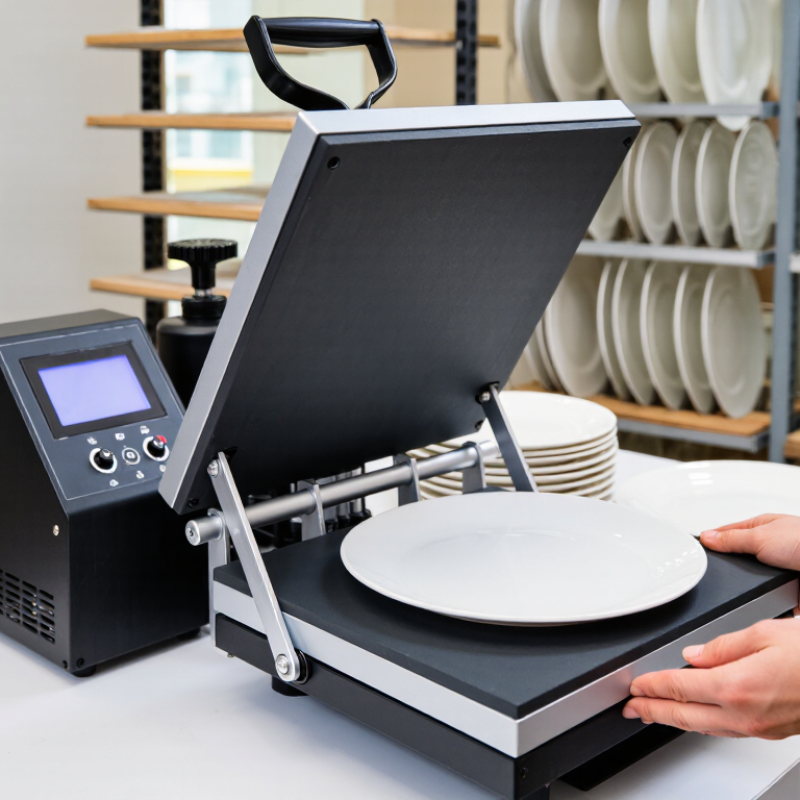
Why Choose a Plate Heat Press for Your Business?

What a Plate Heat Press Is

A plate heat press is a machine designed to transfer an image onto a coated, heat-resistant plate. It uses a heated platen shaped to match the plate’s surface, plus a lower support that holds the blank steady. Heat and pressure activate the transfer layer, bonding the design to the coating. That sounds simple. In practice, plate depth and rim shape affect how evenly the platen makes contact. A small gap can leave a pale edge or uneven color.

The operator places the transfer face-down, aligns it carefully, and follows settings suited to the blank and transfer material. Temperature, pressure, and pressing time all matter; one setting rarely works for every plate. A test piece helps reveal missed areas before a larger batch is prepared. Check the plate’s coating instructions, since not every ceramic plate is made for heat transfer. Keep hands clear of the hot platen, and allow the finished plate to cool as directed. The process can be repeatable, though alignment still takes patience—and occasionally a second look.

How a Plate Heat Press Works

A plate heat press uses a heated, shaped platen to transfer a design onto a compatible plate. The plate sits in a supportive lower cradle, while transfer paper is positioned over its coated surface. When the press closes, even contact helps move the design from paper to coating.

Heat, pressure, and time work together. The platen warms the coating, allowing sublimation ink to bond with it under the correct conditions. Settings depend on the press, plate material, and transfer supplies, so a single recipe may not suit every job. Follow equipment and material instructions, and keep the plate steady during pressing.

Details matter. A wrinkled transfer sheet can leave a faint crease or blurred edge. Too little contact may create pale areas; excessive pressure can stress a plate. In practice, the first test is not always perfect. Check the finished surface after it cools, then adjust one setting at a time. Keep hands clear of the hot platen, and use a heat-resistant work surface. A simple test plate can reveal uneven pressure before a larger batch is run.

Why Choose a Plate Heat Press for Your Business?

How a Plate Heat Press Works

A plate heat press uses a heated platen to transfer heat to the design and substrate. The operator positions the materials, closes the press to apply pressure for a set dwell time, then opens it to finish the transfer. The bars show process order only—not measured time or performance. Temperature, pressure, and dwell time depend on the materials and transfer method.

Business Uses for Plate Heat Presses

A plate heat press helps businesses apply designs to flat, compatible items with controlled heat and pressure. Custom apparel shops use one for small runs of T-shirts, hoodies, uniforms, and tote bags. It also suits personalized teamwear, event merchandise, and staff apparel. A clean platen and careful alignment matter. A crooked logo is hard to ignore.

Promotional-product sellers can press designs onto suitable patches, mouse pads, and other flat substrates, following each material’s temperature and time requirements. Grand View Research estimated the global custom T-shirt printing market at USD 5.16 billion in 2023 and projected an 11.1% compound annual growth rate from 2024 to 2030. That points to commercial demand, not guaranteed profits. A press can help shops handle short orders without extensive setup, but production speed depends on loading, pressing, and cooling each item. The weak spot? Operator technique varies. Test transfers on spare material, record settings, and check wash durability before fulfilling larger orders.

Key Advantages for Production and Profitability

A plate heat press can give a production line more control over transfers on curved or rigid plates. Its shaped platen applies heat and pressure across the decorated area, helping reduce uneven edges and incomplete transfers. That matters. When every plate needs a similar finish, a repeatable setup can limit rework and make quality checks easier.

Profitability depends on more than the press price. A steady cycle time can help staff plan daily output, while fewer spoiled blanks may reduce material waste. Operators can record press time, temperature, rejected pieces, and labor minutes to see whether the process is paying off. Small batches help test settings before a large order. They also reveal issues, such as uneven contact near a plate’s rim.

There are trade-offs. A press takes workspace, needs routine checks, and may not suit every plate shape or coating. I would not assume one setting works for every blank; modest differences can affect the result. A practical trial with the actual materials is worth the time. The equipment is most useful when its output matches real customer demand and the team can maintain consistent handling.

How to Choose a Plate Heat Press for Your Business

Choosing a plate heat press starts with the items you plan to decorate. Measure your plates, including their usable flat area and rim. A platen that is too small may leave uneven edges; one that is too large can waste workspace. Check whether the press accepts interchangeable platens if your product range may change. Small details matter. Consider daily order volume, too. A manual press may suit occasional batches, while frequent production calls for a comfortable handle and consistent pressure. Check the required power supply and leave room for safe loading and unloading.

Look beyond the advertised temperature range. Ask whether the press holds heat evenly across the platen and allows clear adjustments to pressure and time. Test it with your own plates and transfer materials before committing to a large run. Record settings and inspect several finished samples; one good result is not enough. Notice whether color and adhesion stay consistent from the center to the edges. Review the operating instructions, cleaning needs, replacement-part availability, and warranty terms. A stable base and protected handle can make routine work safer. I would not choose by price alone, though it is easy to do when budgets are tight. The right fit depends on your products, workspace, and realistic production pace.

Why Choose a Plate Heat Press for Your Business? — How to Choose a Plate Heat Press for Your Business
Business Need Plate Press Feature to Consider Practical Selection Guidance Why It Matters
Personalized gifts and small custom orders Single-station press with interchangeable plate-shaped platens Choose a platen that matches the plate sizes and shapes you expect to sell most often. A plate-specific platen helps apply heat and pressure across the intended print area.
Products in several plate sizes Compatible interchangeable platens or a suitable range of press sizes Check the platen’s supported diameter and shape against each blank plate before purchasing. A plate that does not fit the platen correctly may receive uneven pressure or incomplete contact.
Frequent setup changes Accessible controls and straightforward platen-change procedure Ask how platens are changed and whether the required accessories are included or sold separately. Efficient changeovers can reduce setup interruptions when switching between products.
Repeat production runs Adjustable temperature and timer, with clearly readable controls Confirm the machine’s operating range and use the settings recommended for the transfer material and plate blank. Repeatable settings support consistent production; suitable settings depend on the materials being used.
Limited workspace Compact footprint and a handle or opening mechanism suited to the work area Measure the press, its open position, and the space needed to load and unload plates. Allowing adequate clearance makes operation and handling safer and more convenient.
New or occasional operators Clear instructions, stable construction, and accessible safety features Review the operating manual, safety guidance, warranty terms, and availability of replacement parts. Training and maintenance support help operators use the press correctly over time.
Growing order volume Durable construction and a workflow suited to the expected production schedule Compare the manufacturer’s stated duty guidance and consider whether a second station would reduce bottlenecks. Actual output depends on loading, alignment, transfer settings, cooling, and operator workflow—not just the press itself.
Choosing between press types Plate-specific press versus a general flat heat press Choose a plate-specific model when its curved or shaped platen is designed for the plate blanks you use. Plate presses are designed for plate transfers; a flat press may not provide suitable contact on a curved plate surface.
Note: Specifications and compatible plate sizes vary by model. Verify platen compatibility and follow the instructions for the press, transfer paper, ink, and blank plate.