
1-208-754-4884

Why Choose an ABS Enclosure for Global Procurement?

Why Choose an ABS Enclosure for Global Procurement?

Global procurement requires more than a low unit price. Buyers need stable quality, practical logistics, and dependable product protection. An Abs Enclosure can support these goals when its material, design, and manufacturing process match the application.

ABS offers a useful balance of impact resistance, electrical insulation, and manageable production costs. Its light weight can reduce shipping loads and simplify installation. In a warehouse, this may mean fewer damaged corners and easier shelf handling. In the field, it can protect control boards from accidental knocks, dust, and routine handling stress.

Small details matter.

Dr. Sarah Chen, a senior enclosure design consultant, explains, “A reliable enclosure protects the electronics without making assembly unnecessarily difficult.” This observation reflects an important procurement reality. A strong housing is not enough if screw posts crack, covers misalign, or cable entries require repeated modification.

Experienced buyers should review wall thickness, hinge strength, mounting points, ventilation, and surface finish. They should also request sample testing before approving large quantities. Supplier audits, dimensional reports, and batch inspection records add useful confidence. Yet no material is perfect. ABS may require additional protection in severe ultraviolet exposure or unusually high-temperature environments. Ignoring that limitation can create avoidable replacement costs.

For international purchasing teams, the best Abs Enclosure is not simply the cheapest option. It is the enclosure that performs consistently, ships efficiently, and fits the equipment without hidden adjustments. Careful validation remains essential. Procurement decisions become stronger when practical experience supports the specification.
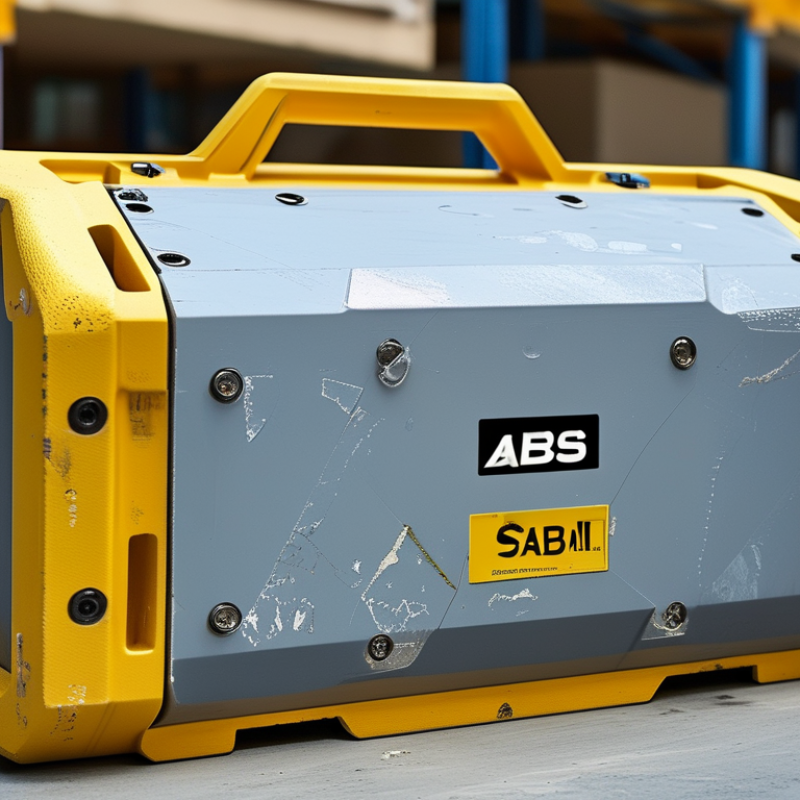
Why Choose an ABS Enclosure for Global Procurement?

ABS Enclosure Basics and Key Material Properties

ABS enclosures begin with acrylonitrile butadiene styrene, a thermoplastic valued for impact resistance, light weight, and easy injection molding. Acrylonitrile improves chemical resistance. Butadiene adds toughness. Styrene supports rigidity and surface finish. This balance suits control boxes, meters, and compact electrical assemblies.

Material selection still needs evidence. The OECD Global Plastics Outlook reports that global plastics production reached 460 million tonnes in 2019. That scale increases pressure for consistent specifications, traceability, and responsible sourcing. ABS commonly performs well around normal indoor temperatures, but heat resistance varies by grade. Continuous exposure near its limit can cause warping. Outdoor use also needs attention because standard ABS can degrade under ultraviolet radiation. Flame performance is not automatic. Procurement teams should request tested ratings, wall-thickness conditions, and certificates linked to the exact compound. A smooth sample proves very little.

Tips: Define operating temperature, impact needs, cable-entry design, and surface finish before requesting quotations. Ask for dimensional tolerances after molding. Check chemical compatibility with oils, cleaners, and nearby materials. If export packaging faces heat or humidity, test the packed enclosure, not only the resin. It is easy to overtrust a datasheet. That assumption can fail. A practical pilot batch, with drop and thermal-cycle testing, often reveals assembly stress, weak hinges, or poor screw retention. These details affect global procurement more than a low unit price.

How ABS Enclosures Protect Internal Components

ABS enclosures protect internal components from common damage during daily operation. Their rigid walls resist impacts from tools, handling, and accidental drops. They also reduce contact with conductive surfaces. That matters near terminals and small circuit boards. Small details matter.

A well-designed enclosure limits dust and splash entry when its cover, fasteners, and gasket work together. Protection depends on the complete assembly, not ABS alone. Cable glands, vents, and mounting points can become weak spots. In practical inspections, loose screws often cause more trouble than cracked housings. Regular torque checks can prevent this problem.

ABS also provides useful electrical insulation and remains lightweight for equipment installation. However, it is not a perfect shield. Prolonged sunlight, high temperatures, solvents, or heavy impact may reduce its service life. The selected material grade and wall thickness should match the working environment. For global procurement, buyers should review temperature ratings, flammability information, ingress test results, and dimensional drawings. Sample testing is wiser than relying only on photographs. A small fit issue can expose a connector or pinch a cable. Engineers should also check internal clearances, heat buildup, and access for maintenance. These practical checks make protection more reliable across different applications and installation conditions.

Design and Customization Options for Global Procurement

Why Choose an ABS Enclosure for Global Procurement?

Design flexibility makes ABS enclosures practical for international procurement. Their lightweight structure reduces shipping weight without sacrificing everyday protection. Engineers can specify wall thickness, mounting bosses, ventilation features, and cable entry points for each application. A recessed lid can protect switches, while a clear window keeps status indicators visible.

Customization should begin with the installation environment. Indoor control panels may need smooth surfaces and easy labeling. Outdoor units require better resistance to moisture, sunlight, and temperature changes. Hinge direction, locking methods, and internal clearance also affect assembly speed. Small details matter. A poorly placed screw can slow production.

From practical enclosure evaluations, consistent documentation is as important as the housing itself. Suppliers should review drawings, 3D files, tolerances, surface finishes, and inspection criteria before sampling. Prototype testing can reveal weak bosses, tight cable routes, or unexpected lid distortion. A universal design rarely fits every market perfectly. That is worth admitting. Regional installation habits may also require adjustments. Pilot batches, material verification, and packaging checks help reduce procurement risk. Clear part numbering supports repeat orders across different production locations. Reliability often comes from disciplined revisions, not attractive geometry alone.

Why Choose an ABS Enclosure for Global Procurement?

ABS is widely selected for customized enclosures because it combines practical mechanical strength, impact resistance, lightweight construction, and moderate heat performance. The chart shows representative property ranges for general-purpose ABS grades used in enclosure design.

Values are representative ranges reported for unfilled ABS materials and may vary according to grade, formulation, wall thickness, molding process, and test method. Since the properties use different units, the chart is intended to show design ranges rather than rank performance.

Cost, Compliance, and Supply Chain Considerations

Why Choose an ABS Enclosure for Global Procurement?

Cost, Compliance, and Supply Chain Considerations

An ABS enclosure can look inexpensive on a quotation, yet total cost depends on more than unit price. Tooling, inserts, packaging, freight, inspection, and regional taxes can quickly change the calculation. For repeated orders, stable molding dimensions may reduce assembly adjustments and field returns. That matters. Ask for a clear cost breakdown before approving production.

ABS supports practical designs with clean surfaces, moderate impact resistance, and efficient injection molding. Depending on the destination and application, buyers may need material declarations, flame testing, ingress protection, or impact reports. Request resin identification, test records, and batch traceability before approval. Do not treat one familiar certificate as universal. Requirements differ. A local compliance review remains necessary, especially when the enclosure protects electrical components.

Supply continuity also deserves close attention. ABS is widely processed, but resin availability, mold capacity, and shipping conditions can still create delays. Keep approved drawings, color references, inspection limits, and packaging specifications in one controlled file. Pilot samples should be checked with actual cable glands, screws, and mounting rails. Measure the wall thickness. Test the hinge repeatedly. Small mismatches become expensive after shipment. ABS is not perfect. Heat, solvents, and prolonged sunlight may reduce performance, so the final material choice should reflect real operating conditions, not only a favorable quotation.

Why Choose an ABS Enclosure for Global Procurement? — Cost, Compliance, and Supply Chain Considerations
Procurement Dimension ABS Enclosure Consideration Indicative Data or Requirement Global Procurement Implication
Material Cost ABS is a widely produced engineering thermoplastic with established injection-molding supply capacity. Typical commodity ABS resin pricing is often lower than specialty flame-retardant grades, PC blends, and many machined metals. Actual pricing varies by grade, region, volume, and resin market conditions. Supports competitive piece pricing for medium- and high-volume programs.
Tooling Economics Injection molding requires an upfront mold investment, while the mold can support repeatable production over a long service life when properly designed and maintained. Tooling cost is project-specific and depends on cavity count, part size, mold steel, surface finish, slides, inserts, and expected production volume. Higher initial tooling cost can be offset by lower unit cost and consistent part repeatability at scale.
Manufacturing Cycle ABS is suitable for high-speed injection molding and can be produced with integrated features such as bosses, ribs, snap-fits, and mounting points. Cycle time depends on wall thickness, cooling design, mold temperature, part geometry, and machine capacity. Designing features into the molded part can reduce secondary assembly and machining operations.
Weight and Freight ABS offers a relatively low-density alternative to metal enclosures while maintaining useful rigidity for many electronic and industrial applications. Typical ABS density is approximately 1.03–1.07 g/cm³; aluminum is approximately 2.6–2.8 g/cm³. Lower enclosure weight can reduce freight costs, handling effort, and packaging requirements.
Mechanical Performance ABS provides a practical balance of impact resistance, stiffness, and dimensional stability for general-purpose housings. Typical continuous-use temperature capability is commonly around 70–85°C, depending on grade, load, and exposure conditions. Suitable for many indoor electronics, controls, instruments, and low-to-moderate temperature equipment; higher-temperature applications may require another polymer.
Surface Finish ABS can be molded with textured, matte, glossy, or custom cosmetic surfaces and is generally suitable for post-molding decoration. Available options may include pad printing, laser marking, painting, plating, labels, and molded-in color. Consistent cosmetic specifications can simplify supplier qualification across multiple manufacturing regions.
Electrical Safety ABS is electrically insulating and is available in grades formulated for improved flame performance. For products requiring flame classification, specify the applicable UL 94 rating, such as V-0, V-1, or V-2, at the required wall thickness. The rating must be verified for the selected material grade. Compliance depends on the exact resin grade, enclosure thickness, design, and certification documentation—not on the ABS designation alone.
Ingress Protection ABS can be used for sealed enclosures when the housing, gasket, fasteners, cable entries, and assembly process are designed as a complete system. IP ratings are verified through testing under IEC 60529. Common project targets include IP54, IP65, and IP67, depending on the application. Specify the target IP level and test configuration early; enclosure material alone does not establish ingress protection.
Chemical Resistance ABS has useful resistance to many household and industrial chemicals but may be affected by some solvents, oils, and aggressive cleaning agents. Resistance varies by formulation, concentration, temperature, exposure time, and mechanical stress. Acetone and several aromatic or chlorinated solvents can attack ABS. Global validation should include the actual cleaning chemicals, disinfectants, oils, and environmental contaminants expected in service.
Regulatory Documentation Material selection can be supported by declarations and test reports for market-specific requirements. Common documentation may include RoHS, REACH, conflict-minerals information where applicable, material declarations, and flame-rating evidence. Request controlled documentation for the exact material grade and maintain revision records throughout the product lifecycle.
Environmental Compliance ABS parts can be specified with recycled content or designed for easier material identification and end-of-life processing. Plastic marking is commonly specified using ISO 11469 and related material-identification practices; local recycling acceptance varies by market. Use clear resin identification, avoid unnecessary material combinations, and confirm regional extended-producer-responsibility obligations.
Supply Availability ABS is manufactured globally in general-purpose, impact-modified, UV-stabilized, and flame-retardant grades. Availability depends on resin grade, color, certification, minimum order quantity, and regional distribution. A standardized resin specification can enable dual sourcing and reduce dependence on a single production region.
Color Control ABS can be supplied in standard or custom colors using pre-colored resin or masterbatch. Color tolerances should be defined using an approved reference sample or measurable color difference criteria such as ΔE, where appropriate. Masterbatch and reference-sample controls help maintain visual consistency between global suppliers and production batches.
Quality Consistency Molded ABS parts can provide repeatable dimensions when mold design, process parameters, resin drying, and inspection controls are stable. Control plans may include dimensional inspection, appearance checks, assembly fit, torque tests, ingress testing, and material verification. Use common drawings, inspection methods, golden samples, and acceptance criteria for all approved manufacturing sites.
Lead-Time Planning Production lead time includes engineering validation, mold fabrication, first-article sampling, corrections, approval, and mass production. Tooling and qualification schedules vary widely; complex molds and regulated products generally require longer validation windows. Freeze critical interfaces early and maintain safety stock during supplier transfer, tooling relocation, or regional ramp-up.
Best-Fit Applications ABS is commonly considered for indoor electronic housings, control boxes, instrumentation covers, consumer equipment, and general industrial enclosures. Suitability depends on temperature, UV exposure, impact, chemical contact, flame requirements, ingress target, and electrical system requirements. Choose ABS when balanced cost, appearance, manufacturability, and general-purpose performance are more important than extreme temperature or outdoor durability.
Note: Values and requirements are general engineering guidance rather than a certification claim. Final selection should be confirmed using the exact ABS grade, wall thickness, enclosure design, operating environment, applicable destination-market regulations, and qualification-test results.

How to Evaluate ABS Enclosure Suppliers Worldwide

Why Choose an ABS Enclosure for Global Procurement?

How to Evaluate ABS Enclosure Suppliers Worldwide

ABS enclosures offer practical protection for control units, sensors, and compact electrical assemblies. Their light weight can reduce shipping costs. Their impact resistance supports demanding handling conditions. Still, material choice alone does not guarantee procurement success. Supplier evaluation requires more than comparing unit prices.

Start by checking manufacturing experience with similar enclosure sizes and wall thicknesses. Request dimensional reports, material data, and sample parts from recent production. Inspect screw posts, cable openings, hinges, and sealing surfaces closely. Small molding defects can create assembly delays later. Ask how the supplier controls warpage, color variation, and surface marks between batches.

Quality systems matter, but evidence matters more. Review inspection procedures, testing records, and traceability practices. If the enclosure needs flame resistance or outdoor durability, confirm the exact test standards and supporting documents. Do not rely on vague claims. A clear answer is valuable.

Evaluate tooling ownership, minimum order quantities, and replacement-part support. Confirm whether the supplier can maintain stable production during seasonal demand. Communication also deserves a practical test. Send a technical drawing with three questions and measure the response time and accuracy. Some suppliers reply quickly but overlook tolerances. That is a warning sign.

Packaging should protect corners and mounting features during long-distance transport. Ask for photographs of packed cartons and sample labels. A factory visit or independent inspection can reveal workflow issues that documents miss. No evaluation is flawless. Even experienced buyers can overvalue polished samples and underestimate after-sales support. Recheck assumptions before signing a long-term agreement.