Buying industrial flow-control equipment in 2026 requires more than comparing prices and actuator speeds. Automated Valves now support water treatment, chemical processing, energy facilities, food production, and building systems worldwide. Each application demands careful attention to pressure, temperature, media compatibility, cycling frequency, and available power.
This guide examines leading Automated Valves for global buyers through practical performance criteria. It considers ball, butterfly, gate, globe, and control valve designs. It also reviews electric, pneumatic, and smart actuation options. Field experience shows that a compact valve can fail quickly when sealing materials do not match the process fluid. A stainless-steel body alone is not enough.
Reliability depends on verified data. Buyers should check torque margins, enclosure ratings, fail-safe functions, maintenance access, and documented test results. Relevant standards may include ISO 5211, IEC 60534, API 598, or regional conformity requirements, depending on the valve and application. Supplier traceability matters, too. Request drawings, material certificates, inspection records, and clear warranty terms.
Small details matter.
Remote monitoring can reduce downtime, but it may introduce cybersecurity and integration concerns. Pneumatic systems can respond quickly, although compressors require clean and stable air. Electric actuators simplify installation, yet their duty cycle and emergency behavior need careful review. No ranking fits every facility. Some product information remains incomplete or overly promotional. Global buyers should challenge assumptions, compare verified specifications, and consult qualified engineers before final selection.
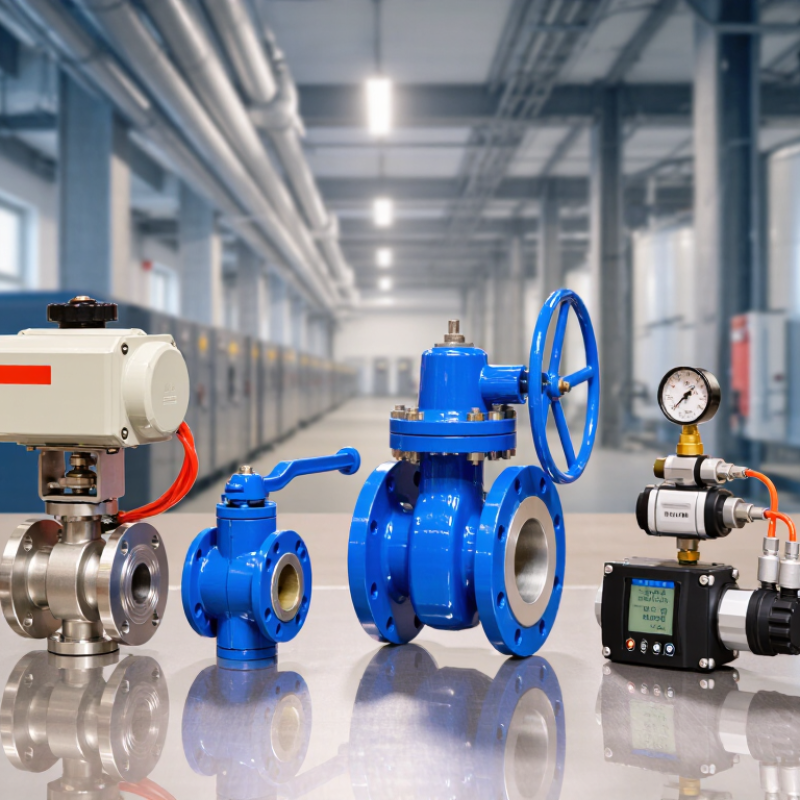
Automated valves control liquid or gas flow without constant manual operation. An actuator moves the valve after receiving an electric, pneumatic, or hydraulic signal. Common designs include ball, butterfly, globe, and diaphragm valves. Each suits different pressures, temperatures, flow rates, and media. During site inspections, engineers often check response time, leakage, noise, and access space before selecting a valve.
Global buyers need automation for safer and more consistent processes. A remote command can isolate a line within seconds. This matters in water treatment, chemical processing, food production, and energy facilities. Automated control can also reduce labor demands and improve process records. However, automation is not automatically better. Poor sizing, unstable air supply, or incorrect signal settings can create serious operating problems.
Automated valves do not perform alike, even when their actuators look similar. Ball valves use a drilled sphere that rotates 90 degrees. They provide tight shutoff and low pressure loss, making them practical for clean liquids, gases, and frequent cycling. Butterfly valves use a disc inside the pipe. Their lighter body reduces installation weight, but the disc remains in the flow path.
Globe valves guide a plug toward a seat, allowing precise throttling. This control comes with higher pressure loss and greater trim wear. Gate valves lift a wedge away from the flow. They suit isolation, not continuous regulation. Diaphragm valves separate the process fluid from moving parts, which helps in corrosive or hygienic service. The choice is rarely obvious.
MarketsandMarkets estimates the industrial valves market could grow from about USD 78.3 billion in 2024 to USD 102.6 billion by 2029. The report links growth to automation, process expansion, and infrastructure renewal. Grand View Research also identifies rising demand for smart valve monitoring. Yet, a larger market does not guarantee a better valve selection.
Pneumatic actuators offer fast movement and simple fail-safe options. Electric actuators suit remote sites where compressed air is unavailable. Hydraulic units deliver high torque but need careful leak control. In field reviews, sizing errors remain common. A valve that closes quickly may create damaging water hammer. Engineers should check media, temperature, cycling frequency, torque, and failure position before approving the purchase. The “best” valve can still be wrong.
2026 Top Automated Valves for Global Buyers
Performance begins with sizing, not appearance. Specify flow coefficient (Cv), pressure class, temperature range, and media viscosity. A valve with excessive Cv may cause unstable control. A smaller valve can create pressure loss and overheating. Actuator torque must exceed breakaway torque, especially with sticky fluids. ISO 5211 mounting dimensions improve actuator compatibility. IEC 60534 guidance supports consistent control-valve sizing practices. MarketsandMarkets projects the industrial valves market to reach about USD 100.8 billion by 2029, reflecting wider automation demand across process industries.
Safety depends on details buyers sometimes overlook. Define the required fail-open, fail-close, or fail-in-place position. Check response time, duty cycle, ingress protection, and manual override design. For hazardous process applications, review IEC 61508-based functional-safety evidence and the required SIL level.
Materials also matter. Stainless steel may resist corrosion, but seal compatibility depends on temperature and chemicals. Reports often compare market volume, not field reliability. That limitation deserves attention.
Tips: Request a complete datasheet, torque curve, test certificate, and material declaration. Confirm ISO 5211 dimensions before ordering. Compare actual operating pressure, not only maximum pressure. Ask for cycle-life data under your media and temperature. Do not assume a popular configuration fits every pipeline. A small mismatch can become an expensive shutdown. When uncertain, involve a qualified engineer and document every assumption.
For global buyers, an automated valve is more than a flow-control device. Certification often decides whether it can enter a project, factory, or regulated market. I have learned to check the certificate scope, not just its logo. ISO 9001 supports quality management, while functional-safety or emissions documents may address different risks. Requirements differ by valve type, actuator, installation zone, and destination. A certificate copied into a quotation is not enough. Ask for the issuing body, validity date, tested configuration, and traceable serial records. Small details matter.
Supplier evaluation should include evidence from the workshop. Request material certificates, calibration records, pressure-test reports, and a clear factory acceptance test plan. A video call can reveal storage conditions, assembly discipline, and whether technicians understand actuator settings. References from similar temperature, pressure, and cycle conditions are more useful than generic testimonials. Communication is also a technical factor. Slow answers may signal future trouble with drawings, spare parts, or field support. I once underestimated this point.
Purchase price is only the visible cost. Compare actuator sizing, control accessories, shipping, commissioning, maintenance, and replacement seals. The cheapest offer may use a suitable valve but an oversized actuator, increasing energy use. Another may exclude testing or documentation. Build a five-year cost sheet before approval. Include currency movement and delivery buffers. Still, forecasts remain imperfect. Actual failure rates, customs delays, and operator training can change the result. A careful buyer leaves room for evidence, negotiation, and revision.
| Rank | Automated Valve Type | Typical Size Range | Common Actuation | Typical Pressure / Temperature Capability | Key International Certifications and Standards | Typical Applications | Indicative Unit Cost (USD) | Typical Lead Time | Global Purchasing Considerations |
|---|---|---|---|---|---|---|---|---|---|
| 1 | Segmented Ball Valve | DN25–DN600 (1–24 in) |
Pneumatic or electric quarter-turn actuator | Commonly up to approximately 40 bar; temperature depends on seat and body materials | ISO 5211 EN 593 API 609 IEC 60534 | Process control, chemical processing, water treatment, pulp and paper, industrial utilities | $900–$8,000 | 6–14 weeks | Offers good throttling performance and compact installation. Confirm cavitation limits, noise control, trim material, and actuator torque margin before ordering. |
| 2 | Butterfly Valve | DN50–DN2400 (2–96 in) |
Electric or pneumatic quarter-turn actuator | Commonly 10–40 bar; temperature is strongly affected by liner, seat, and disc materials | EN 593 API 609 ISO 5211 AWWA C504 | Water distribution, HVAC, cooling systems, wastewater, fire protection, bulk fluid isolation | $250–$6,500 | 4–12 weeks | Usually provides the lowest installed cost for large diameters. Buyers should verify flange drilling, face-to-face dimensions, shutoff class, and liner compatibility. |
| 3 | Floating Ball Valve | DN15–DN300 (½–12 in) |
Pneumatic or electric quarter-turn actuator | Commonly up to 100–150 bar in selected designs; temperature depends on seal materials | API 6D API 608 ISO 5211 ISO 15848 | Oil and gas utilities, compressed air, steam services, water, general industrial isolation | $350–$5,500 | 5–14 weeks | Provides tight shutoff with a relatively simple design. Confirm fire-safe construction, fugitive-emission requirements, antistatic features, and media compatibility. |
| 4 | Trunnion-Mounted Ball Valve | DN100–DN1200 (4–48 in) |
Pneumatic, electric, or hydraulic actuator | Commonly 16–420 bar depending on pressure class and design; cryogenic and high-temperature options require special materials | API 6D API 608 ISO 5211 ISO 15848 | Pipeline transmission, natural gas, hydrocarbon processing, high-pressure water and utility systems | $3,000–$35,000 | 10–24 weeks | Suitable for high-pressure and large-diameter service. Total cost is affected by pressure class, body construction, seal design, testing, and actuator power requirements. |
| 5 | Globe Control Valve | DN15–DN400 (½–16 in) |
Pneumatic diaphragm, piston, or electric linear actuator | Commonly up to 250 bar; high-temperature versions may exceed 500°C with suitable materials | IEC 60534 ASME B16.34 IEC 61508 NACE MR0175 | Steam, chemical dosing, boiler feedwater, refinery processes, flow and pressure regulation | $1,200–$18,000 | 8–20 weeks | Strong choice for accurate throttling but normally has higher pressure loss than rotary valves. Specify flow coefficient, noise limits, trim, and fail position. |
| 6 | Gate Valve with Actuator | DN50–DN1600 (2–64 in) |
Electric, hydraulic, or pneumatic actuator | Commonly 10–420 bar; temperature depends on body, stem, packing, and seat materials | API 600 API 602 API 6D ASME B16.34 | Pipeline isolation, power generation, water transmission, mining, oil and gas facilities | $1,000–$25,000 | 8–22 weeks | Designed primarily for fully open or fully closed service, not continuous throttling. Review actuator thrust, stem protection, drainage, and maintenance access. |
| 7 | Check Valve with Position Monitoring | DN25–DN1200 (1–48 in) |
Normally self-actuated; optional limit switch or position transmitter | Commonly 10–420 bar depending on check-valve pattern and pressure class | API 594 API 6D ASME B16.34 EN 12334 | Backflow prevention, pump discharge, pipeline systems, water treatment, process piping | $180–$12,000 | 4–16 weeks | Useful where reverse-flow protection is critical. Buyers should evaluate cracking pressure, closing speed, water hammer, installation orientation, and monitoring requirements. |
| 8 | Pinch Valve | DN25–DN1200 (1–48 in) |
Pneumatic or electric actuator | Commonly up to 10–16 bar; temperature and pressure depend mainly on sleeve material | ISO 5208 EN 558 ATEX* IEC 60534* | Abrasive slurries, mining, cement, wastewater, powders, corrosive and contaminated media | $500–$8,000 | 5–14 weeks | Provides excellent isolation for abrasive or solids-laden media. Sleeve replacement is a major lifecycle cost, so material selection and spare availability are important. |
| 9 | Diaphragm Valve | DN15–DN300 (½–12 in) |
Pneumatic or electric linear actuator | Commonly up to 16 bar; temperature depends on diaphragm and lining material | EN 13397 ISO 5208 EHEDG* 3-A* | Pharmaceutical processing, food and beverage, ultrapure water, corrosive chemicals, sanitary services | $450–$7,500 | 6–16 weeks | Separates the actuator mechanism from the process fluid. Confirm cleanability, surface finish, diaphragm life, drainage, and hygienic documentation where applicable. |
| 10 | Knife Gate Valve | DN50–DN1600 (2–64 in) |
Pneumatic, electric, or hydraulic actuator | Commonly 6–25 bar; pressure capability depends on unidirectional or bidirectional design | MSS SP-81 EN 1171 ISO 5208 ATEX* | Pulp and paper, mining slurry, wastewater, bulk solids, biomass, ash handling | $600–$9,500 | 6–16 weeks | Well suited to thick fluids and suspended solids. Confirm gate-edge design, packing arrangement, abrasion resistance, orientation, and whether the valve is intended for isolation only. |
Choosing an automated valve starts with the process, not the catalog. Identify the fluid, temperature, pressure, flow rate, and pipe size. A clean-water line may suit a quarter-turn ball valve. Abrasive slurry usually demands stronger materials and careful seat selection. Steam service needs heat-resistant construction and dependable sealing.
Check the actuator next. Electric actuators fit locations with stable power and precise positioning needs. Pneumatic actuators respond quickly, but they require clean, dry air and suitable safety controls. Define the failure position clearly. Should the valve close, open, or remain fixed during power loss? This decision affects equipment protection and operator safety.
Control signals also matter. Confirm compatibility with the plant’s automation system, including feedback, communication, and voltage requirements. Review enclosure protection for outdoor or dusty installations. Ask for test records, material certificates, and traceable inspection data. These documents support reliable purchasing across borders and industries.
I have seen projects choose oversized valves for “extra capacity.” That often creates poor control and unnecessary cost. Smaller is not always better either. Pressure drop can become a hidden problem. I still recheck calculations against real operating conditions, because design data is sometimes incomplete. Field access matters too. A valve that cannot be serviced safely may become the wrong choice, even when its specifications look perfect.