In 2026, selecting among Valve Models means matching the valve to the process, not simply comparing prices. Pressure, temperature, fluid composition, flow rate, and operating frequency all shape the decision. A stainless-steel ball valve may suit clean, frequent on-off service, while abrasive slurry can demand different materials and trim. Small details matter. A rushed choice can increase leakage, maintenance, or downtime.
Market data shows why careful selection matters. Grand View Research’s Industrial Valves Market Size, Share & Trends Analysis Report estimated the global market at approximately $79 billion in 2023. That figure describes a broad market, not a recommendation for any specific plant. Buyers should still check the applicable design and testing requirements, such as ASME B16.34 and API 598, against their project specifications. These references help frame questions about pressure-temperature ratings, inspection, and testing; they do not replace engineering review.
This guide explains how to compare valve types, materials, end connections, and actuation options for real operating conditions. It also considers lifecycle cost, spare-part availability, and supplier documentation. A datasheet can look complete while omitting a detail that changes the choice, such as startup temperature or expected cycling frequency. Forecasts cannot choose a valve for you. The most reliable selection starts with verified process data, clear acceptance criteria, and a willingness to revisit assumptions before purchase.
Before comparing valve models, describe the job in measurable terms.
Record the fluid, normal and peak flow, operating pressure, temperature range, and expected cycle frequency. A water line running steadily at 4 bar differs from a dosing line that pulses near its pressure limit. Small details matter. Note whether the fluid carries grit, bubbles, or corrosive compounds, and whether its viscosity changes as the system cools. These conditions influence body material, internal components, connection type, and required flow capacity. Use actual operating data where possible; a nameplate maximum alone can hide pressure surges.
Define what the valve must do during normal operation and a fault. Specify acceptable leakage, response time, control method, and required position after loss of power or air.
Check space, orientation, ambient temperature, vibration, and maintenance access. A handwheel may clear the pipe but remain unreachable behind a guard.
Allow for uncertainty, especially when startup pressure or future throughput is poorly documented. It is tempting to choose a familiar size and move on. That shortcut can be wrong.
Verify assumptions with the process engineer, then compare rated limits against the full operating range, not just a typical shift. Document what remains uncertain.
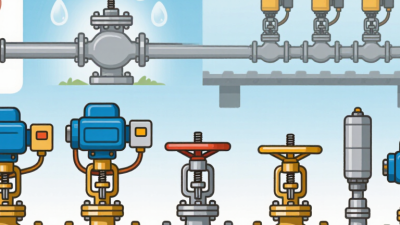
Valve selection starts with the task, not the pipe size. For simple isolation, a ball valve opens quickly with a quarter-turn; a gate valve suits infrequent, fully open or closed service. Neither is ideal for precise throttling. A globe valve offers finer flow adjustment, though its pressure drop can be higher. For large water lines, a butterfly valve is compact and light. A check valve prevents reverse flow without an operator, but it cannot regulate demand.
Control needs narrow the choice. Modulating service calls for a control valve matched to the actuator, signal, and required range—not just the connection size. The U.S. Department of Energy’s Improving Steam System Performance sourcebook notes that steam supplies about 30% of industrial energy use. In steam lines, stable control and suitable materials matter; poor matching can waste energy or create noisy, unstable flow. Small details matter.
For water-system planning, the U.S. EPA’s 2023 Drinking Water Infrastructure Needs Survey and Assessment estimates $625 billion in needs over 20 years. That scale makes maintainability and reliable isolation practical selection criteria. Check pressure, temperature, fluid cleanliness, cycling frequency, and failure position against the duty. One imperfect part of selection: operating data may be incomplete. In that case, document assumptions and verify them during commissioning rather than treating the first valve choice as final.
Compare valve types by function and control needs
Indicative suitability ratings from 1 (limited fit) to 5 (strong fit), based on common valve applications. Ball and gate valves are commonly used for isolation, globe valves for throttling, and check valves for preventing reverse flow. Actual performance depends on valve design, sizing, materials, and operating conditions.
Choosing a valve starts with the process media, not just the pipe size. Water, hot condensate, and a mildly acidic cleaning solution can behave very differently inside the same line. Check concentration, temperature, suspended solids, and whether the media changes during startup or cleaning. Small details matter. Chlorides may pit some stainless steels, while abrasive particles can wear a soft seat faster than expected.
Material selection should cover the body, trim, stem, seat, and seals. Each component may contact the fluid, and a mismatch can cause swelling, corrosion, leakage, or shortened service life. Elastomers deserve particular attention. Compare compatibility data at the actual concentration and temperature; generic labels such as “corrosive” are not enough. Treat charts as screening tools, not guarantees. That distinction is easy to overlook.
Confirm the valve’s pressure rating at its operating temperature, because allowable pressure often falls as temperature rises. Include pump shutoff pressure, water hammer, and other brief surges, not just the steady gauge reading. Also check differential pressure, flow direction, and the valve’s intended duty; throttling can damage a valve designed for isolation. Leave a margin, but do not guess. Field readings may be incomplete, so record assumptions and verify them during commissioning with a qualified engineer.
| How to Choose the Right Valve Model in 2026? — Match Materials and Pressure Ratings to the Process Media | ||||||
|---|---|---|---|---|---|---|
| Process Media / Service | Common Valve Type | Typical Body Material | Trim, Seat, or Lining | Pressure-Rating Starting Point | Key Selection Considerations | Compatibility Cautions |
| Clean water and general utility water | Gate, globe, butterfly, or ball valve | Ductile iron, carbon steel, or stainless steel | EPDM is commonly used for water service; stainless trim is often selected for corrosion resistance | Choose an applicable ASME Class or PN rating above the design pressure, including surge pressure | Check operating temperature, water-treatment chemicals, flow velocity, and required shutoff performance. | EPDM is generally unsuitable for petroleum oils. Material suitability depends on additives and temperature. |
| Seawater and chloride-bearing water | Butterfly, ball, or diaphragm valve | Duplex stainless steel, suitable high-alloy stainless steel, or lined ductile iron | Material selected for chloride exposure; EPDM or another service-compatible seat or lining | Specify the pressure class from the valve’s applicable standard and verify the rating at operating temperature | Consider chloride concentration, temperature, velocity, crevice geometry, and galvanic effects. | Standard 304 stainless steel can be vulnerable to chloride pitting and crevice corrosion; 316 stainless steel is not immune. |
| Crude oil, fuel, and many hydrocarbon services | Ball, gate, or plug valve | Carbon steel or stainless steel, selected for the fluid and environment | PTFE seats are common in many services; elastomers must be selected for the specific fluid | ASME Classes 150, 300, and higher are common options; confirm the pressure–temperature rating for the exact valve | Check fluid composition, vapor pressure, fire-safe requirements, emissions controls, and required isolation. | Elastomer compatibility varies widely across fuels and additives. Do not assume one seal material suits every hydrocarbon. |
| Steam and hot condensate | Globe, gate, or qualified high-performance ball valve | Carbon steel or alloy steel, selected for temperature and pressure | Metal-to-metal trim is often used for severe temperature or erosion conditions; packing must suit the temperature | Select the pressure class using the design pressure and temperature tables for the applicable standard | Account for thermal cycling, water hammer, flashing, and the pressure drop across the valve. | Soft seats and elastomers have temperature limits; verify the complete valve assembly, not just the body material. |
| Dilute acids or alkalis | Diaphragm, lined butterfly, or lined plug valve | Compatible alloy or a lined body, such as suitably specified rubber- or fluoropolymer-lined construction | Diaphragm, liner, and seat material selected for the exact chemical concentration and temperature | Use the rating of the complete lined valve at operating temperature; lining may limit allowable pressure or vacuum | Confirm concentration, temperature, contaminants, permeation risk, and whether the service is oxidizing or reducing. | “Acid-resistant” is not a universal material property. Compatibility can change substantially with concentration and temperature. |
| Abrasive slurry, mineral solids, or wastewater with suspended particles | Pinch, slurry knife-gate, or lined diaphragm valve | Robust metal body with a replaceable elastomer sleeve or a service-specific lined body | Abrasion-resistant elastomer or replaceable wear components, selected for particle size and chemistry | Confirm both pressure rating and allowable differential pressure; slurry service may impose additional limits | Consider solids loading, particle hardness, settling, flushing, and whether the valve will operate partially open. | Fine throttling can accelerate wear in many slurry valves. Abrasion and chemical compatibility must be assessed together. |
| High-purity water or clean-in-place service | Diaphragm or sanitary ball valve | Stainless steel suitable for the required sanitary finish and cleaning procedure | Product-contact diaphragm or seat selected for the fluid, temperature, and cleaning chemicals | Use the sanitary valve’s documented pressure–temperature limits and verify the rating during cleaning cycles | Specify drainability, surface finish, connection type, dead-leg requirements, and cleaning validation needs. | A sanitary design does not by itself guarantee chemical compatibility, sterility, or suitability for a particular process. |
| Rating note: ASME Class designations and PN ratings are not interchangeable pressure values. Allowable pressure depends on the valve standard, material group, temperature, design, and sometimes the trim or lining. Confirm the manufacturer’s pressure–temperature data and applicable code requirements before specification. | ||||||
Choosing the right valve model in 2026 means matching actuation to the job, not just the pipe size. Manual operation may suit an occasional isolation valve. For frequent cycling, compare electric and pneumatic actuators against required torque, cycle time, and available utilities. A spring-return actuator can move a valve to a safer position after air or power loss, but confirm that position fits the process. Check the valve’s torque across its full travel, especially when pressure or temperature changes. Small details matter.
Standards help make the choice verifiable. Confirm pressure and temperature ratings, materials, end connections, and leakage requirements against the project specification. ISO 5211 may apply to actuator mounting, while control-valve applications may call for IEC 60534 requirements; neither standard covers every selection detail. Smart features can add position feedback, cycle tracking, and diagnostics. They are useful only if operators can interpret the data and maintain the communications link. Check protocol compatibility, access controls, and what happens during a network outage. This is easy to overlook. More sensors do not automatically mean better decisions, and a simple local indicator may still be valuable. Before ordering, review the actual operating conditions with the engineering and maintenance teams; early assumptions sometimes need revisiting.
Check valve sizing against actual operating conditions, not pipe diameter alone. Record minimum and maximum flow, pressure drop, fluid temperature, and viscosity. For control valves, review the expected flow range and how often conditions change. A valve that fits the line can still operate poorly if it is oversized. Small details matter. Confirm the selected materials suit the fluid and temperature, then check pressure ratings across the full operating range.
Compare lifecycle costs, not just purchase prices. Include installation, actuator or control requirements, inspection intervals, replacement parts, and likely downtime. A lower-cost valve may need more frequent maintenance; the opposite can also be true. That estimate can mislead. Ask how the cost assumptions were made, especially when service conditions are uncertain. A simple table comparing options can expose missing items.
Supplier documentation helps verify the choice. Request dimensional drawings, material specifications, pressure-temperature data, flow coefficients where relevant, and maintenance instructions. Check that document revisions match the quoted model and configuration. For critical dimensions, compare drawings with the installation space before ordering. If a rating or material is unclear, ask for written clarification rather than filling the gap with an assumption. Supplier documents should support the conditions you actually expect, not just a generic product description.